Guideline-Directed Medical Therapy (GDMT)

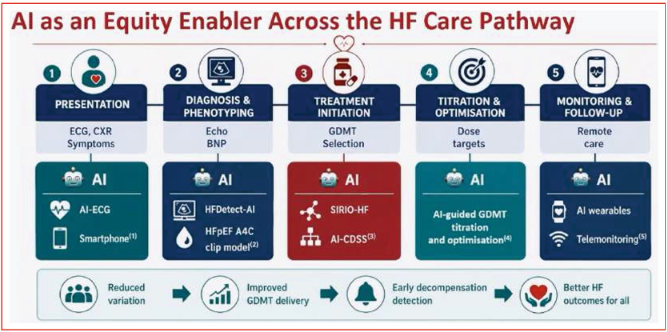
AI Will Improve Equity in Heart Failure Care: Pro

by Prateek Chopra | June 3, 2026 | Cardiology Conferences | ESC-HF 2026 Artificial intelligence (AI) was discussed as a promising approach to address inequities in heart failure care. Persistent disparities in diagnosis, treatment, and outcomes arise from differences in access to specialists, healthcare infrastructure, and adherence to evidence-based therapies. AI was presented as a tool capable of analyzing large volumes […]

AI Will Improve Equity in Heart Failure Care: Pro Read Post »
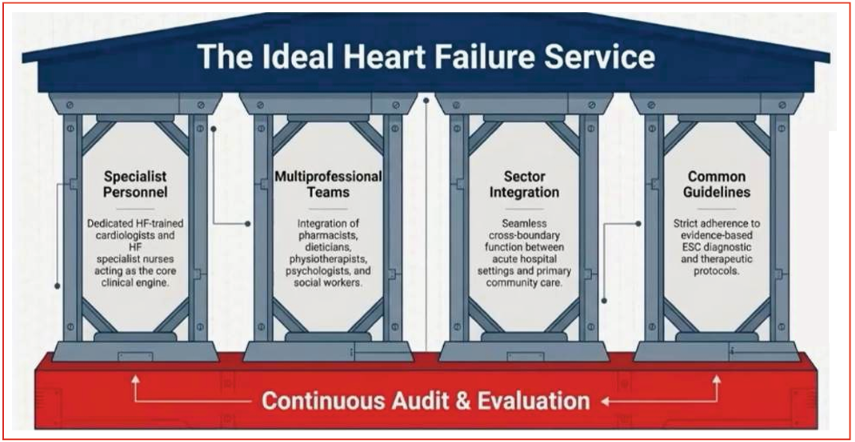
Heart Failure Unit: Spain’s Secret Weapon for GDMT Optimisation

by Prateek Chopra | June 2, 2026 | Cardiology Conferences | ESC-HF 2026 Heart failure (HF) remains a major global health burden despite the availability of highly effective guideline-directed medical therapies (GDMT). However, the greatest challenge is no longer the discovery of therapies, but the establishment of healthcare systems capable of delivering rapid, protocol-driven, and sustained optimization of treatment. The findings

Heart Failure Unit: Spain’s Secret Weapon for GDMT Optimisation Read Post »

Long Term Outcomes with Sacubitril Valsartan in HFrEF: Insights From a Real World Cohort

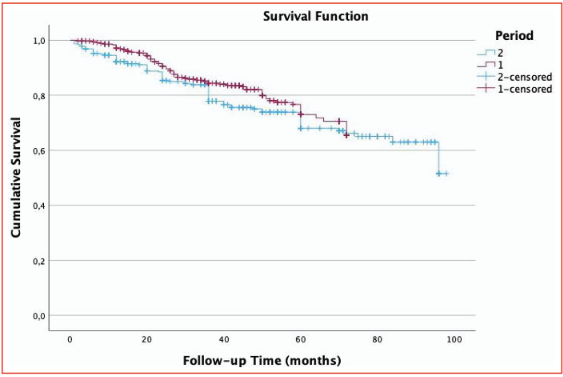
by Prateek Chopra | June 1, 2026 | Cardiology Conferences | ESC-HF 2026 Sacubitril–valsartan (SV) has shown prognostic benefits in patients with heart failure with reduced ejection fraction (HFrEF), although its long-term real-world impact remains unclear. This study assessed long-term outcomes associated with SV use in a real-world HFrEF cohort. The findings were presented at Heart Failure 2026, organized by the

Long Term Outcomes with Sacubitril Valsartan in HFrEF: Insights From a Real World Cohort Read Post »

Understanding Non-prescrip on of Guideline-Directed Medical Therapy in AcuteHeart Failure And Advanced Kidney Disease: A Na on-Wide Study

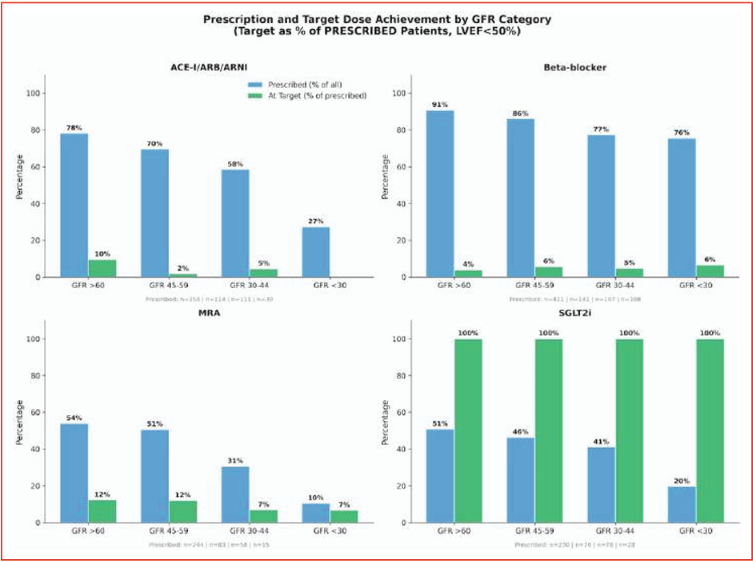
by Prateek Chopra | May 31, 2026 | Cardiology Conferences | ESC-HF 2026 Heart failure (HF) and chronic kidney disease (CKD) commonly coexist and are associated with poor clinical outcomes. However, patients with advanced CKD have been underrepresented in major HF clinical trials, resulting in limited evidence regarding the safety and effectiveness of guideline-directed medical therapy (GDMT) in this high-risk population.

Understanding Non-prescrip on of Guideline-Directed Medical Therapy in AcuteHeart Failure And Advanced Kidney Disease: A Na on-Wide Study Read Post »

Are We Mee ng the Guidelines? A Review on Management of Heart FailurePa ents in a General Hospital in UK

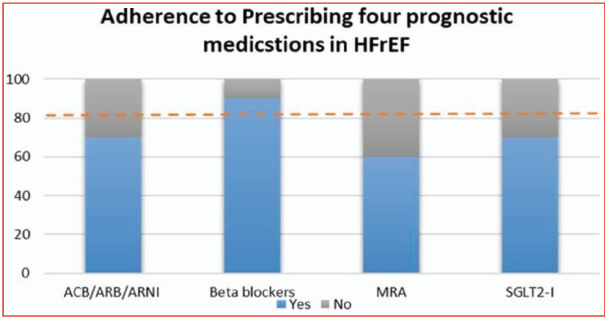
by Prateek Chopra | May 30, 2026 | Cardiology Conferences | ESC-HF 2026 Heart failure (HF) remains associated with substantial mortality and morbidity despite advances in therapy. Guideline-directed medical therapy improves outcomes in heart failure with reduced ejection fraction (HFrEF); however, adherence in routine clinical practice remains variable. This study evaluated adherence to guideline-recommended diagnostic and therapeutic strategies among patients newly

Are We Mee ng the Guidelines? A Review on Management of Heart FailurePa ents in a General Hospital in UK Read Post »

Is there Really a Clinical Benefit to Using the New Drugs for HFrEF in Real Life

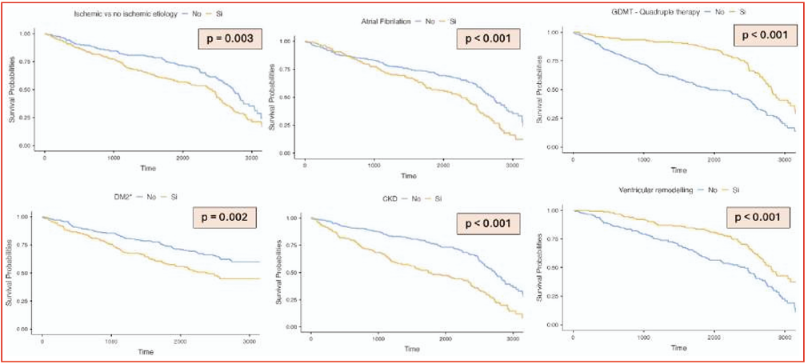
by Prateek Chopra | May 28, 2026 | Cardiology Conferences | ESC-HF 2026 Since 2017, several new therapies demonstrating clinical benefit in patients with HF and reduced left LVEF have been approved for clinical use. However, real-world evidence regarding the benefits of these therapies remains limited. The study aimed to analyse the characteristics and prognosis of patients with HFrEF prospectively followed

Is there Really a Clinical Benefit to Using the New Drugs for HFrEF in Real Life Read Post »

Door-to-GDMT Time: The Effect of De Novo Diagnosis of Heart Failure on Guideline-directed Medical Therapy Optimisation During the Rapid-up Titration Programme and on Prognosis

by Prateek Chopra | May 27, 2026 | Cardiology Conferences | ESC-HF 2026 Early initiation of guideline-directed medical therapy (GDMT) has shown significant prognostic benefits in heart failure (HF). Despite strong evidence for life-saving drug therapy, previous real-world registries of chronic HF patients have consistently revealed low prescription rates and underdosing of GDMT. Accordingly, the 2023 ESC HF guidelines recommend rapid

Door-to-GDMT Time: The Effect of De Novo Diagnosis of Heart Failure on Guideline-directed Medical Therapy Optimisation During the Rapid-up Titration Programme and on Prognosis Read Post »

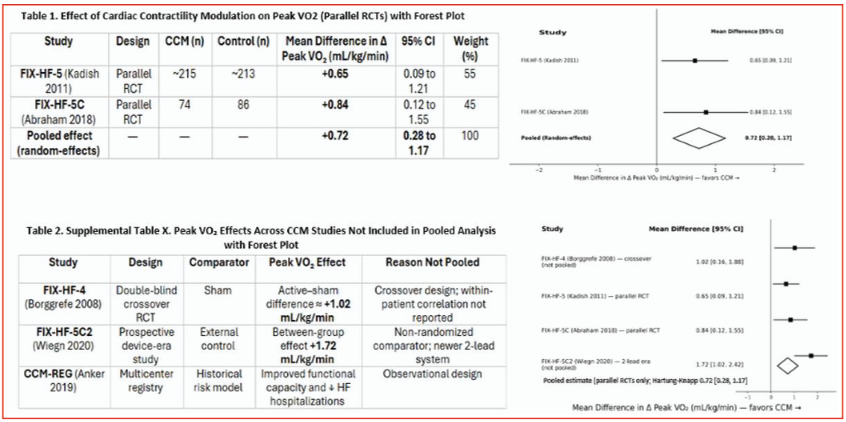
Cardiac Contractility Modula on vs Guideline-Directed Medical Therapy in Symptomatic HFrEF with Narrow QRS: An Updated Systema c Review and Meta-Analysis

by Prateek Chopra | May 27, 2026 | Cardiology Conferences | ESC-HF 2026 Cardiac contractility modulation (CCM) is an implantable device-based therapy developed for patients with symptomatic heart failure with reduced ejection fraction (HFrEF) and narrow QRS complexes who are not eligible for cardiac resynchronization therapy. Earlier studies demonstrated improvements in exercise tolerance and symptoms with CCM; however, more recent randomized

Cardiac Contractility Modula on vs Guideline-Directed Medical Therapy in Symptomatic HFrEF with Narrow QRS: An Updated Systema c Review and Meta-Analysis Read Post »

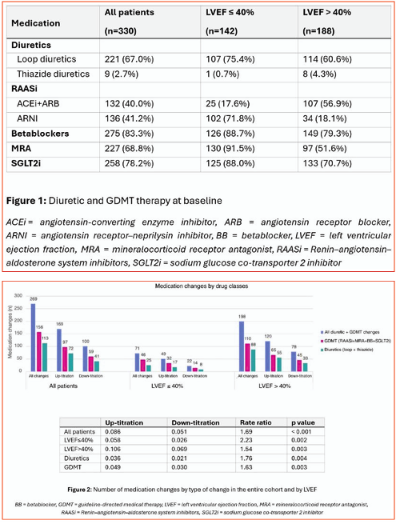
STOP-DHF (A Non-invasive Hemodynamic-guided Strategy to Prevent Heart Failure Decompensation) Trial: Preliminary Results of Medical Therapy Interventions Study

by Prateek Chopra | May 26, 2026 | Cardiology Conferences | ESC-HF 2026 Elevated left ventricular filling pressures (LVFP) often precede heart failure (HF) decompensation by several days or weeks, creating an opportunity for early therapeutic intervention. Non-invasive remote hemodynamic monitoring may enable timely and targeted medication adjustments to prevent worsening HF and improve outcomes. The STOP-DHF trial evaluated the impact

STOP-DHF (A Non-invasive Hemodynamic-guided Strategy to Prevent Heart Failure Decompensation) Trial: Preliminary Results of Medical Therapy Interventions Study Read Post »

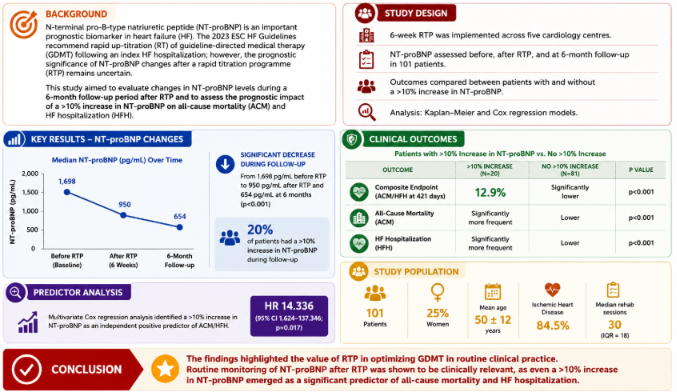
The Prognostic Role of Regular NT-proBNP Measurement A er a Rapid-Up Titration Programme of Guideline-Directed Medical Therapy in Heart Failure: Essential or Superfluous?

by Prateek Chopra | May 25, 2026 | Cardiology Conferences | ESC-HF 2026 N-terminal pro-B-type natriuretic peptide (NT-proBNP) is an important prognostic biomarker in heart failure (HF). The 2023 ESC HF Guidelines recommend rapid up-titration (RT) of guideline-directed medical therapy (GDMT) following an index HF hospitalization; however, the prognostic significance of NT-proBNP changes after a rapid titration programme (RTP) remains uncertain.

The Prognostic Role of Regular NT-proBNP Measurement A er a Rapid-Up Titration Programme of Guideline-Directed Medical Therapy in Heart Failure: Essential or Superfluous? Read Post »

Scroll to Top