
by Prateek Chopra | May 27, 2026 | Cardiology Conferences | ESC-HF 2026
Cardiac contractility modulation (CCM) is an implantable device-based therapy developed for patients with symptomatic heart failure with reduced ejection fraction (HFrEF) and narrow QRS complexes who are not eligible for cardiac resynchronization therapy. Earlier studies demonstrated improvements in exercise tolerance and symptoms with CCM; however, more recent randomized and device-era investigations have provided updated evidence regarding its clinical efficacy and functional benefits. This systematic review and meta-analysis evaluated the effects of CCM combined with guideline-directed medical therapy (GDMT) compared with GDMT alone or sham control in patients with symptomatic HFrEF. The findings were presented at Heart Failure 2026, organized by the European Society of Cardiology, held in Barcelona, Spain, from 9–12 May 2026.
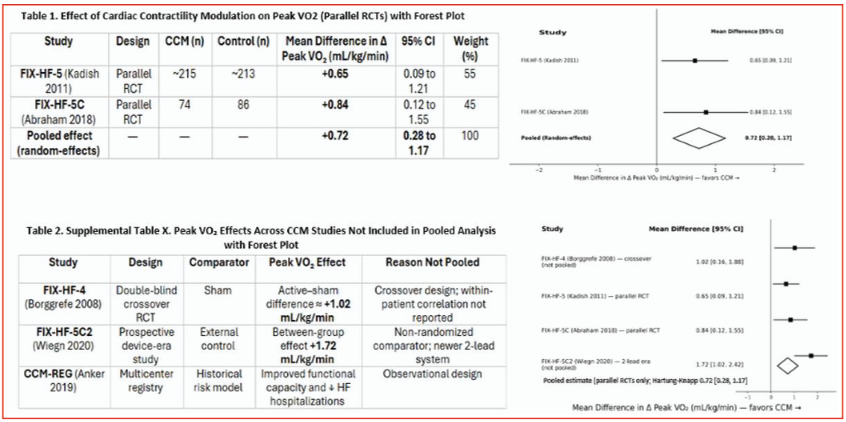
Controlled studies evaluating CCM in HFrEF were systematically reviewed. The primary endpoint was the between-group change in peak oxygen consumption (peak VO₂). Random-effects meta-analysis was performed for parallel randomized controlled trials, while crossover studies and newer device-era trials were summarized descriptively.
Four controlled datasets were included: FIX-HF-4 (n=164), FIX-HF-5 (n=428), FIX-HF-5C (EF 25–45%, n=160), and FIX-HF-5C2 (n=60). In FIX-HF-5, CCM improved peak VO₂ by +0.65 mL/kg/min (P=0.024) and Minnesota Living with Heart Failure Questionnaire scores by −9.7 points (P<0.0001). FIX-HF-5C showed a +0.84 mL/kg/min increase in peak VO₂ (95% Bayesian credible interval 0.12–1.55) and lower cardiovascular death or HF hospitalization rates (2.9% vs 10.8%; P=0.048). Pooled analysis of parallel RCTs demonstrated a significant peak VO₂ improvement of +0.72 mL/kg/min (95% CI 0.28–1.17). In FIX-HF-4, withdrawal of active CCM reduced peak VO₂, while active therapy improved exercise capacity and quality of life (P=0.03 for both). In FIX-HF-5C2, peak VO₂ increased by +1.72 mL/kg/min, with ≥1 NYHA class improvement in 83.1% versus 42.7% of controls (P<0.001), without device-related adverse events.
In symptomatic HFrEF patients with narrow QRS complexes, CCM added to GDMT improved functional capacity and symptoms, with pooled randomized data showing an approximate +0.7 mL/kg/min increase in peak VO₂ and larger benefits in newer device-era studies.