
by Prateek Chopra | May 31, 2026 | Cardiology Conferences | ESC-HF 2026
Heart failure (HF) and chronic kidney disease (CKD) commonly coexist and are associated with poor clinical outcomes. However, patients with advanced CKD have been underrepresented in major HF clinical trials, resulting in limited evidence regarding the safety and effectiveness of guideline-directed medical therapy (GDMT) in this high-risk population. The present study evaluated the prevalence and clinical characteristics of CKD among patients hospitalized with acute heart failure (AHF), with a particular focus on GDMT prescription patterns, dosing, and longitudinal treatment trajectories in patients with left ventricular ejection fraction (LVEF) ≤50% and advanced CKD. The findings were presented at Heart Failure 2026, organized by the European Society of Cardiology, held in Barcelona, Spain, from 9–12 May 2026.
This retrospective nationwide observational study included patients admitted with AHF to the only tertiary cardiology centre in Iceland between 2020 and 2024 using data from the Icelandic Heart Failure Registry. Patients were stratified according to KDIGO CKD stages irrespective of baseline renal function. GDMT prescription rates, achievement of target doses, and reasons for non-prescription were assessed at discharge, while longitudinal treatment patterns were evaluated up to six months following hospitalization.
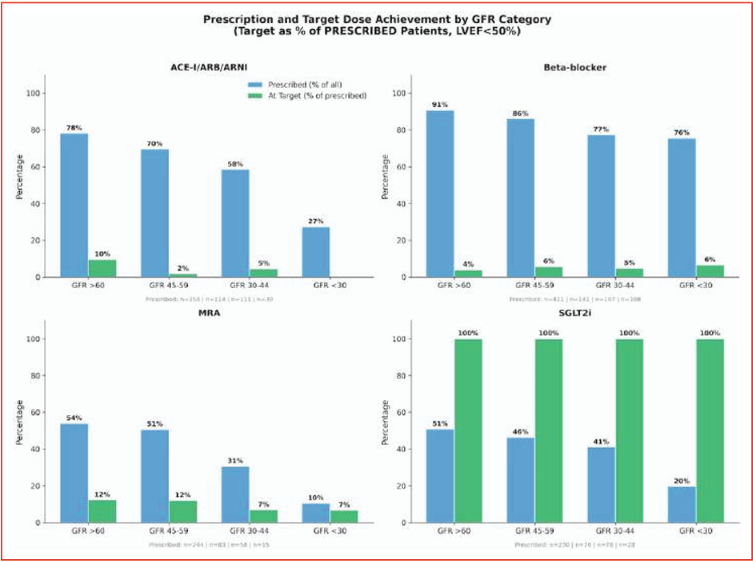
Among 2,441 patients with a median age of 77 years, 70.6% had LVEF ≤50% and 16.2% had CKD stages 4–5. Progressive CKD was associated with a higher burden of comorbidities and substantially lower GDMT utilization. In patients with LVEF ≤50%, prescription rates declined markedly from CKD stages 1–2 to stages 4–5 for RAAS inhibitors (78% vs 27%), mineralocorticoid receptor antagonists (54% vs 10%), and SGLT2 inhibitors (51% vs 20%), whereas beta-blocker use remained relatively preserved (91% vs 76%). Target dose achievement was consistently low, and kidney disease was the primary documented reason for non-prescription. Patients with advanced CKD experienced high in-hospital mortality (15.3%), six-month mortality (37.2%), and readmission rates (30.6%). Post-discharge GDMT up-titration was infrequent, with no significant dose escalation observed beyond three months. SGLT2 inhibitor use at discharge increased significantly from 2.9% in 2020 to 41% in 2024.
In this nationwide real-world cohort, CKD was strongly associated with underuse and underdosing of GDMT in patients hospitalized with AHF, highlighting a substantial treatment gap and the need for improved evidence and implementation strategies in patients with severe renal dysfunction.