Guideline-Directed Medical Therapy (GDMT)

Clinical Trial Evidence in Heart Failure With Reduced Ejection on Fraction

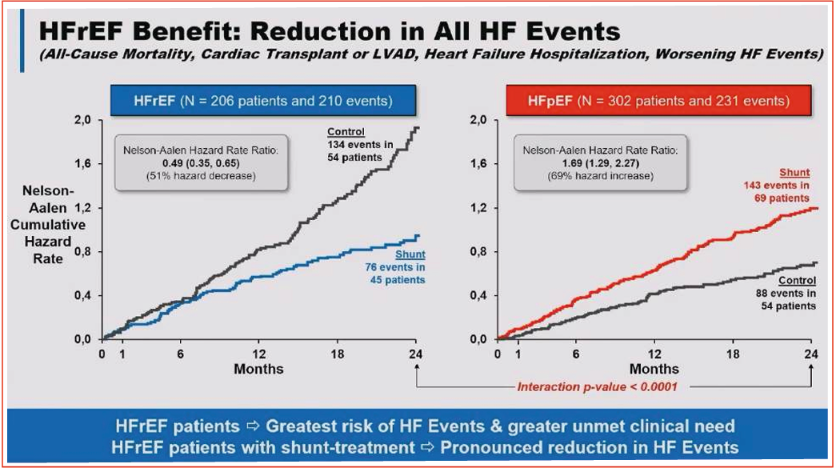
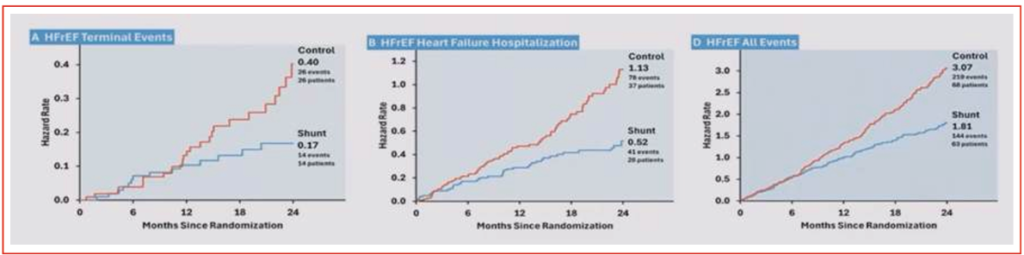
by Prateek Chopra | May 25, 2026 | Cardiology Conferences | ESC-HF 2026 Heart failure with reduced ejection fraction (HFrEF) remains associated with frequent hospitalizations, progressive ventricular remodeling, and high mortality despite optimal guideline-directed medical therapy (GDMT). The RELIEVE-HF trial was designed to evaluate whether unloading the left atrium with the V-Wave Ventura interatrial shunt could reduce congestion and improve clinical […]

Clinical Trial Evidence in Heart Failure With Reduced Ejection on Fraction Read Post »
Latest Analyses in HFrEF, Diagnosis, Pa ent Selec on, and Clinical Experience

by Prateek Chopra | May 24, 2026 | Cardiology Conferences | ESC-HF 2026 Heart failure with reduced ejection fraction (HFrEF) continues to be associated with substantial morbidity and mortality despite significant advances in therapeutic options. In the era of guideline-directed medical therapy (GDMT), a growing body of evidence has highlighted the importance of accurate diagnosis, early patient identification, and timely initiation

Latest Analyses in HFrEF, Diagnosis, Pa ent Selec on, and Clinical Experience Read Post »

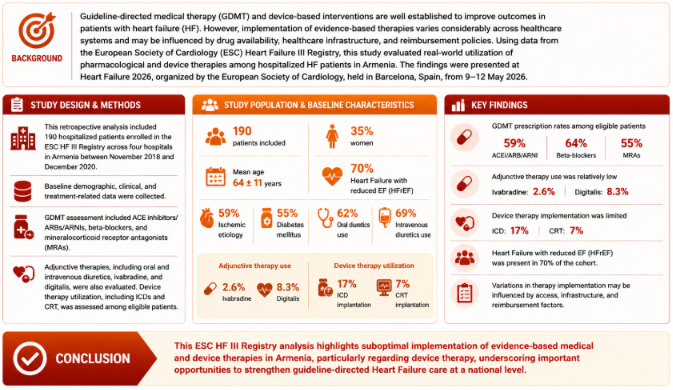
Guideline-Directed Medical and Device Therapy in Heart Failure: Insights from theESC Heart Failure III Registry in Armenia

by Prateek Chopra | May 24, 2026 | Cardiology Conferences | ESC-HF 2026 Guideline-directed medical therapy (GDMT) and device-based interventions are well established to improve outcomes in patients with heart failure (HF). However, implementation of evidence-based therapies varies considerably across healthcare systems and may be influenced by drug availability, healthcare infrastructure, and reimbursement policies. Using data from the European Society of

Guideline-Directed Medical and Device Therapy in Heart Failure: Insights from theESC Heart Failure III Registry in Armenia Read Post »

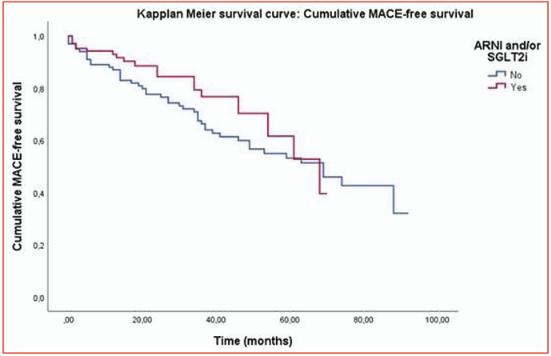
Effect of Sacubitril/Valsartan and SGLT2 Inhibitors on Echocardiographic Responseand Clinical Outcomes A er Cardiac Resynchroniza on Therapy: Insights froma Real-world Cohort

by Prateek Chopra | May 23, 2026 | Cardiology Conferences | ESC-HF 2026 Cardiac resynchronization therapy (CRT) is recommended for symptomatic heart failure (HF) patients with prolonged QRS duration and reduced left ventricular ejection fraction (LVEF), although pivotal CRT trials predated widespread use of angiotensin receptor-neprilysin inhibitors (ARNI) and sodium-glucose co-transporter-2 inhibitors (SGLT2i). This study evaluated whether contemporary HF therapy influences

Effect of Sacubitril/Valsartan and SGLT2 Inhibitors on Echocardiographic Responseand Clinical Outcomes A er Cardiac Resynchroniza on Therapy: Insights froma Real-world Cohort Read Post »

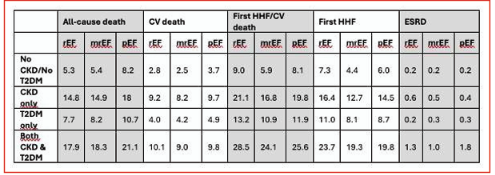
Type 2 Diabetes and Chronic Kidney Disease Combina ons in Heart Failure Acrossthe Ejec on Frac on Spectrum: Clinical Associa ons, Medica on Use, andCause-Specific Outcomes

by Prateek Chopra | May 18, 2026 | Cardiology Conferences | ESC-HF 2026 Type 2 Diabetes Mellitus (T2DM) and Chronic Kidney Disease (CKD) frequently coexist with Heart Failure (HF), substantially increasing the risks of mortality and hospitalization for HF (HHF). Several HF therapies have demonstrated cardiorenal benefits in patients with CKD and/or T2DM; however, real-world evidence suggests that these therapies remain

Type 2 Diabetes and Chronic Kidney Disease Combina ons in Heart Failure Acrossthe Ejec on Frac on Spectrum: Clinical Associa ons, Medica on Use, andCause-Specific Outcomes Read Post »

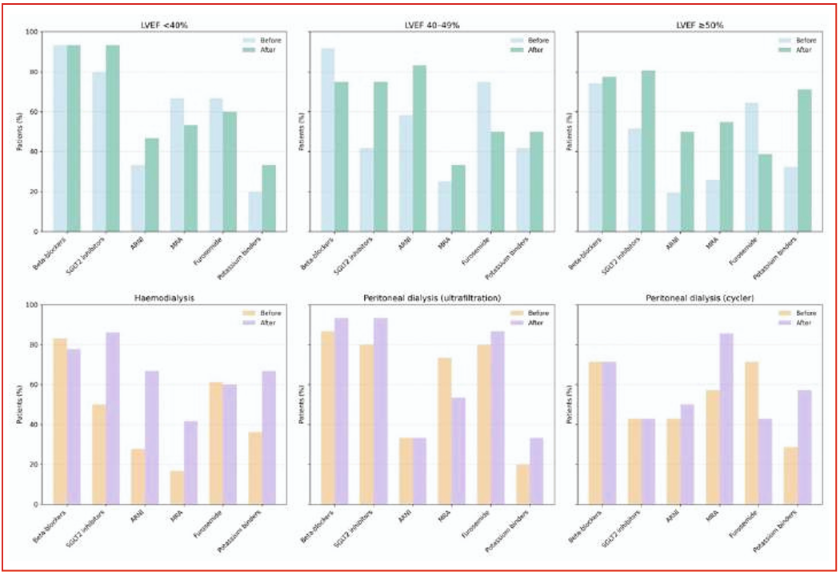
Opmizing Heart Failure Treatment in Pa ents Receiving Renal ReplacementTherapy: The Role of a Cardiorenal Unit

by Prateek Chopra | May 17, 2026 | Cardiology Conferences | ESC-HF 2026 Cardiorenal syndrome (CRS) remains a major therapeutic challenge, particularly in patients receiving renal replacement therapy, where evidence supporting guideline-directed Heart Failure (HF) therapies is limited. The management of these patients is often complicated by multiple comorbidities, fluid overload, and concerns regarding treatment tolerability and safety. This study aimed

Opmizing Heart Failure Treatment in Pa ents Receiving Renal ReplacementTherapy: The Role of a Cardiorenal Unit Read Post »

Vericiguat: Standard Therapy for HFrEF

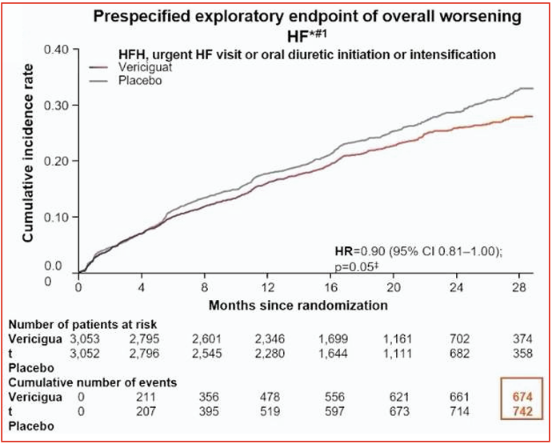
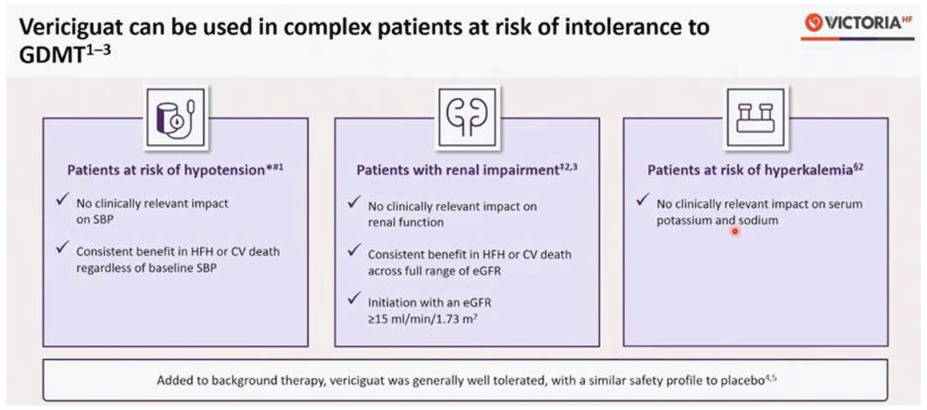
by Prateek Chopra | May 15, 2026 | Cardiology Conferences | ESC-HF 2026 Patients with heart failure with reduced ejection fraction (HFrEF) continued to experience substantial morbidity and mortality despite contemporary guideline-directed medical therapy (GDMT). The prognosis after worsening heart failure (HF) events remained poor, with approximately 37% 1-year all-cause mortality/HFH rates and 19% 1-year mortality despite optimized medical and device

Vericiguat: Standard Therapy for HFrEF Read Post »

GDMT in HFrEF: A Complete Story or a Par al Narrative?

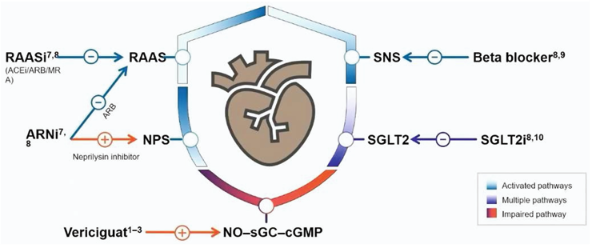
by Prateek Chopra | May 15, 2026 | Cardiology Conferences | ESC-HF 2026 The guideline-directed medical therapy (GDMT) has transformed the prognosis of heart failure with reduced ejec on frac on (HFrEF). The introduc on of the four founda onal pillars, ARNIs or ACE inhibitors, beta-blockers, Mineralocor coid receptor antagonists, and SGLT2 inhibitors, has substan ally reduced mortality and hospitaliza on.

GDMT in HFrEF: A Complete Story or a Par al Narrative? Read Post »

The HFrEF Medica on Toolkit for Pa ents Who Need More: From Evidence to Implementation

by Prateek Chopra | May 14, 2026 | Cardiology Conferences | ESC-HF 2026 The session highlighted that heart failure with reduced ejec on frac on (HFrEF) has entered a contemporary treatment era characterized by rapid and comprehensive implementa on of evidence-based therapies. Despite major advances with the four founda onal pillars, ACE inhibitors/ARNIs, beta-blockers, Mineralocor coid receptor antagonists, and SGLT2 inhibitors,

The HFrEF Medica on Toolkit for Pa ents Who Need More: From Evidence to Implementation Read Post »

Scroll to Top