
by Prateek Chopra | May 25, 2026 | Cardiology Conferences | ESC-HF 2026
Heart failure with reduced ejection fraction (HFrEF) remains associated with frequent hospitalizations, progressive ventricular remodeling, and high mortality despite optimal guideline-directed medical therapy (GDMT). The RELIEVE-HF trial was designed to evaluate whether unloading the left atrium with the V-Wave Ventura interatrial shunt could reduce congestion and improve clinical outcomes in symptomatic heart failure. The objective was to assess the efficacy, safety, and mechanistic effects of this device, with specific emphasis on differences between patients with HFrEF and heart failure with preserved ejection fraction (HFpEF). The findings were presented at Heart Failure 2026, organized by the European Society of Cardiology, held in Barcelona, Spain, from 9–12 May 2026.
RELIEVE-HF was a multicenter, randomized, double-blind, sham-controlled trial conducted across 114 sites. A total of 508 patients receiving maximally tolerated GDMT were randomized, including 206 with HFrEF (LVEF ≤40%) and 302 with HFpEF. The device consisted of a permanently implanted interatrial shunt with a 5 mm orifice, delivered through a 14 Fr catheter in approximately one hour. Median follow-up was 22 months, with 98.4% follow-up completeness.
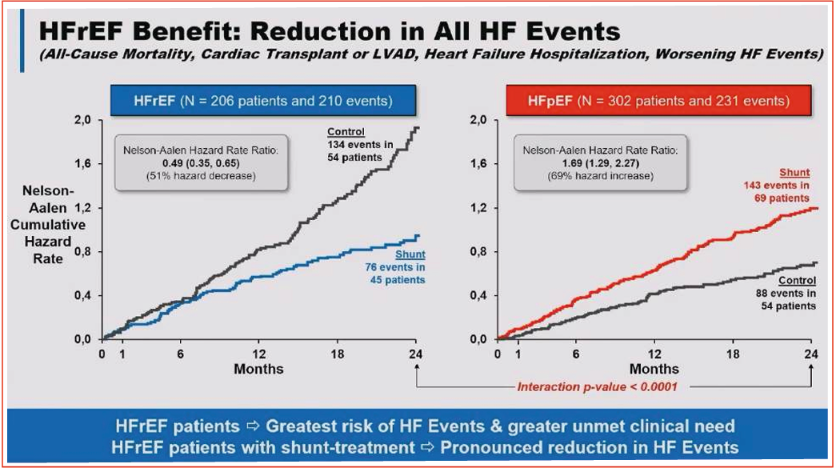
In HFrEF, the shunt reduced total heart failure events by 51% versus control (hazard ratio 0.49; 95% CI 0.35–0.65). All-cause mortality declined by 52%, left ventricular assist device implantation or heart transplantation was reduced by 85%, and heart failure hospitalizations were reduced by 54%. Echocardiographic analyses showed reverse left ventricular remodeling, reflected by reductions in LV end-diastolic volume. In contrast, HFpEF was associated with worse outcomes (hazard ratio 1.69). Safety outcomes were favorable, with 100% implant success, no device- or procedure-related major adverse cardiovascular or neurologic events, and no shunt embolization or adherent thrombus.
Interatrial shunt therapy was shown to be safe and clinically effective in appropriately selected patients with HFrEF, supporting a novel device-based strategy to complement GDMT and reduce heart failure burden.