
by Prateek Chopra | May 17, 2026 | Cardiology Conferences | ESC-HF 2026
Cardiorenal syndrome (CRS) remains a major therapeutic challenge, particularly in patients receiving renal replacement therapy, where evidence supporting guideline-directed Heart Failure (HF) therapies is limited. The management of these patients is often complicated by multiple comorbidities, fluid overload, and concerns regarding treatment tolerability and safety. This study aimed to evaluate the impact of HF prognostic therapies in patients with CRS undergoing renal replacement therapy and to assess the role of a dedicated cardiorenal unit (CRU) in optimizing treatment outcomes. The findings were presented at Heart Failure 2026, organized by the European Society of Cardiology, held in Barcelona, Spain, from 9–12 May 2026.
A retrospective observational study was conducted in patients with CRS receiving renal replacement therapy at a specialized Cardiorenal Unit. Data on comorbidities, laboratory parameters, echocardiographic findings, and HF treatment were collected. Subgroup analyses were performed according to left ventricular ejection fraction (LVEF) and renal replacement therapy modality. The impact of treatment optimization on functional status, drug up-titration, hospital admissions, and mortality was subsequently assessed.
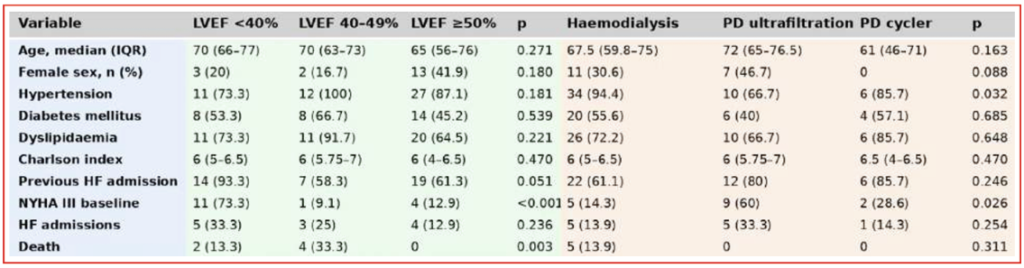
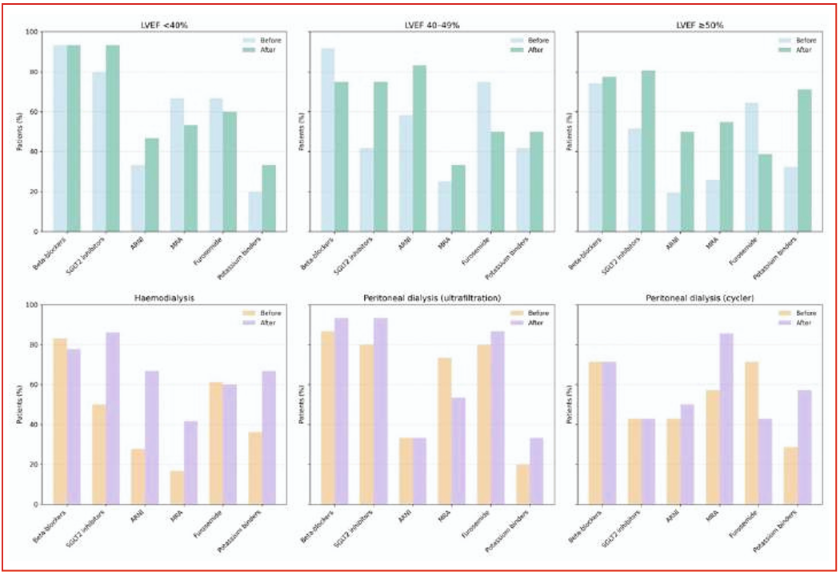
The study included 58 patients (69% men) with a mean age of 65.6 ± 12.5 years. The most common comorbidities were arterial hypertension (86.2%), dyslipidaemia (72.4%), and diabetes mellitus (51.7%), with a mean Charlson comorbidity index of 5.83 ± 2.04. Based on LVEF, 25.9% of patients had an ejection fraction <40%, 20.7% between 40–49%, and 53.4% ≥50%. Hemodialysis was the predominant renal replacement modality (62.1%), followed by peritoneal dialysis for ultrafiltration (25.9%) and automated peritoneal dialysis (12.1%). Patients with LVEF <40% had worse baseline functional class, although NYHA class improved across all groups following treatment optimization. Up-titration of HF prognostic therapies was achieved irrespective of ejection fraction or dialysis modality and was associated with reduced furosemide dose, suggesting improved congestion control. Potassium binder use increased significantly (50%), particularly among patients with preserved ejection fraction. During follow-up, 20.7% of patients required HF hospitalization and 10.3% died, while non-cardiovascular admissions were more frequent in patients receiving hemodialysis (27.8%).
The findings support the role of a multidisciplinary cardiorenal unit in optimizing HF therapies among patients receiving renal replacement therapy, contributing to improved functional status and reduced HF-related hospitalizations despite the complexity of this high-risk population.