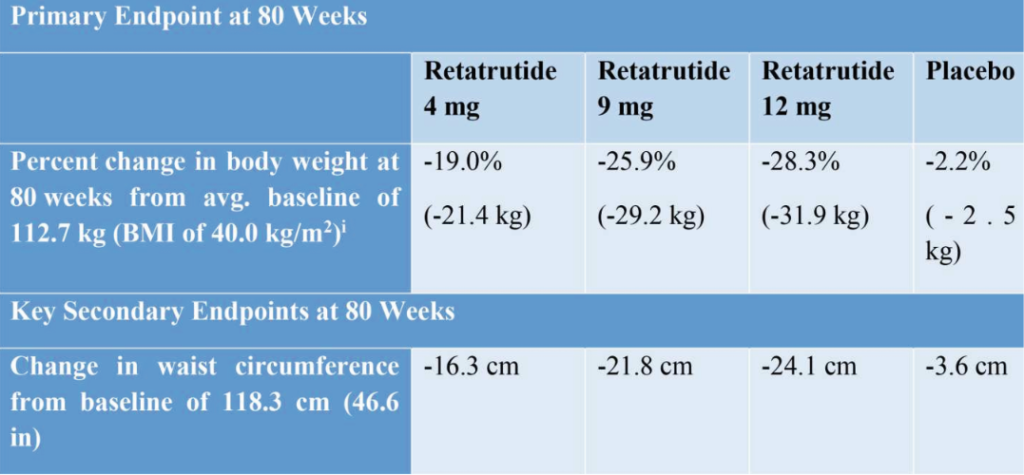
TRIUMPH-1 Trial: Results of First Phase 3 Study of Retatrutide, a GIP, GLP-1, and Glucagon Receptor Agonist in Patients with Obesity

by Prateek Chopra | June 29, 2026 | Diabetes Conferences | ADA 2026 Therapeutic Overview TRIUMPH-1 Trial Design Weight Loss Outcomes Impact on Obesity Status Cardiometabolic Benefits Effects on Obesity-Related Conditions Clinical Implications In the phase 3 TRIUMPH-1 trial, retatrutide produced marked and sustained weight loss, with many participants no longer meeting criteria for obesity after treatment. The associated improvements […]
TRIUMPH-1 Trial: Results of First Phase 3 Study of Retatrutide, a GIP, GLP-1, and Glucagon Receptor Agonist in Patients with Obesity Read Post »

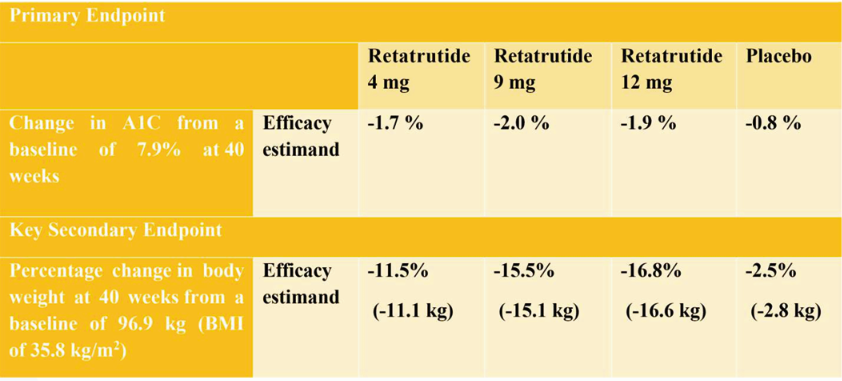
TRANSCEND-T2D-1: Results of First Phase 3 Study of Retatrutide, a GIP,GLP-1, and Glucagon Receptor Agonist in Patientswith T2D

by Prateek Chopra | June 29, 2026 | Diabetes Conferences | ADA 2026 Trial Overview Study Design Glycemic Outcomes Weight Loss Outcomes Cardiometabolic Benefits Safety Outcomes Clinical Implications In the TRANSCEND-T2D-1 trial, retatrutide produced substantial reductions in HbA1c and body weight, along with improvements in cardiovascular risk factors. These findings support its potential as an effective treatment option for managing

TRANSCEND-T2D-1: Results of First Phase 3 Study of Retatrutide, a GIP,GLP-1, and Glucagon Receptor Agonist in Patientswith T2D Read Post »

Optimising Prescribing in Type 2 Diabetes: Updating a Five-Drug Class Treatment Selection Model to Include NewerGLP-1 Receptor Agonists

by Prateek Chopra | June 29, 2026 | Diabetes Conferences | ADA 2026 Precision Medicine in T2D Methods Study Population Model Performance Key Findings Clinical Implications The updated five-drug class prediction model accurately predicts HbA1c responses to both oral and subcutaneous semaglutide. Successful external validation supports its use as a precision medicine tool for individualized treatment selection in type 2

Optimising Prescribing in Type 2 Diabetes: Updating a Five-Drug Class Treatment Selection Model to Include NewerGLP-1 Receptor Agonists Read Post »

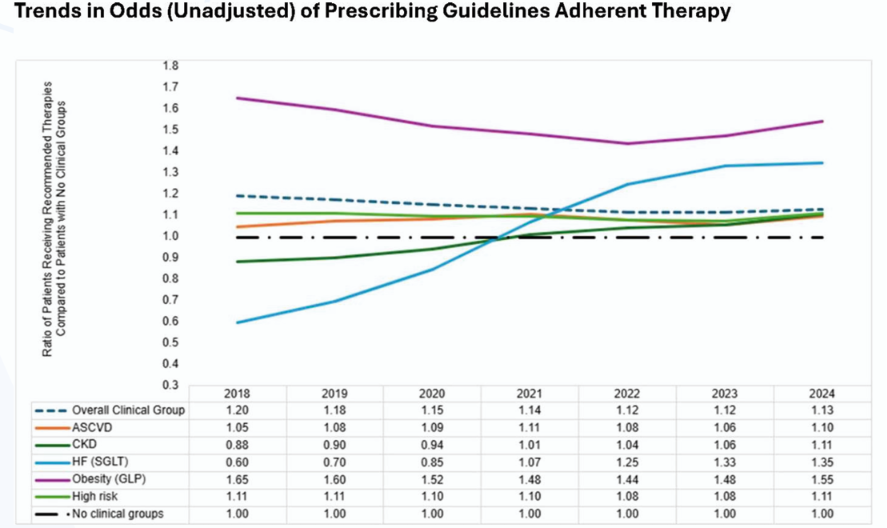
Adherence to Type 2 Diabetes Pharmacotherapy Guidelines: Six-Year Real-World Prescribing Analysis

by Prateek Chopra | June 28, 2026 | Diabetes Conferences | ADA 2026 Clinical Context Methods Trends in Guideline Adherence Adherence Across Clinical Groups Untreated Diabetes Remains a Concern Clinical Implications Guideline adherence in T2D pharmacotherapy improved substantially between 2018 and 2024; however, significant prescribing gaps and a growing proportion of untreated patients remain. Targeted interventions are needed to ensure

Adherence to Type 2 Diabetes Pharmacotherapy Guidelines: Six-Year Real-World Prescribing Analysis Read Post »

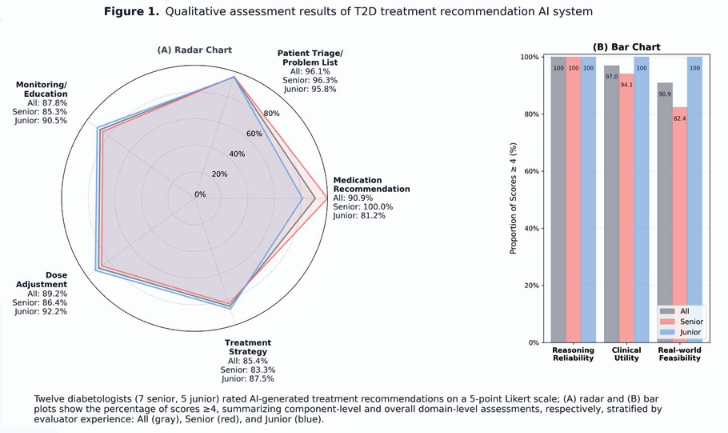
Toward Standardized Type 2 Diabetes Treatment Decisions: Diabetologist Evaluation of an Evidence-Citing Agentic AI for Real-World Care

by Prateek Chopra | June 28, 2026 | Diabetes Conferences | ADA 2026 Innovation Overview Key Functionalities Evaluation Approach Clinician Acceptability Ratings (Score ≥4) Key Findings Clinical Implications The agentic AI system generated evidence-based T2D treatment recommendations with high clinician acceptability across multiple decision-making domains. These findings highlight its potential to support standardized, reliable, and evidence-informed diabetes care in clinical

Toward Standardized Type 2 Diabetes Treatment Decisions: Diabetologist Evaluation of an Evidence-Citing Agentic AI for Real-World Care Read Post »

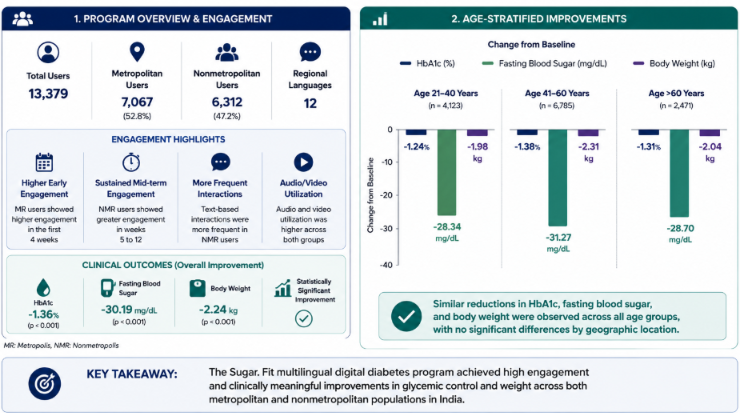
Real-World Evaluation of a Personalized, Multilingual Digital Diabetes Care Model across Metropolitan and Nonmetropolitan India

by Prateek Chopra | June 27, 2026 | Diabetes Conferences | ADA 2026 Program Overview Program Features Methods Study Population Engagement Patterns Clinical Outcomes Age-Stratified Findings Clinical Implications The Sugar.fit multilingual digital diabetes program achieved high engagement and clinically meaningful improvements in glycemic control and weight across both metropolitan and nonmetropolitan populations. These findings support the scalability and equity of

Real-World Evaluation of a Personalized, Multilingual Digital Diabetes Care Model across Metropolitan and Nonmetropolitan India Read Post »

Disparities in Sodium–Glucose Cotransporter Inhibitor Use: A Systematic Literature Review

by Prateek Chopra | June 27, 2026 | Diabetes Conferences | ADA 2026 Clinical Objective Methods Study Selection Key Findings Potential Contributors to Disparities Clinical Implications Evidence from this systematic review indicates persistent sociodemographic disparities in SGLT2 inhibitor utilization across the United States. Further research is needed to better understand the drivers of these inequities and develop strategies to improve

Disparities in Sodium–Glucose Cotransporter Inhibitor Use: A Systematic Literature Review Read Post »

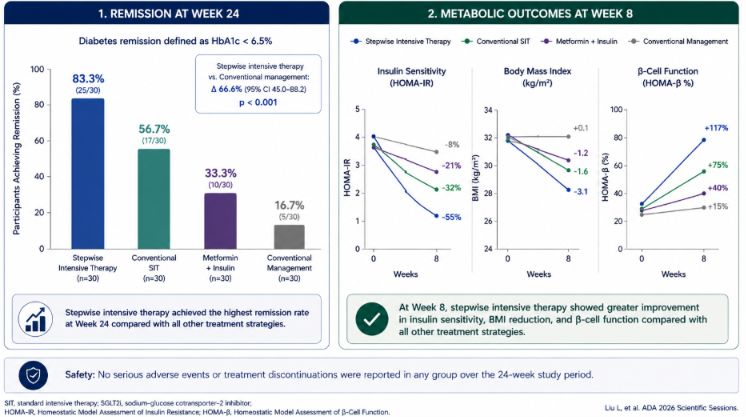
Efficacy and Safety of Simplified SGLT2i-Based Stepwise Intensive Therapy in Inducing Diabetes Remission in Newly Diagnosed Type 2 Diabetes with Severe Hyperglycemia: A Pilot Study

by Prateek Chopra | June 26, 2026 | Diabetes Conferences | ADA 2026 Study Objective Methods Primary Endpoint Study Population Remission Outcomes Metabolic Outcomes Safety SGLT2i-based stepwise intensive therapy achieved remission rates comparable to conventional SIT while providing greater improvements in insulin sensitivity and BMI. This simplified outpatient-oriented approach may offer a practical alternative to prolonged inpatient intensive insulin therapy

Efficacy and Safety of Simplified SGLT2i-Based Stepwise Intensive Therapy in Inducing Diabetes Remission in Newly Diagnosed Type 2 Diabetes with Severe Hyperglycemia: A Pilot Study Read Post »

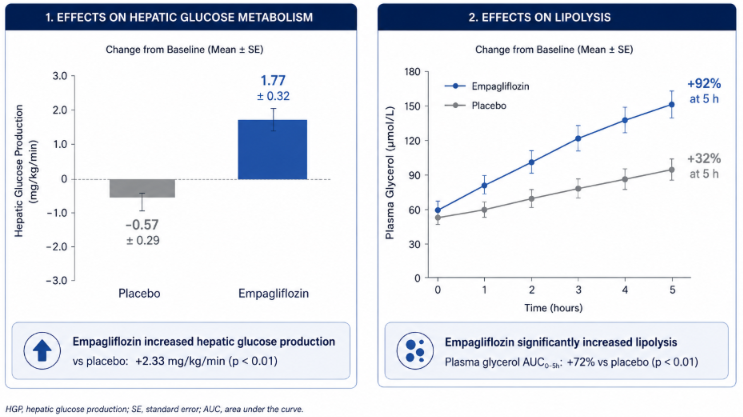
Effects of Empagliflozin on Hepatic Glucose Production, Gluconeogenesis, and Lipolysis in Type 2 Diabetes

by Prateek Chopra | June 26, 2026 | Diabetes Conferences | ADA 2026 Study Objective Methods Effects on Hepatic Glucose Metabolism Effects on Lipolysis Mechanistic Insights Clinical Implications Empagliflozin increased both gluconeogenesis and lipolysis in individuals with type 2 diabetes, with glycerol acting as an important gluconeogenic substrate. These compensatory metabolic responses help preserve hepatic glucose production and may explain

Effects of Empagliflozin on Hepatic Glucose Production, Gluconeogenesis, and Lipolysis in Type 2 Diabetes Read Post »

The Natural History of Type 2 Diabetes Varies Between Clinical Subphenotypes of At-Risk Individuals

by Prateek Chopra | June 25, 2026 | Diabetes Conferences | ADA 2026 Research Objective Methods High-Risk Metabolic Clusters Study Population Changes in Insulin Sensitivity Changes in Beta-Cell Function Adiposity Trajectories Clinical Implications High-risk metabolic subphenotypes follow different pathways toward the development of T2D. While progressive insulin resistance predominates in some individuals, accelerated beta-cell deterioration drives diabetes onset in others,

The Natural History of Type 2 Diabetes Varies Between Clinical Subphenotypes of At-Risk Individuals Read Post »

Scroll to Top