
by Prateek Chopra | June 28, 2026 | Diabetes Conferences | ADA 2026
Clinical Context
- The 2019 ADA Pharmacotherapy Guidelines promoted patient-centred treatment selection based on comorbidities such as ASCVD, heart failure (HF), chronic kidney disease (CKD), and obesity.
- This study evaluated real-world trends in guideline adherence from 2018 to 2024.
Methods
- A multi-year cross-sectional analysis was conducted using Veradigm Network Electronic Health Records.
- Eligible patients had T2D, available HbA1c and BMI data, and at least two consecutive years of EHR activity.
- Clinical groups included ASCVD, HF, CKD, and obesity.
Trends in Guideline Adherence
- Overall adherence increased from:
- 15.8% in 2018.
- 38.2% in 2024.
- Despite this improvement, adherence remained below 40% by 2024.
Adherence Across Clinical Groups
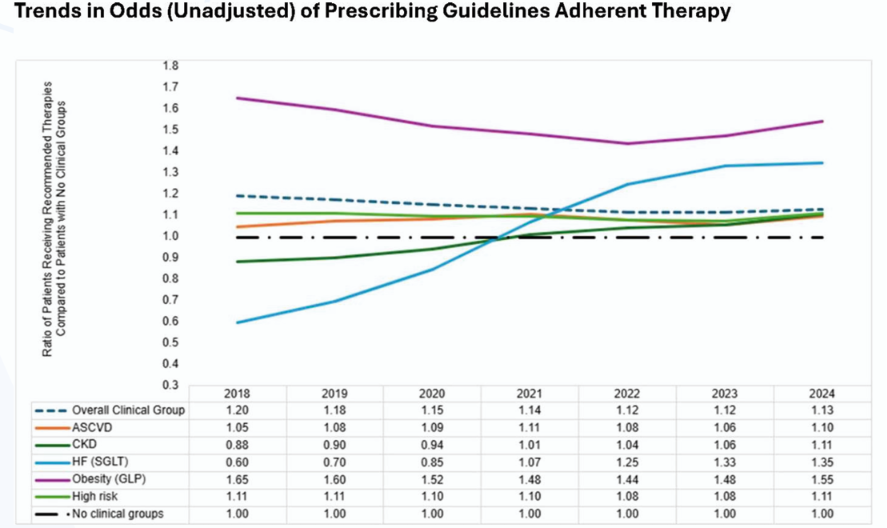
- The relative odds of guideline adherence in patients with qualifying comorbidities compared with those without comorbidities declined slightly:
- OR 1.20 in 2018.
- OR 1.13 in 2024.
- Obesity consistently showed the highest adherence rates.
- The greatest improvement was observed in patients with HF:
- OR 0.60 in 2018.
- OR 1.35 in 2024.
- 2024 adherence patterns:
- ASCVD: OR 1.10.
- HF: OR 1.35.
- Obesity: OR 1.55.
- Adherence remained variable across high-risk clinical groups.
Untreated Diabetes Remains a Concern
- The proportion of untreated T2D patients increased from:
- 21.1% in 2018.
- 35.7% in 2024.
Clinical Implications
- Adoption of evidence-based prescribing has improved over time.
- Important treatment gaps persist, particularly among patients with high-risk comorbidities.
- Efforts to improve implementation of guideline-directed therapy remain necessary.
Guideline adherence in T2D pharmacotherapy improved substantially between 2018 and 2024; however, significant prescribing gaps and a growing proportion of untreated patients remain. Targeted interventions are needed to ensure broader use of evidence-based therapies among eligible individuals.