
by Prateek Chopra | June 29, 2026 | Diabetes Conferences | ADA 2026
Therapeutic Overview
- Retatrutide is a novel triple hormone receptor agonist targeting GIP, GLP-1, and glucagon receptors.
- The therapy is designed to reduce appetite, enhance insulin response, increase energy expenditure, and promote fat metabolism.
TRIUMPH-1 Trial Design
- Phase 3, randomized, placebo-controlled trial.
- Enrolled 2,339 adults with obesity, including individuals with knee osteoarthritis and/or obstructive sleep apnea.
- Participants received once-weekly retatrutide 4 mg, 9 mg, 12 mg, or placebo for 80 weeks.
Weight Loss Outcomes
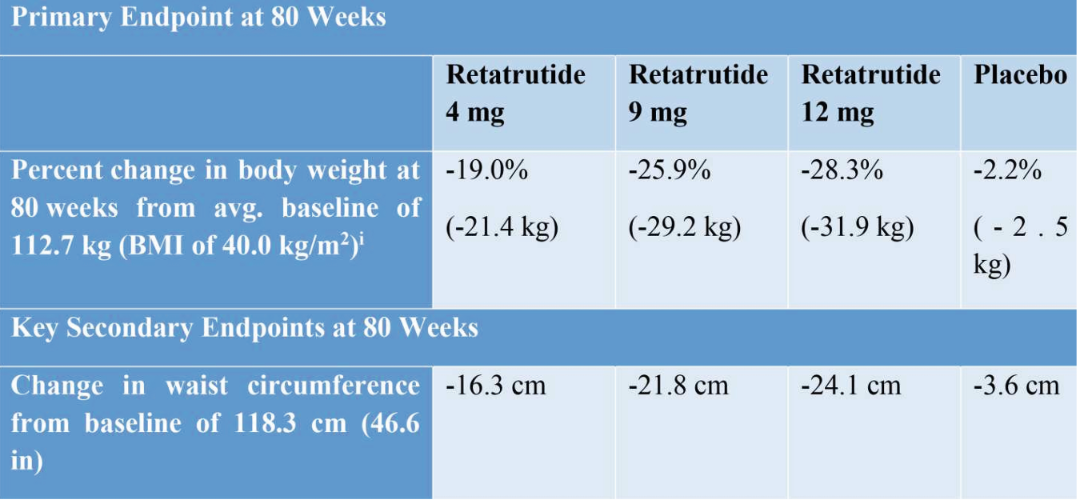
- Retatrutide produced substantial and clinically meaningful weight reduction across all dose groups.
- Mean weight loss at Week 80:
- 4 mg: 47.2 lbs (19.0%).
- 9 mg: 64.4 lbs (25.9%).
- 12 mg: 70.3 lbs (28.3%).
Impact on Obesity Status
- Among participants receiving retatrutide 12 mg, 65.3% achieved a BMI below 30 kg/m².
- Many participants transitioned below the threshold for obesity.
Cardiometabolic Benefits
- Significant improvements were observed in:
- Triglyceride levels.
- Systolic blood pressure.
- High-sensitivity C-reactive protein (hsCRP).
Effects on Obesity-Related Conditions
- Improvements were reported in:
- Knee osteoarthritis symptoms.
- Obstructive sleep apnea.
Clinical Implications
- Retatrutide demonstrated substantial weight reduction alongside improvements in multiple cardiometabolic risk factors.
- The therapy may offer a comprehensive approach to obesity management and related comorbidities.
In the phase 3 TRIUMPH-1 trial, retatrutide produced marked and sustained weight loss, with many participants no longer meeting criteria for obesity after treatment. The associated improvements in cardiometabolic risk factors and obesity-related complications support its potential as an effective treatment option for chronic weight management.