GLP-1 Receptor Agonists

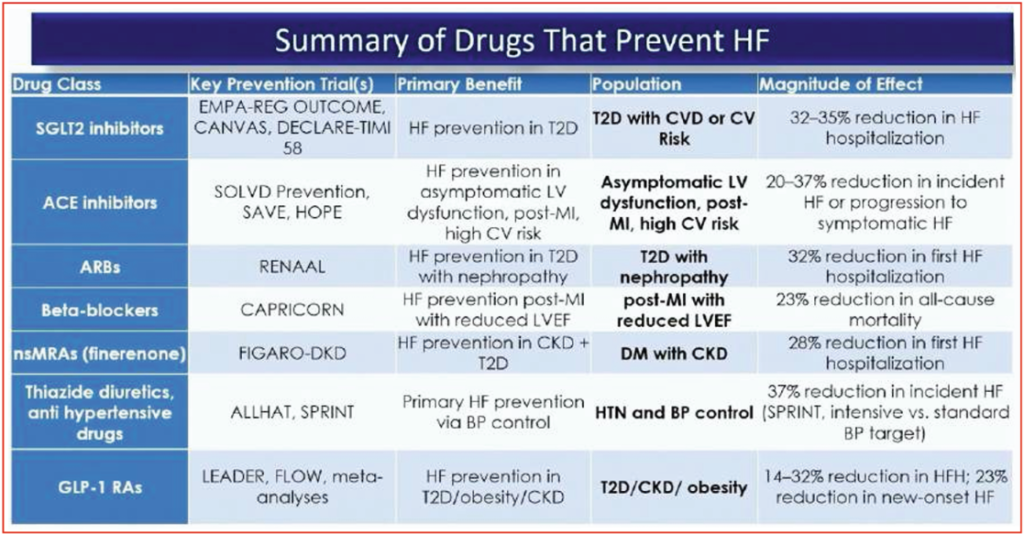
Which Drugs Prevent Heart Failure?

by Prateek Chopra | May 21, 2026 | Cardiology Conferences | ESC-HF 2026 Heart failure (HF) prevention has evolved from traditional risk-factor management to targeted pharmacologic intervention across the HF continuum. Contemporary evidence supports multiple cardiometabolic therapies that prevent incident HF, delay progression from pre-HF to symptomatic disease, and reduce HF hospitalization (HFH). The findings were presented at Heart Failure 2026, […]

Which Drugs Prevent Heart Failure? Read Post »
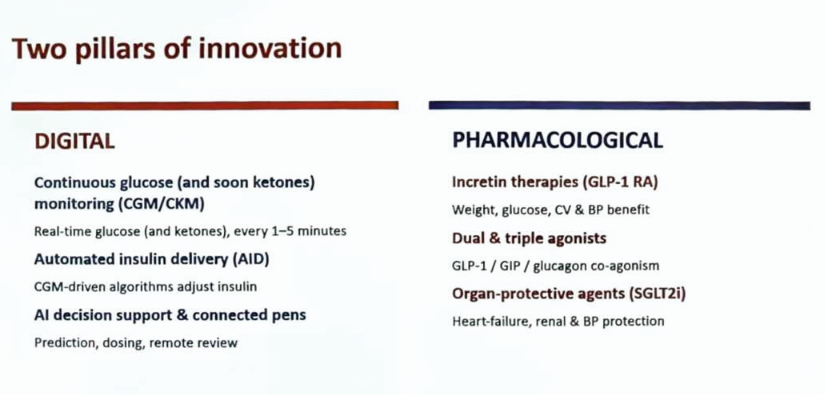
Digital and Pharmacologic Innovations in Diabetes

by Prateek Chopra | June 15, 2026 | Cardiology Conferences | ESH 2026 Unmet Cardiometabolic Need: Address the broader cardiometabolic burden in type 2 diabetes (T2DM), where ~75% of patients have concomitant hypertension and a 2–4× elevated cardiovascular (CV) risk. Treatment goals extend beyond glycemic control to include cardiovascular and renal protection, facilitated by digital health technologies and novel pharmacotherapies. Digital

Digital and Pharmacologic Innovations in Diabetes Read Post »

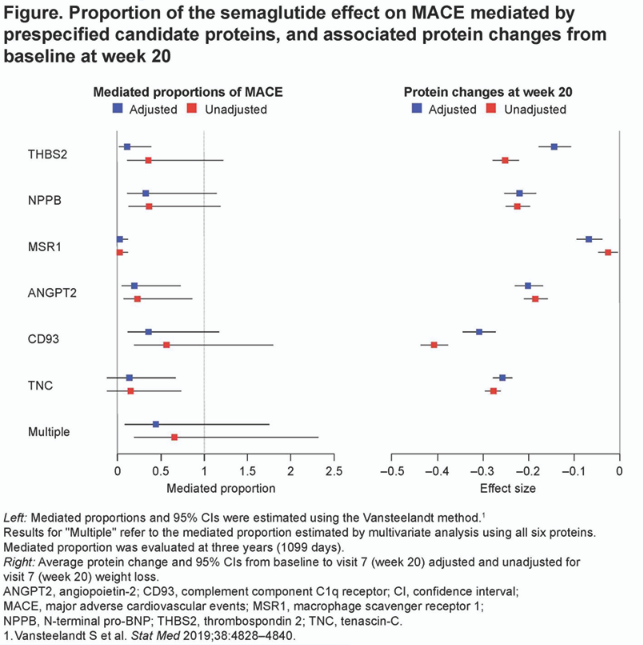
Serum Proteomics Suggest Novel Mechanisms of Action of Semaglutide in Reducing the Risk of MACE in the SELECT Trial

by Prateek Chopra | July 5, 2026 | Diabetes Conferences | ADA 2026 Mechanistic Insights Methods Key Findings Protein-Specific Effects Clinical Implications Four circulating proteins—THBS2, NPPB, ANGPT2, and CD93—mediated a substantial proportion of semaglutide’s cardiovascular benefit independent of weight loss. These findings provide new insights into the biological mechanisms underlying semaglutide’s cardioprotective effects.

Serum Proteomics Suggest Novel Mechanisms of Action of Semaglutide in Reducing the Risk of MACE in the SELECT Trial Read Post »

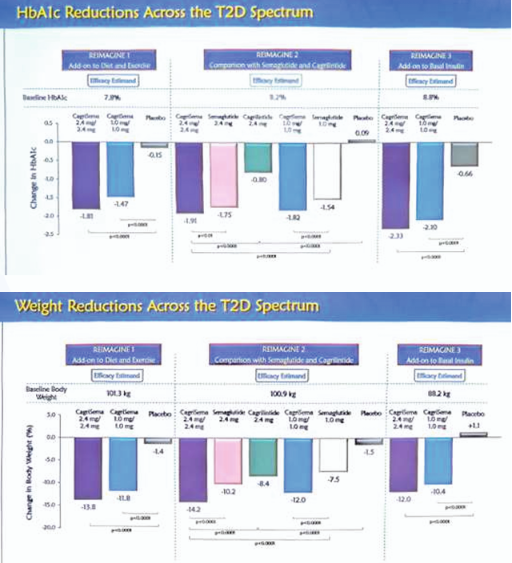
Insights from the REIMAGINE Trial: Robust Glycaemic Control and Meaningful Weight Loss with Cagri Sema Across DiverseT2D Population

by Prateek Chopra | June 29, 2026 | Diabetes Conferences | ADA 2026 Therapy Overview REIMAGINE Trial Programme Glycemic Outcomes Weight Loss Outcomes Benefits in Insulin-Treated T2D Safety Profile Clinical Implications The REIMAGINE programme showed that CagriSema delivers substantial improvements in glycemic control and body weight across diverse T2D populations. Its consistent efficacy and favorable safety profile support its potential

Insights from the REIMAGINE Trial: Robust Glycaemic Control and Meaningful Weight Loss with Cagri Sema Across DiverseT2D Population Read Post »

Optimising Prescribing in Type 2 Diabetes: Updating a Five-Drug Class Treatment Selection Model to Include NewerGLP-1 Receptor Agonists

by Prateek Chopra | June 29, 2026 | Diabetes Conferences | ADA 2026 Precision Medicine in T2D Methods Study Population Model Performance Key Findings Clinical Implications The updated five-drug class prediction model accurately predicts HbA1c responses to both oral and subcutaneous semaglutide. Successful external validation supports its use as a precision medicine tool for individualized treatment selection in type 2

Optimising Prescribing in Type 2 Diabetes: Updating a Five-Drug Class Treatment Selection Model to Include NewerGLP-1 Receptor Agonists Read Post »

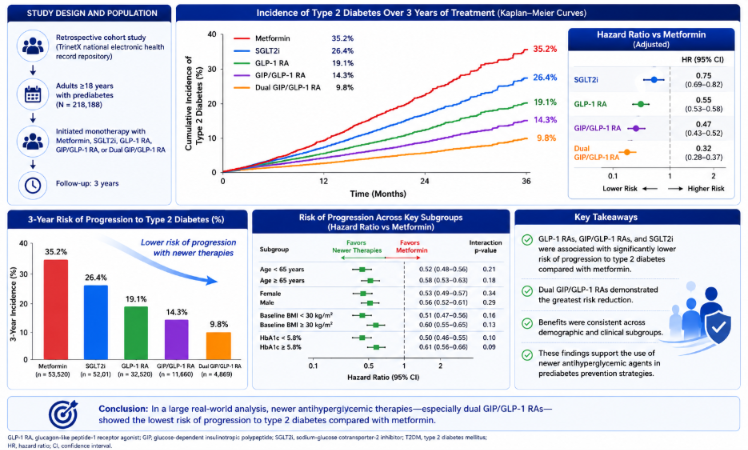
Prescribing Trends and Comparative Risk of Type 2 Diabetes Progression in Prediabetes by Antihyperglycemic Drug Class

by Prateek Chopra | June 24, 2026 | Diabetes Conferences | ADA 2026 Need for Diabetes Prevention Methods Primary Outcome Risk of Progression to Type 2 Diabetes Clinical Implications In this large real-world analysis, GLP-1RAs, GIP/GLP-1RAs, and SGLT2 inhibitors were associated with significantly lower rates of incident T2D compared with metformin. Among these therapies, GIP/GLP-1RAs provided the greatest protection against

Prescribing Trends and Comparative Risk of Type 2 Diabetes Progression in Prediabetes by Antihyperglycemic Drug Class Read Post »

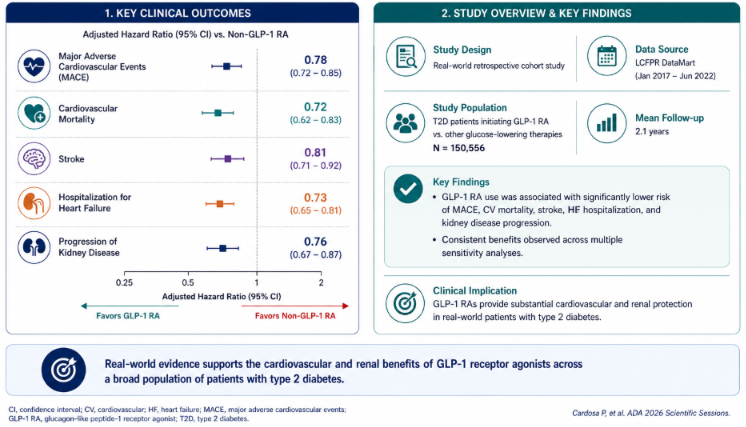
The Cardioprotective Effect of Glucagon-Like Peptide 1 Receptor Agonist ina Trial Inspired, And Wider, Population Individuals Living with Type 2Diabetes: A Target Trial Emulation Study in CPRD

by Prateek Chopra | June 23, 2026 | Diabetes Conferences | ADA 2026 Clinical Context Methods Study Population Cardiovascular Outcomes in the Trial-Matched Cohort Cardiovascular Outcomes in the Non-Trial Cohort Clinical Implications GLP-1RA therapy was associated with a lower risk of major adverse cardiovascular events among individuals meeting LEADER trial eligibility criteria but not among those outside the trial population.

The Cardioprotective Effect of Glucagon-Like Peptide 1 Receptor Agonist ina Trial Inspired, And Wider, Population Individuals Living with Type 2Diabetes: A Target Trial Emulation Study in CPRD Read Post »

A1C and BMI Changes by Sociodemographic Groups Among Patients UsingGLP-1 Receptor Agonists and Sodium-Glucose Cotransporter 2 Inhibitors(SGLT-2i) in a Large Integrated Health System

by Prateek Chopra | June 23, 2026 | Diabetes Conferences | ADA 2026 | 0 comments Clinical Relevance Methods Study Population Glycemic and Weight Outcomes Differences Across Demographic Groups Clinical Implications In a real-world healthcare setting, GLP-1 RA therapy was associated with clinically meaningful reductions in HbA1c and BMI among patients with T2DM and obesity. Greater benefits observed in specific racial, ethnic,

A1C and BMI Changes by Sociodemographic Groups Among Patients UsingGLP-1 Receptor Agonists and Sodium-Glucose Cotransporter 2 Inhibitors(SGLT-2i) in a Large Integrated Health System Read Post »

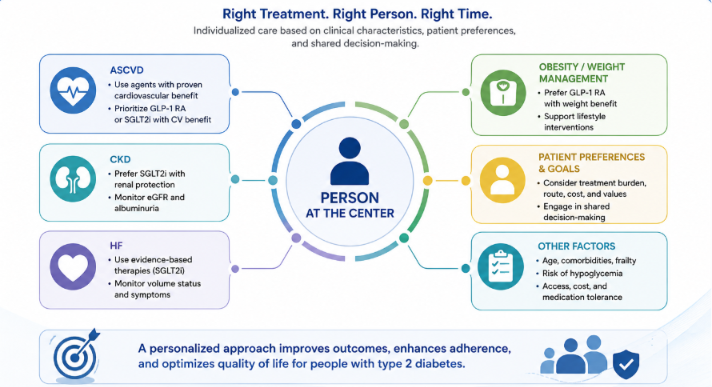
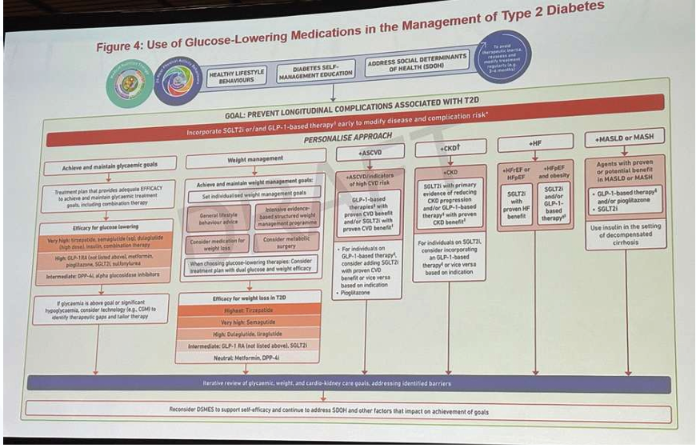
Personalized Approach to Treatment Based on IndividualCharacteristics and Associated Long-Term Conditions

by Prateek Chopra | June 21, 2026 | Diabetes Conferences | ADA 2026 | 0 comments Evolving Treatment Approach: Management of Atherosclerotic Cardiovascular Disease (ASCVD): Management of Heart Failure and Chronic Kidney Disease: Obesity-Focused Treatment Strategies: Factors Influencing Treatment Selection: Principles of Personalized Care: Personalized diabetes care enables treatment decisions to be aligned with each individual’s cardiovascular, renal, metabolic, and obesity-related risk

Personalized Approach to Treatment Based on IndividualCharacteristics and Associated Long-Term Conditions Read Post »

Scroll to Top