
by Prateek Chopra | June 26, 2026 | Diabetes Conferences | ADA 2026
Study Objective
- This study investigated the effects of empagliflozin on hepatic glucose production (HGP), gluconeogenesis, and lipolytic activity in individuals with type 2 diabetes.
- The aim was to better understand the mechanisms underlying the compensatory increase in endogenous glucose production observed with SGLT2 inhibitor therapy.
Methods
- Fifteen individuals with type 2 diabetes participated in a tracer-based metabolic study.
- Mean age: 57 ± 2 years.
- Mean HbA1c: 9.0 ± 1.0%.
- Mean BMI: 31 ± 1.5 kg/m².
- Participants received a single dose of empagliflozin 25 mg, and metabolic responses were assessed over 5 hours.
Effects on Hepatic Glucose Metabolism
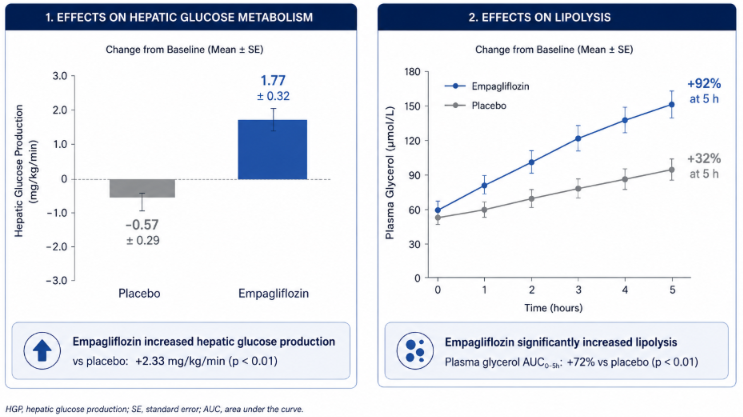
- Baseline hepatic glucose production (HGP): 2.33 mg/kg/min.
- Post-empagliflozin HGP: 2.43 mg/kg/min.
- Overall, HGP remained unchanged despite treatment.
- Gluconeogenesis increased significantly:
- Baseline: 1.57 mg/kg/min.
- Post-treatment: 1.77 mg/kg/min (P<0.01).
Effects on Lipolysis
- Glycerol rate of appearance increased from 3.57 to 4.02 μmol/kg/min (P<0.01).
- Plasma glycerol concentrations increased from 134 to 157 μmol/L (P<0.01).
- Free fatty acid levels increased from 0.51 to 0.71 μmol/L (P<0.01).
Mechanistic Insights
- Empagliflozin stimulated lipolysis and increased the availability of glycerol.
- Glycerol served as a major substrate for enhanced gluconeogenesis.
- Increased gluconeogenesis helped maintain hepatic glucose production despite urinary glucose loss.
Clinical Implications
- These findings provide insight into the metabolic adaptations associated with SGLT2 inhibitor therapy.
- Maintenance of hepatic glucose production may contribute to the low risk of hypoglycemia observed with this drug class.
Empagliflozin increased both gluconeogenesis and lipolysis in individuals with type 2 diabetes, with glycerol acting as an important gluconeogenic substrate. These compensatory metabolic responses help preserve hepatic glucose production and may explain the favorable hypoglycemia profile of SGLT2 inhibitors.