
by Prateek Chopra | June 24, 2026 | Diabetes Conferences | ADA 2026
Need for Diabetes Prevention
- Prediabetes is associated with a high risk of progression to type 2 diabetes (T2D).
- While metformin is commonly used for diabetes prevention, newer antihyperglycemic therapies may offer greater metabolic benefits and improved diabetes risk reduction.
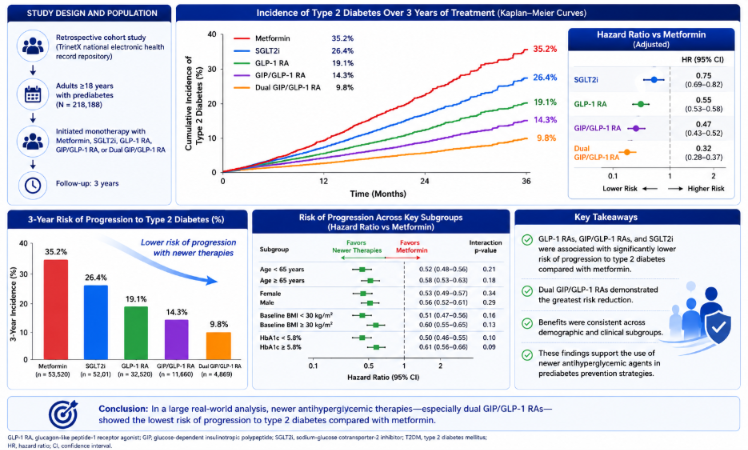
- This study compared the effectiveness of GLP-1 receptor agonists (GLP-1RAs), dual GIP/GLP-1 receptor agonists (GIP/GLP-1RAs), and SGLT2 inhibitors with metformin for preventing incident T2D.
Methods
- A retrospective cohort study was conducted using data from the TriNetX national electronic health record repository.
- Adults aged ≥18 years with prediabetes who initiated monotherapy with metformin, SGLT2i, GLP-1RAs, or GIP/GLP-1RAs within three months of diagnosis were included.
- Individuals with pre-existing diabetes were excluded.
- Treatment groups underwent 1:1 propensity score matching based on demographics, comorbidities, laboratory values, and cardiometabolic medications.
Primary Outcome
- Incident T2D within three years of treatment initiation.
Risk of Progression to Type 2 Diabetes
- GLP-1RAs were associated with a 45% lower risk of incident T2D compared with metformin:
- n=32,520
- HR 0.55 (95% CI: 0.53–0.58; p<0.0001)
- GIP/GLP-1RAs demonstrated the greatest preventive benefit:
- n=11,680
- HR 0.47 (95% CI: 0.43–0.52; p<0.001)
- SGLT2 inhibitors reduced the risk of progression to T2D by 25% compared with metformin:
- n=5,201
- HR 0.75 (95% CI: 0.69–0.82; p<0.0001)
Clinical Implications
- Incretin-based therapies were associated with substantially greater reductions in diabetes risk than metformin.
- GIP/GLP-1RAs demonstrated the most pronounced preventive effect among the evaluated therapies.
- These findings support the potential role of newer antihyperglycemic agents in diabetes prevention strategies for individuals with prediabetes.
In this large real-world analysis, GLP-1RAs, GIP/GLP-1RAs, and SGLT2 inhibitors were associated with significantly lower rates of incident T2D compared with metformin. Among these therapies, GIP/GLP-1RAs provided the greatest protection against progression to diabetes, highlighting their potential value in preventive diabetes care.