
Cardiovascular Disease

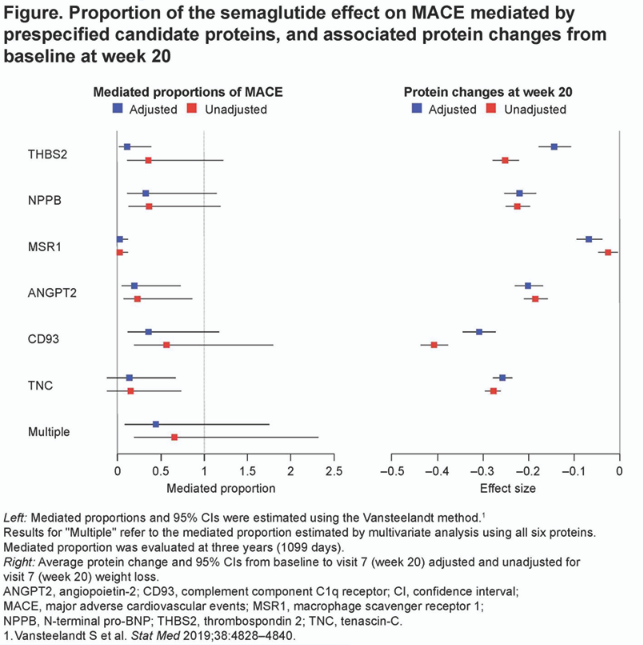
Serum Proteomics Suggest Novel Mechanisms of Action of Semaglutide in Reducing the Risk of MACE in the SELECT Trial

by Prateek Chopra | July 5, 2026 | Diabetes Conferences | ADA 2026 Mechanistic Insights Methods Key Findings Protein-Specific Effects Clinical Implications Four circulating proteins—THBS2, NPPB, ANGPT2, and CD93—mediated a substantial proportion of semaglutide’s cardiovascular benefit independent of weight loss. These findings provide new insights into the biological mechanisms underlying semaglutide’s cardioprotective effects.

Serum Proteomics Suggest Novel Mechanisms of Action of Semaglutide in Reducing the Risk of MACE in the SELECT Trial Read Post »

Biomarkers: Which Ones Are Worthwhile? (Personalised Risk)

by Prateek Chopra | June 11, 2026 | Diabetes Conferences | ADA 2026 | 0 comments Background: Cardiovascular disease (CVD) remains the leading cause of morbidity and mortality in individuals with type 2 diabetes (T2D), despite advances in risk factor management. Accurate risk stratification is essential to identify high-risk individuals and guide personalized preventive strategies.

Biomarkers: Which Ones Are Worthwhile? (Personalised Risk) Read Post »

Rates of Cardiovascular Disease and Heart Failure Among Diabetes Subtypes Relative to Adults Without Diabetes

by Prateek Chopra | June 11, 2026 | Diabetes Conferences | ADA 2026 | 0 comments Study Design: T2D Subtype Classification: Population Characteristics: Cardiovascular Outcomes: Key Findings: Clinical Implications: Although all T2D subtypes were associated with increased cardiovascular risk, Severe Insulin-Deficient Diabetes (SIDD) carried the highest burden of ASCVD and heart failure. These findings support

Rates of Cardiovascular Disease and Heart Failure Among Diabetes Subtypes Relative to Adults Without Diabetes Read Post »

Scroll to Top