
by Prateek Chopra | June 23, 2026 | Diabetes Conferences | ADA 2026 | 0 comments
Clinical Relevance
- GLP-1 receptor agonists (GLP-1 RAs) and sodium-glucose cotransporter-2 inhibitors (SGLT2i) have demonstrated significant benefits in improving glycemic control and reducing body weight in individuals with type 2 diabetes mellitus (T2DM).
- This study evaluated real-world changes in HbA1c and BMI following initiation of these therapies and explored outcomes across different demographic subgroups.
Methods
- A retrospective analysis was conducted within a large integrated healthcare system in Northern California between 2022 and 2025.
- Adults with T2DM and obesity who initiated GLP-1 RA or SGLT2i therapy were included.
- Outcomes were assessed within six months of treatment initiation.
Study Population
- HbA1c data were available for 9,702 patients.
- BMI measurements were available for 10,749 patients at six months.
Glycemic and Weight Outcomes
- Patients initiating GLP-1 RA therapy experienced:
- A reduction of 1.0% in HbA1c.
- A reduction of 1.1 kg/m² in BMI.
- Clinically meaningful improvements were observed within six months of treatment initiation.
Differences Across Demographic Groups
- Greater reductions in HbA1c and BMI were observed among:
- American Indian/Alaska Native individuals.
- Native Hawaiian/Pacific Islander individuals.
- Younger adults.
- These groups demonstrated the most pronounced treatment responses.
Clinical Implications
- Real-world use of GLP-1 RA therapy is associated with significant improvements in glycemic control and body weight among individuals with T2DM and obesity.
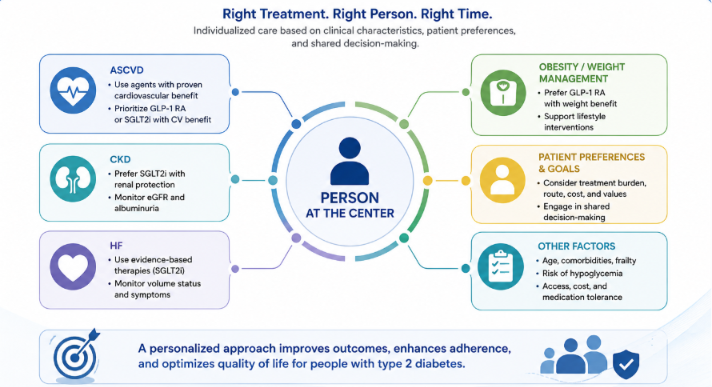
- Understanding demographic variations in treatment response may help support more personalized approaches to diabetes and obesity management.
In a real-world healthcare setting, GLP-1 RA therapy was associated with clinically meaningful reductions in HbA1c and BMI among patients with T2DM and obesity. Greater benefits observed in specific racial, ethnic, and younger populations may help guide individualized treatment strategies and improve diabetes care outcomes.