Blood Pressure Control

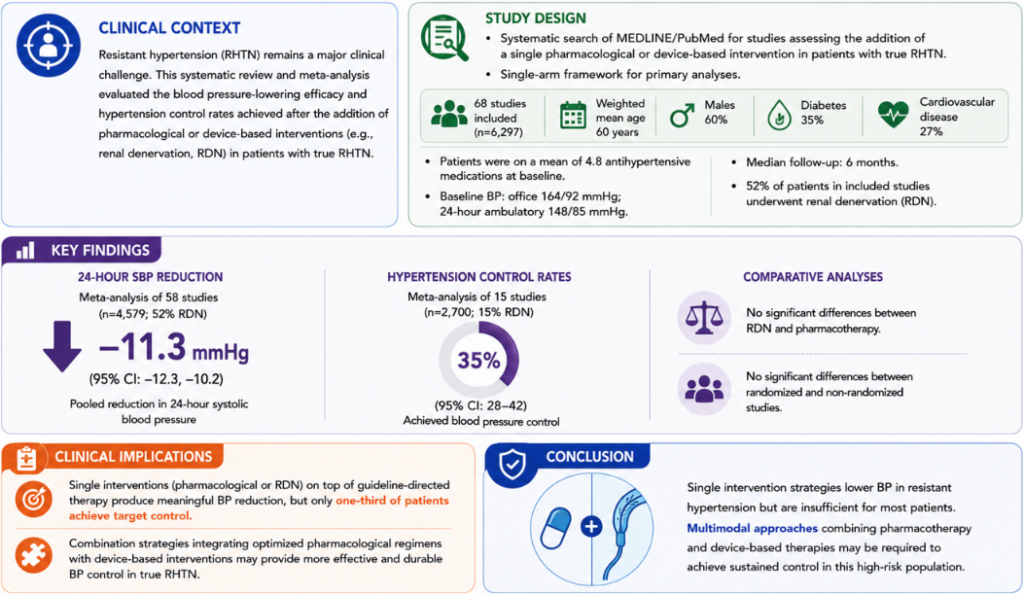
Blood Pressure Lowering Effects of Pharmacological and Device Based Interventions for Resistant Hypertension: A Systematic Review and Meta-Analysis

by Prateek Chopra | June 17, 2026 | Cardiology Conferences | ESH 2026 Clinical Context: Resistant hypertension (RHTN) remains a major clinical challenge. This systematic review and meta-analysis evaluated the blood pressure-lowering efficacy and hypertension control rates achieved after the addition of pharmacological or device-based interventions (e.g., renal denervation, RDN) in patients with true RHTN. Study Design: Key Findings: Clinical Implications: […]
Blood Pressure Lowering Effects of Pharmacological and Device Based Interventions for Resistant Hypertension: A Systematic Review and Meta-Analysis Read Post »

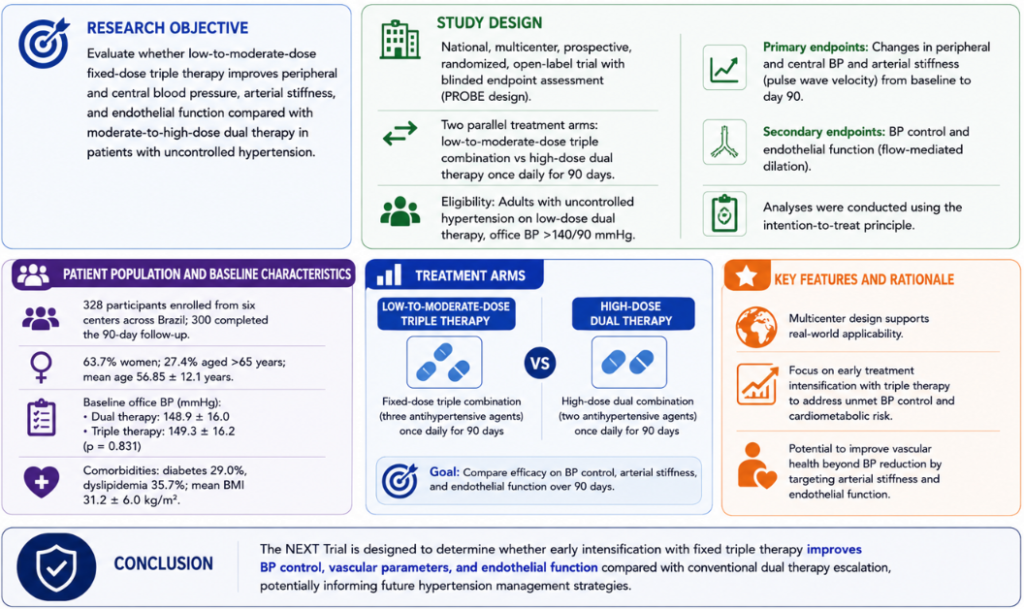
A Fixed-Dose Triple-Combination Therapy for the Initial Steps of Hypertension Treatment: Protocol for the NEXT RandomizedClinical Trial

by Prateek Chopra | June 15, 2026 | Cardiology Conferences | ESH 2026 Research Objective: Evaluate whether low-to-moderate-dose fixed-dose triple therapy improves peripheral and central blood pressure, arterial stiffness, and endothelial function compared with moderate-to-high-dose dual therapy in patients with uncontrolled hypertension. Study Design: Patient Population and Baseline Characteristics: Key Features and Rationale: The NEXT Trial is designed to determine whether

A Fixed-Dose Triple-Combination Therapy for the Initial Steps of Hypertension Treatment: Protocol for the NEXT RandomizedClinical Trial Read Post »

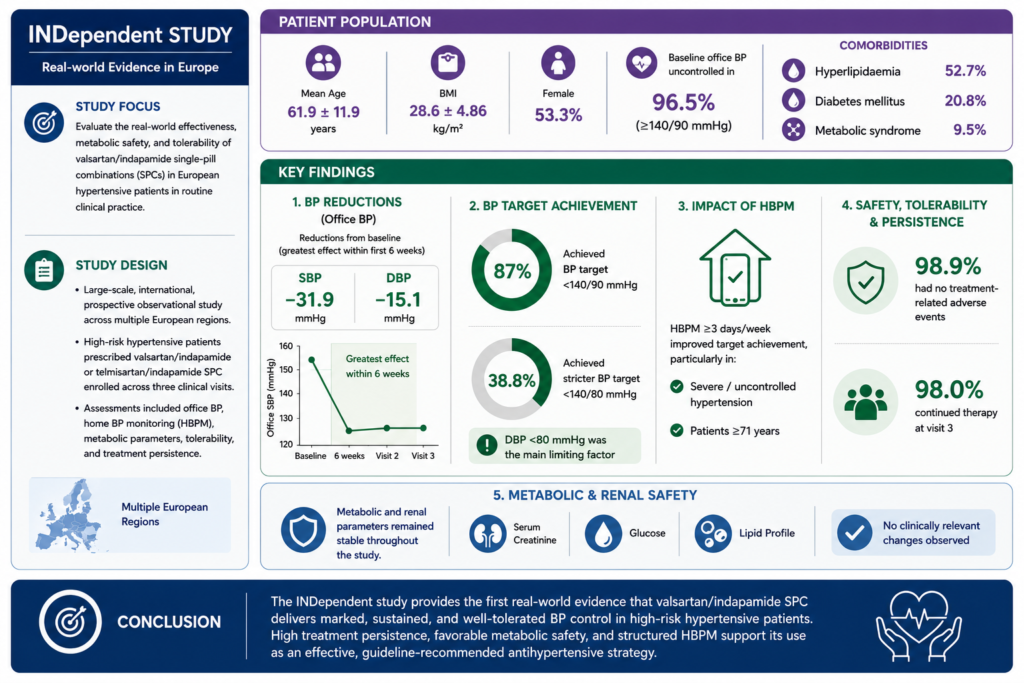
The INDependent Study: First Real-World Clinical Experience with an ARB/Indapamide Single-Pill Combination

by Prateek Chopra | June 11, 2026 | Cardiology Conferences | ESH 2026 Study Focus: Evaluate the real-world effectiveness, metabolic safety, and tolerability of valsartan/indapamide single-pill combinations (SPCs) in European hypertensive patients in routine clinical practice. Study Design: Patient Population: Key Findings: The INDependent study provides the first real-world evidence that valsartan/indapamide SPC delivers marked, sustained, and well-tolerated BP control in

The INDependent Study: First Real-World Clinical Experience with an ARB/Indapamide Single-Pill Combination Read Post »

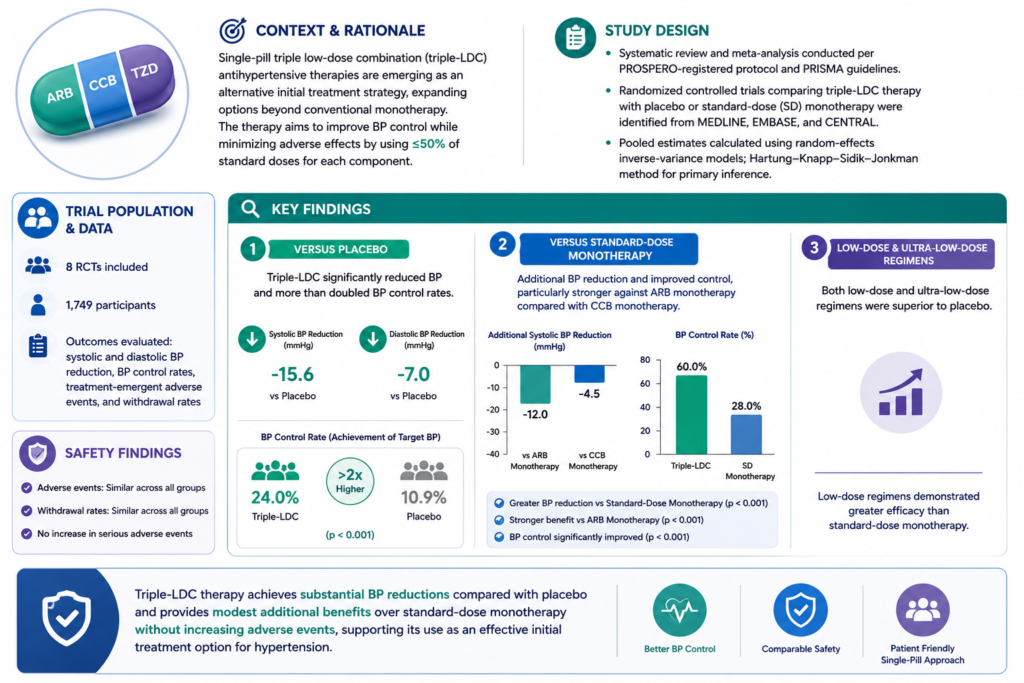
Efficacy and Safety of Initial Low-Dose Triple CombinationTherapy for Hypertension: A Systematic Review and Meta-Analysis

by Prateek Chopra | June 10, 2026 | Cardiology Conferences | ESH 2026 Context and Rationale: Single-pill triple low-dose combination (triple-LDC) antihypertensive therapies have emerged as an alternative initial treatment strategy, expanding options beyond conventional monotherapy. The therapy aims to improve BP control while minimizing adverse effects by using ≤50% of standard doses for each component. Study Design: Trial Population and

Efficacy and Safety of Initial Low-Dose Triple CombinationTherapy for Hypertension: A Systematic Review and Meta-Analysis Read Post »

Effects of a New Low-Dose Triple Single-Pill Antihypertensive Combination on Electrolytes and Creatinine Compared to Placebo and Dual Therapies

by Prateek Chopra | June 9, 2026 | Cardiology Conferences | ESH 2026 Therapeutic Context: Triple SPCs containing three low-dose antihypertensive agents are emerging as a promising strategy for improving BP control. GMRx2 (telmisartan/amlodipine/indapamide; WIDAPLIK) was recently FDA-approved, and its effects on serum electrolytes and renal function were evaluated against placebo and dual-combination therapies. Study Design: Placebo-Controlled Trial Findings: Active-Controlled Trial

Effects of a New Low-Dose Triple Single-Pill Antihypertensive Combination on Electrolytes and Creatinine Compared to Placebo and Dual Therapies Read Post »

From Guidelines to Adherence – Driven Outcomes: The Value of SPCs

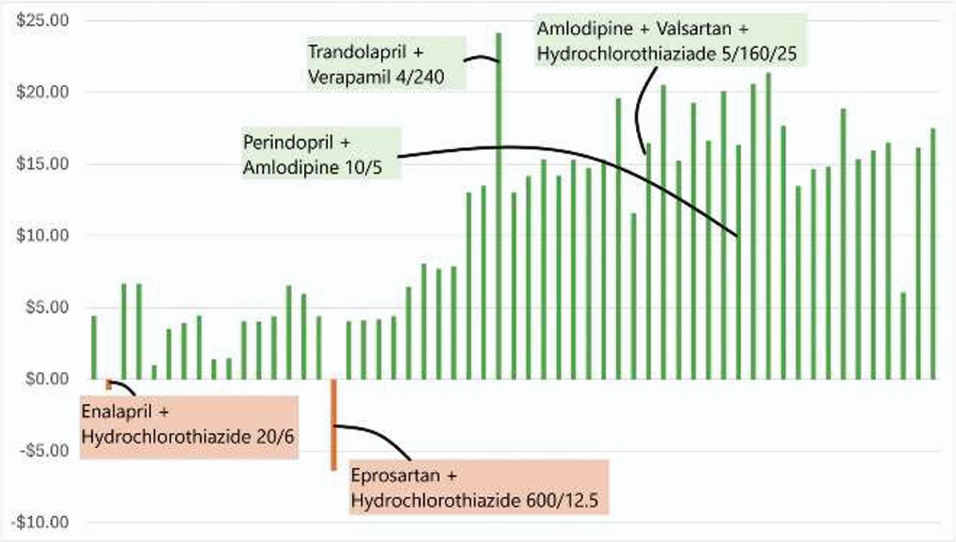
by Prateek Chopra | June 9, 2026 | Cardiology Conferences | ESH 2026 Enhanced Adherence and Persistence: Blood Pressure Reduction: Cardiovascular Outcomes & Mortality: Real-World Cost and Implementation: Single-pill combinations represent an effective, evidence-based, and cost-efficient strategy for hypertension management. They consistently improve adherence, accelerate BP control, reduce cardiovascular and stroke events, and lower healthcare costs compared with free-drug combinations, supporting

From Guidelines to Adherence – Driven Outcomes: The Value of SPCs Read Post »

Triple SPCs: Simplifying Treatment, Strengthening Control

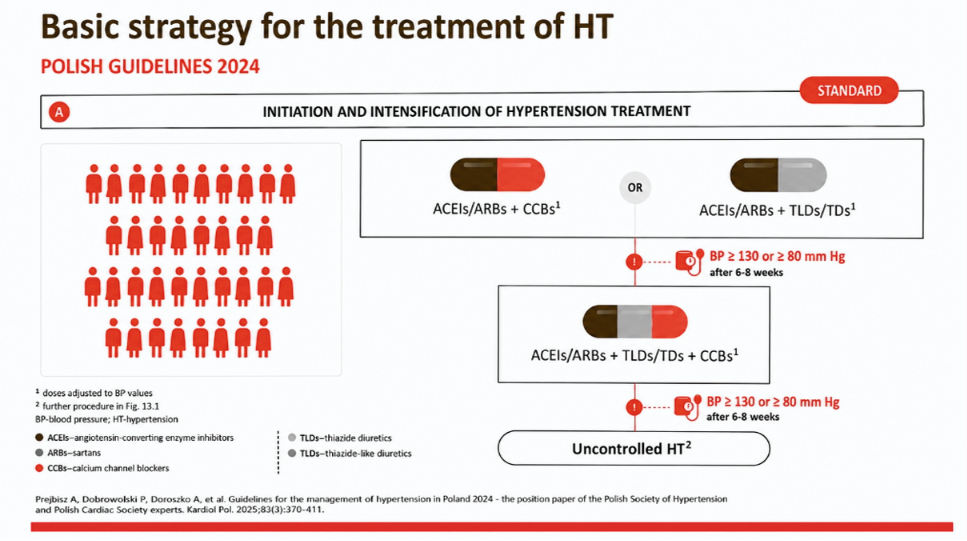
by Prateek Chopra | June 8, 2026 | Cardiology Conferences | ESH 2026 Simplifying Hypertension Care: Despite hypertension being a leading contributor to cardiovascular morbidity and mortality, BP control remains suboptimal due to poor adherence, therapeutic inertia, and complex multi-drug regimens. Triple single-pill combinations (SPCs) simplify therapy, improve adherence, accelerate BP target attainment, and enhance long-term cardiovascular outcomes. Guideline-Based Recommendations: Real-World

Triple SPCs: Simplifying Treatment, Strengthening Control Read Post »

Low-dose Combinations with 3 or 4 Blood Pressure-LoweringMedications for the Treatment of Hypertension

by Prateek Chopra | June 5, 2026 | Cardiology Conferences | ESH 2026 Study Objective: Evaluate early low-dose triple and quadruple antihypertensive therapy versus stepwise monotherapy across diverse ethnic populations, synthesizing evidence from six landmark RCTs: QUARTET (n=591), TRIUMPH (n=700), QUADRO (n=183), Trident Trial (~1,670), VERONICA (n=300), and CREOLE (n=728). Outcomes included BP reduction, hypertension control, tolerability, and fourth-agent selection in

Low-dose Combinations with 3 or 4 Blood Pressure-LoweringMedications for the Treatment of Hypertension Read Post »

Scroll to Top