
by Prateek Chopra | June 11, 2026 | Cardiology Conferences | ESH 2026
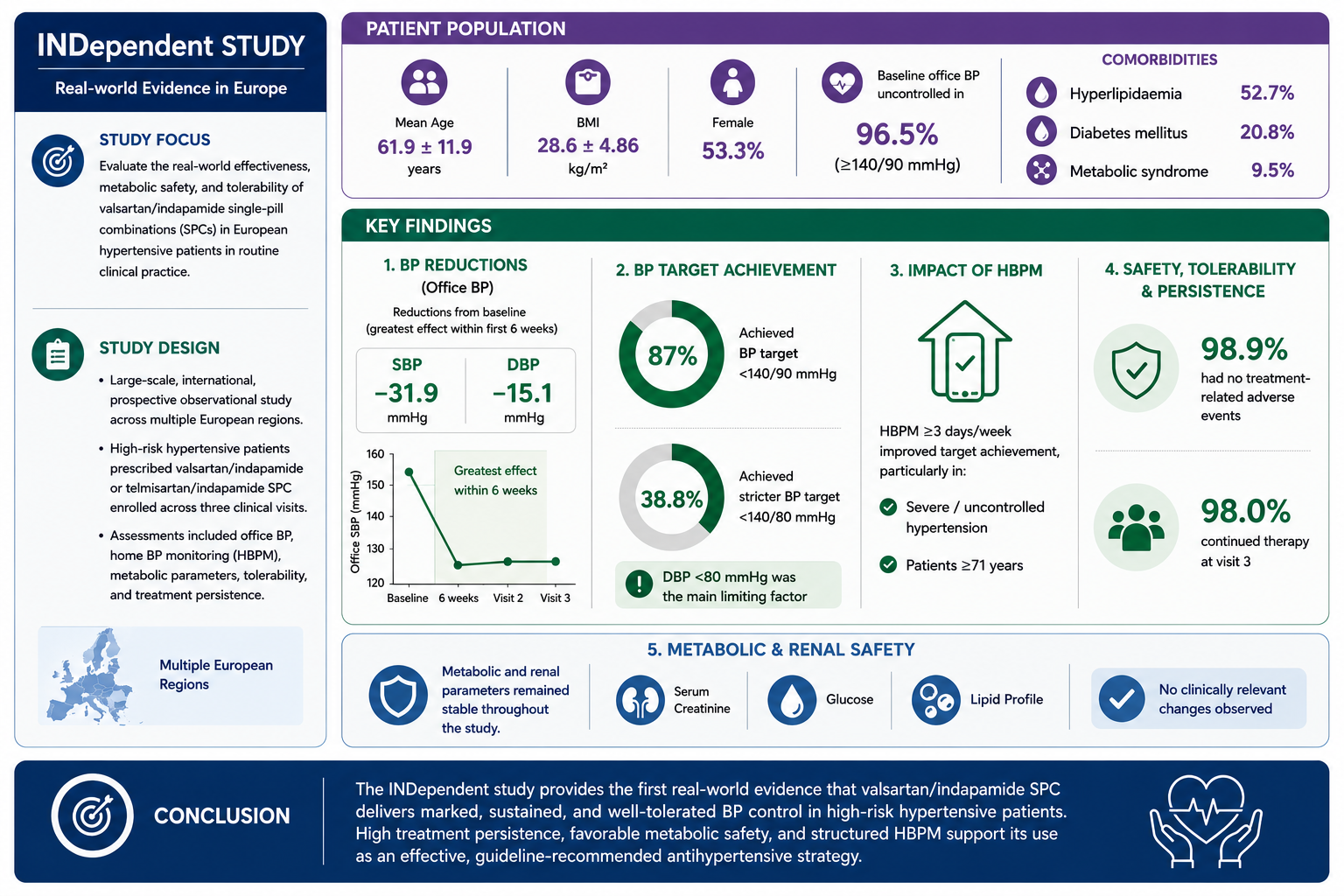
Study Focus:
Evaluate the real-world effectiveness, metabolic safety, and tolerability of valsartan/indapamide single-pill combinations (SPCs) in European hypertensive patients in routine clinical practice.
Study Design:
- Large-scale, international, prospective observational study across multiple European regions.
- High-risk hypertensive patients prescribed valsartan/indapamide or telmisartan/indapamide SPC enrolled across three clinical visits.
- Assessments included office BP, home BP monitoring (HBPM), metabolic parameters, tolerability, and treatment persistence.
Patient Population:
- Mean age: 61.9 ± 11.9 years; BMI: 28.6 ± 4.86 kg/m²; 53.3% female.
- Baseline office BP uncontrolled in 96.5% (≥140/90 mmHg).
- Comorbidities: hyperlipidaemia 52.7%, diabetes mellitus 20.8%, metabolic syndrome 9.5%.
Key Findings:
- BP reductions: office SBP −31.9 mmHg, DBP −15.1 mmHg, greatest effect within first 6 weeks.
- BP target <140/90 mmHg achieved in 87% of patients; stricter <140/80 mmHg reached by 38.8%, with DBP <80 mmHg as main limiting factor.
- HBPM ≥3 days/week improved target attainment, particularly in severe/uncontrolled HTN or patients ≥71 years.
- Metabolic and renal parameters (serum creatinine, glucose, lipid profile) remained stable.
- Treatment well tolerated: 98.9% had no treatment-related adverse events; 98.0% continued therapy at visit 3.
The INDependent study provides the first real-world evidence that valsartan/indapamide SPC delivers marked, sustained, and well-tolerated BP control in high-risk hypertensive patients. High treatment persistence, favorable metabolic safety, and structured HBPM support its use as an effective, guideline-recommended antihypertensive strategy.