
by Prateek Chopra | June 9, 2026 | Cardiology Conferences | ESH 2026
Therapeutic Context:
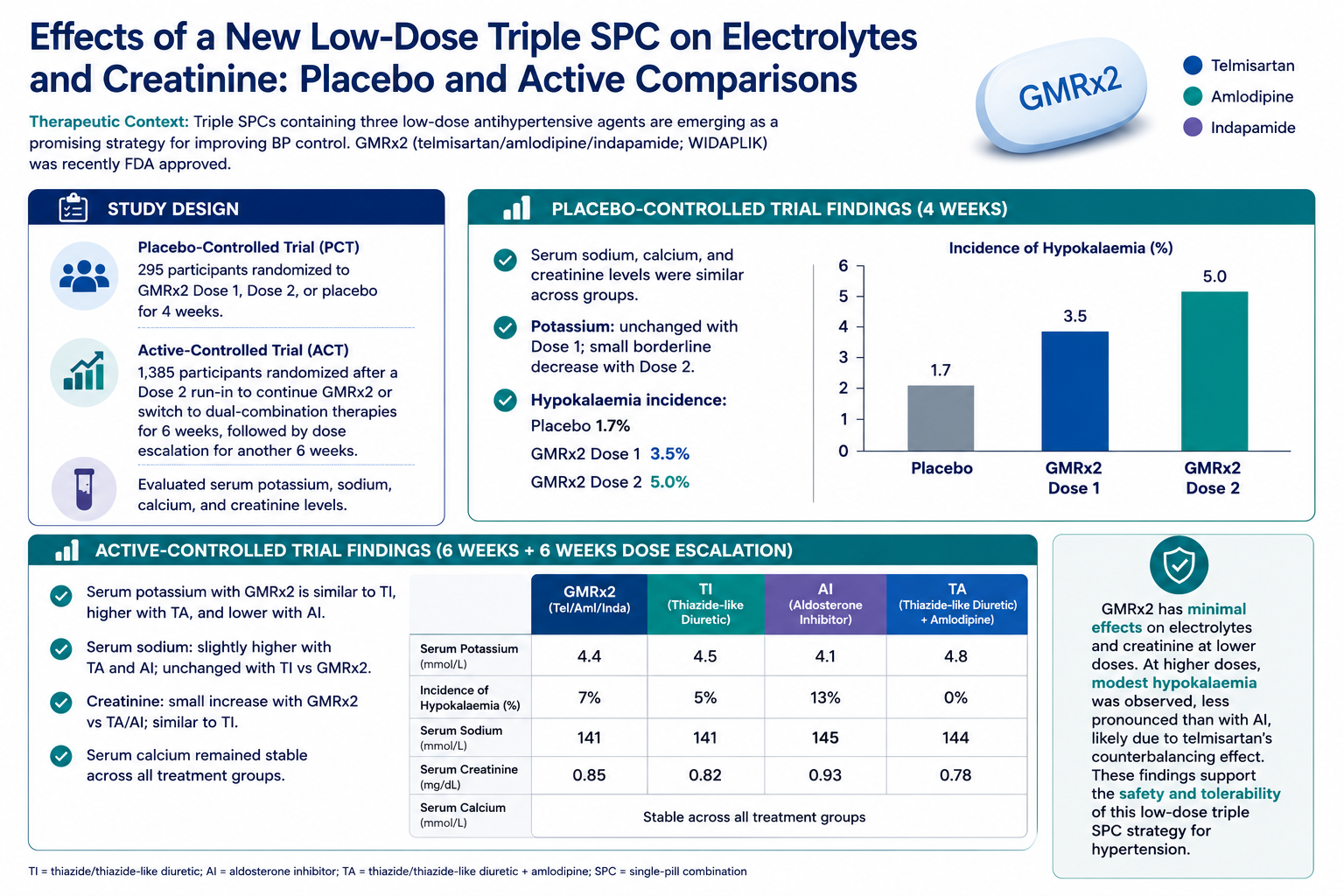
Triple SPCs containing three low-dose antihypertensive agents are emerging as a promising strategy for improving BP control. GMRx2 (telmisartan/amlodipine/indapamide; WIDAPLIK) was recently FDA-approved, and its effects on serum electrolytes and renal function were evaluated against placebo and dual-combination therapies.
Study Design:
- Placebo-Controlled Trial (PCT): 295 participants randomized to GMRx2 Dose 1, Dose 2, or placebo for 4 weeks.
- Active-Controlled Trial (ACT): 1,385 participants randomized after a Dose 2 run-in to continue GMRx2 or switch to dual-combination therapies for 6 weeks, followed by dose escalation for another 6 weeks.
- Evaluated serum potassium, sodium, calcium, and creatinine levels.
Placebo-Controlled Trial Findings:
- Serum sodium, calcium, and creatinine levels were similar across groups.
- Potassium: unchanged with Dose 1; small borderline decrease with Dose 2.
- Hypokalaemia incidence: placebo 1.7%, GMRx2 Dose 1 3.5%, Dose 2 5.0%.
Active-Controlled Trial Findings:
- Serum potassium with GMRx2 is similar to TI, higher with TA, and lower with AI.
- Hypokalaemia incidence: GMRx2 7%, TI 5%, AI 13%, TA none.
- Serum sodium: slightly higher with TA and AI; unchanged with TI vs GMRx2.
- Creatinine: small increase with GMRx2 vs TA/AI; similar to TI.
- Serum calcium remained stable across all treatment groups.
GMRx2 has minimal effects on electrolytes and creatinine at lower doses. At higher doses, modest hypokalaemia was observed, less pronounced than with AI, likely due to telmisartan’s counterbalancing effect. These findings support the safety and tolerability of this low-dose triple SPC strategy for hypertension.