
by Prateek Chopra | June 10, 2026 | Cardiology Conferences | ESH 2026
Context and Rationale:
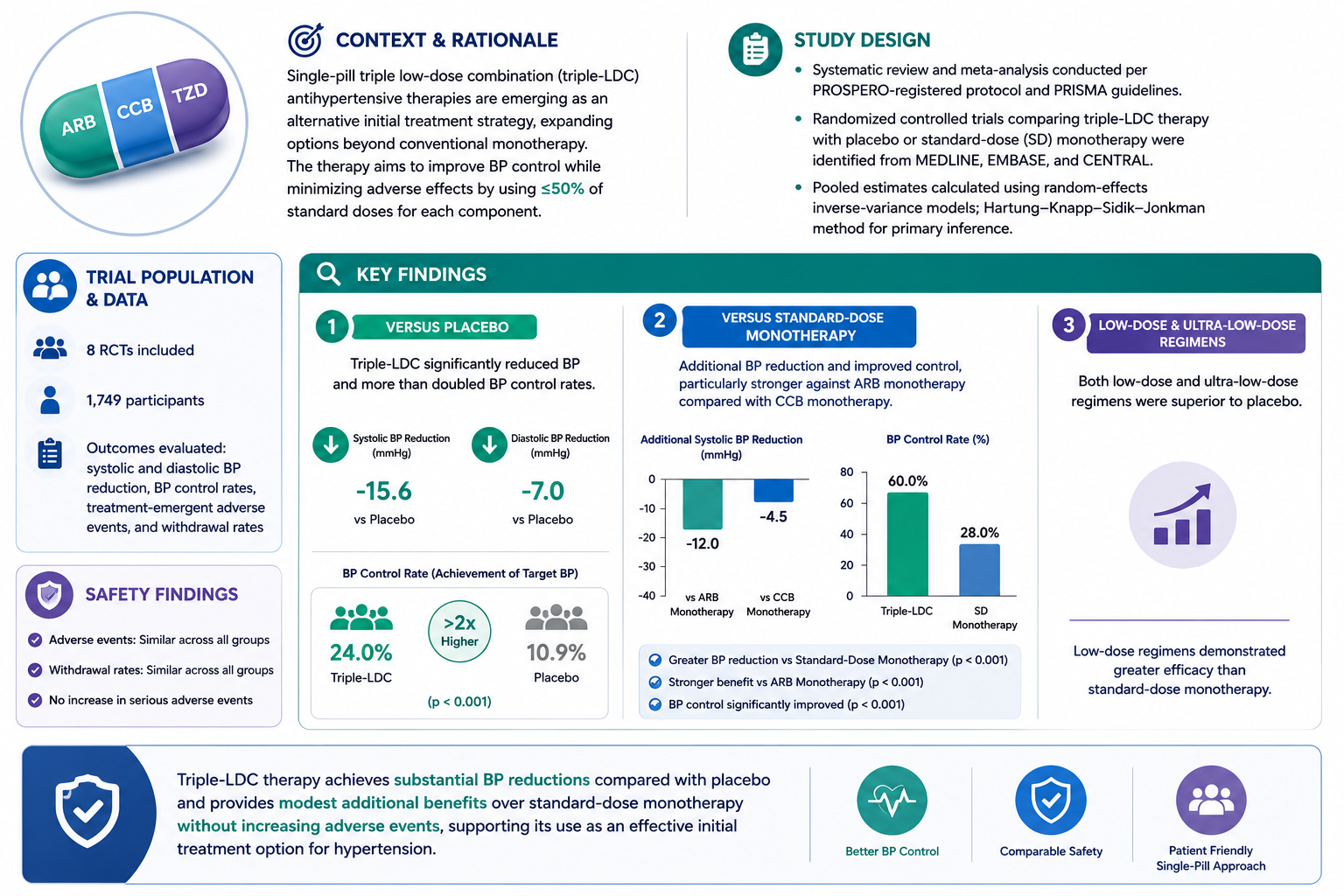
Single-pill triple low-dose combination (triple-LDC) antihypertensive therapies have emerged as an alternative initial treatment strategy, expanding options beyond conventional monotherapy. The therapy aims to improve BP control while minimizing adverse effects by using ≤50% of standard doses for each component.
Study Design:
- Systematic review and meta-analysis conducted per PROSPERO-registered protocol and PRISMA guidelines.
- Randomized controlled trials comparing triple-LDC therapy with placebo or standard-dose (SD) monotherapy were identified from MEDLINE, EMBASE, and CENTRAL.
- Pooled estimates calculated using random-effects inverse-variance models; Hartung–Knapp–Sidik–Jonkman method for primary inference.
Trial Population and Data:
- Eight RCTs included, encompassing 1,749 participants.
- Evaluated outcomes: systolic and diastolic BP reduction, BP control rates, treatment-emergent adverse events, and withdrawal rates.
Key Findings:
- Versus Placebo: Triple-LDC therapy significantly reduced systolic and diastolic BP and more than doubled BP control rates.
- Versus Standard-Dose Monotherapy: Additional BP reduction and improved control, particularly stronger against ARB monotherapy compared with CCB monotherapy.
- Both low-dose and ultra-low-dose regimens were superior to placebo.
- Low-dose regimens demonstrated greater efficacy than SD monotherapy.
- Safety: Adverse events and withdrawal rates were similar across all treatment groups.
Triple-LDC therapy achieves substantial BP reductions compared with placebo and provides modest additional benefits over standard-dose monotherapy without increasing adverse events, supporting its use as an effective initial treatment option for hypertension.