
by Prateek Chopra | May 24, 2026 | Cardiology Conferences | ESC-HF 2026
Cardiac rehabilitation programs (CRPs) are multidisciplinary interventions recommended for patients with cardiovascular disease to improve exercise tolerance, functional capacity, and long-term prognosis. Despite their established clinical benefits, participation and adherence remain suboptimal, and the degree of physiological improvement may vary depending on patient characteristics and program duration. This study evaluated the impact of a phase II cardiac rehabilitation program on functional capacity and cardiac autonomic regulation in patients with established heart disease. The findings were presented at Heart Failure 2026, organized by the European Society of Cardiology, held in Barcelona, Spain, from 9–12 May 2026.
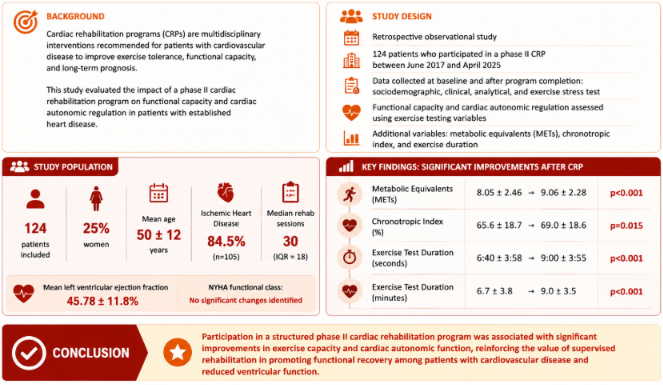
This retrospective observational study included 124 patients who participated in a phase II CRP between June 2017 and April 2025. Sociodemographic, clinical, analytical, and exercise stress test data were collected at baseline and upon completion of the program. Functional capacity and cardiac autonomic regulation parameters were assessed using exercise testing variables, including metabolic equivalents (METs), chronotropic index, and exercise duration.
The study population had a mean age of 50±12 years, and 25% of participants were women. Ischemic Heart Disease was the primary indication for CRP referral in 84.5% of patients (n=105). The median number of rehabilitation sessions completed was 30 (IQR=18), while the mean left ventricular ejection fraction was 45.78±11.8%. Additionally, 12.9% of patients were simultaneously followed in an advanced Heart Failure clinic. Significant improvements were observed following participation in the CRP, including increases in achieved METs (8.05±2.46 vs 9.06±2.28; p<0.001), chronotropic index (65.6±18.7 vs 69.0±18.6; p=0.015), and exercise test duration (6:40±3:58 vs 9:00±3:55 min; p<0.001). No significant changes were identified in NYHA functional class or body mass index.
Participation in a structured phase II cardiac rehabilitation program was associated with significant improvements in exercise capacity and cardiac autonomic function, reinforcing the value of supervised rehabilitation in promoting functional recovery among patients with cardiovascular disease and reduced ventricular function.