
by Prateek Chopra | June 1, 2026 | Cardiology Conferences | ESC-HF 2026
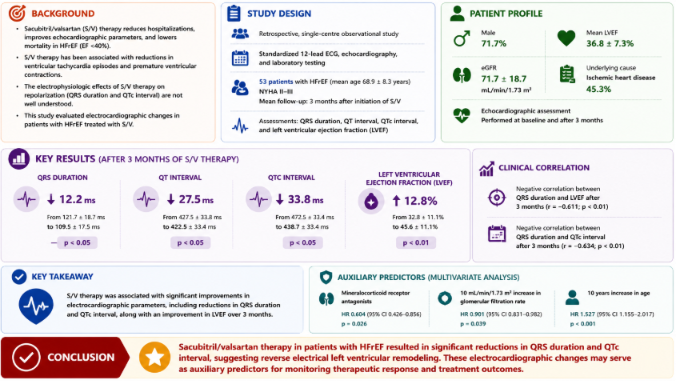
Sacubitril/valsartan (S/V) therapy has been shown to reduce hospitalizations, improve echocardiographic parameters, and lower mortality in patients with heart failure with reduced ejection fraction (HFrEF; EF <40%). S/V therapy has also been associated with reductions in ventricular tachycardia episodes and premature ventricular contractions. However, the precise mechanism underlying the antiarrhythmic effects of S/V therapy remains unclear and may involve reverse remodeling, reduced cardiac fibrosis, decreased wall stress, lower sympathetic activation, or reversal of electrical remodeling. The study aimed to evaluate the effect of S/V therapy on electrocardiographic parameters, specifically QRS duration and QTc interval, as markers of reverse electrical remodeling in patients with HFrEF. The findings were presented at Heart Failure 2026, organized by the European Society of Cardiology, held in Barcelona, Spain, from 9–12 May 2026.
A total of 35 patients with HFrEF (mean age 68.9±7.8 years) underwent standardized 12-lead Holter ECG, echocardiography, and laboratory testing before and 3 months after initiation of S/V therapy. Changes in QRS duration, QTc interval, and left ventricular ejection fraction (LVEF) were assessed.
S/V therapy was associated with a significant reduction in QRS duration, from 121.7±18.7 ms to 116.5±17.5 ms (p<0.05), and QTc interval, from 427.5±33.8 ms to 422.5±33.4 ms (p<0.05). Echocardiographic assessment demonstrated a significant improvement in LVEF, increasing from 31.2±8.8% to 42.6±11.1% (p<0.01). Both QRS duration and QTc interval were found to have a negative correlation with ejection fraction.
The study demonstrated that sacubitril/valsartan therapy in patients with HFrEF resulted in significant reductions in QRS duration and QTc interval, suggesting reverse electrical left ventricular remodeling. These electrocardiographic changes may serve as auxiliary predictors for monitoring therapeutic response and treatment outcomes.