
by Prateek Chopra | June 22, 2026 | Diabetes Conferences | ADA 2026 | 0 comments
Person-Centered Care Framework:
- ADA–EASD recommendations place individuals with T2D at the center of care.
- Treatment decisions should be tailored to clinical risk, patient preferences, socioeconomic factors, and associated with multiple long-term conditions (MLTCs)
Foundations of E ective Implementation:
- Establish SMART (Specific, Measurable, Achievable, Relevant, and Time-bound) treatment goals.
- Support care with medical nutrition therapy (MNT), diabetes self-management education and support (DSMES), and regular treatment review.
Lifestyle Interventions:
- Lifestyle modification remains the cornerstone of T2D management.
- The “5Ss” framework promotes healthy physical behaviors, weight management, and long-term habit formation
Weight Management Strategies:
- GLP-1–based therapies and metabolic surgery can support clinically meaningful weight loss.
- Nutritional guidance and resistance training are important to preserve lean body mass during weight reduction.
Role of Technology:
- Continuous glucose monitoring (CGM) and other digital health tools can support individualized diabetes management.
- Technology use should be aligned with patient needs, preferences, and capabilities.
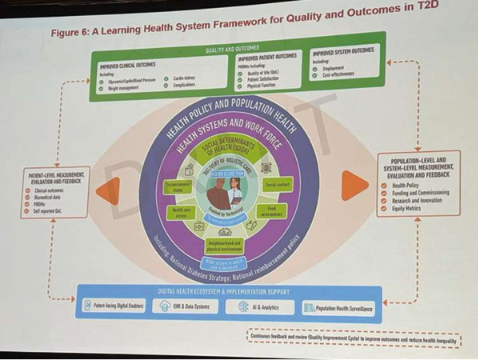
Health-System Transformation:
- Integrated, multidisciplinary care models can improve patient outcomes.
- Digital health platforms, population-level monitoring, and data-driven feedback systems support more effective care delivery.
- Learning health system approaches can enhance continuous quality improvement.
Equity and Access Considerations:
- Equitable access to evidence-based therapies is essential.
- Social determinants of health and healthcare disparities should be addressed as part of routine diabetes care
Remaining Knowledge Gaps:
- Optimal sequencing of therapies.
- Definitions and maintenance of diabetes remission.
- Diabetes management during pregnancy.
- Preservation of muscle function during weight loss.
- Combined use of GLP-1 receptor agonists and SGLT2 inhibitors.
- Management of inadequate treatment response.
Successful implementation of contemporary T2D care requires a personalized, multidisciplinary approach that combines lifestyle modification, evidence-based therapies, digital health technologies, and health-system support. Addressing remaining evidence gaps and ensuring equitable access to care will be critical for improving long-term outcomes.