
by Prateek Chopra | May 29, 2026 | Cardiology Conferences | ESC-HF 2026
In the contemporary management of heart failure with reduced ejection fraction (HFrEF; LVEF <40%), angiotensin II receptor blockers (ARBs) remain widely prescribed despite the increasing use of angiotensin receptor–neprilysin inhibitors. While valsartan, candesartan, and losartan have established clinical benefit in HFrEF, the outcomes associated with other ARBs remain uncertain. This study evaluated real-world ARB prescription patterns and compared clinical outcomes between benefit-proven and benefit-unproven ARBs in patients with HFrEF. The findings were presented at Heart Failure 2026, organized by the European Society of Cardiology, held in Barcelona, Spain, from 9–12 May 2026.
Using the National Health Insurance Service database, adult patients with HFrEF receiving guideline-directed background therapy, including renin–angiotensin system inhibitors, beta-blockers, mineralocorticoid receptor antagonists, and loop diuretics between January 2008 and December 2015, were identified. Clinical outcomes over 5 years, including all-cause death, heart failure hospitalization, or heart transplantation, were compared between patients receiving benefit-proven ARBs and benefit-unproven ARBs, including eprosartan, fimasartan, irbesartan, olmesartan, and telmisartan.
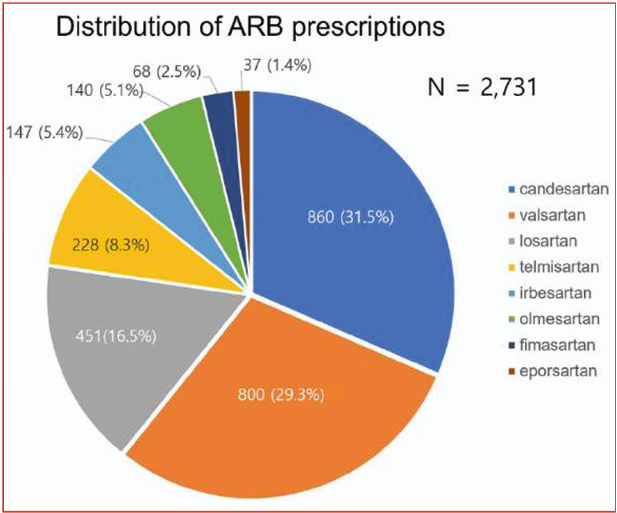
A total of 3,879 patients receiving background therapy were included, with a mean age of 57.8±13.7 years, and 67.8% were male. Among 2,731 ARB prescriptions, candesartan (860, 31.5%), valsartan (800, 29.3%), and losartan (451, 16.5%) were the most frequently prescribed, followed by telmisartan (228, 8.3%), irbesartan (147, 5.4%), olmesartan (140, 5.1%), fimasartan (68, 2.5%), and eprosartan (37, 1.4%). Compared with benefit-proven ARBs, irbesartan (HR 0.85, 95% CI 0.57–1.29; p=0.452), olmesartan (HR 0.75, 95% CI 0.48–1.16; p=0.193), and telmisartan (HR 1.04, 95% CI 0.76–1.43; p=0.819) were not associated with significant differences in the composite outcome. Fimasartan was associated with a lower risk of the composite outcome (HR 0.49, 95% CI 0.24–1.00; p=0.049).
These findings demonstrated that a substantial proportion of patients with HFrEF in real-world practice received benefit-unproven ARBs, which overall were not associated with worse clinical outcomes compared with benefit-proven ARBs. Benefit-unproven ARBs may therefore represent alternative therapeutic options in selected situations when benefit-proven ARBs or other renin–angiotensin system inhibitors are not feasible.