
by Prateek Chopra | May 21, 2026 | Cardiology Conferences | ESC-HF 2026
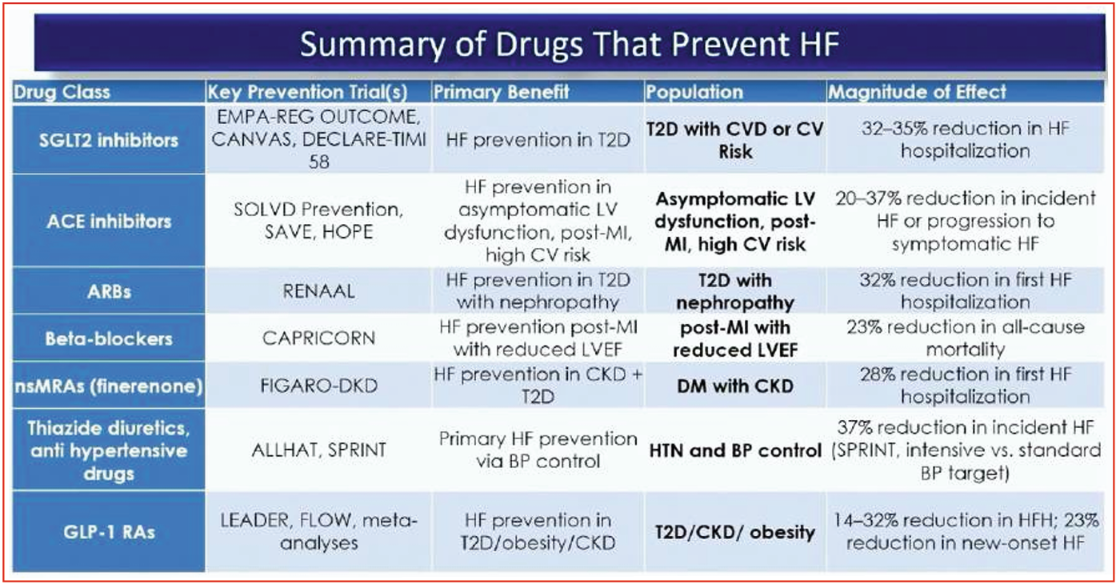
Heart failure (HF) prevention has evolved from traditional risk-factor management to targeted pharmacologic intervention across the HF continuum. Contemporary evidence supports multiple cardiometabolic therapies that prevent incident HF, delay progression from pre-HF to symptomatic disease, and reduce HF hospitalization (HFH). The findings were presented at Heart Failure 2026, organized by the European Society of Cardiology, held in Barcelona, Spain, from 9–12 May 2026.
Angiotensin-converting enzyme inhibitors (ACEi) and angiotensin receptor blockers (ARBs) remain central for Stage B HF and hypertension-related prevention. In the SOLVD Prevention Trial, enalapril reduced progression to symptomatic HF by 20% in asymptomatic left ventricular systolic dysfunction (LVSD), while the SAVE Trial demonstrated a 37% reduction in HF development following myocardial infarction (MI). Beta-blockers also provide significant preventive benefit; the CAPRICORN Trial showed carvedilol reduced mortality by 23% in post-MI patients with reduced left ventricular ejection fraction (LVEF). Intensive blood pressure control in the SPRINT Trial significantly lowered incident HF events.
Sodium-glucose cotransporter-2 inhibitors (SGLT2i) have emerged as major HF preventive therapies in type 2 diabetes (T2D), chronic kidney disease (CKD), and high cardiovascular (CV) risk populations. EMPA-REG OUTCOME, CANVAS Trial, DECLARE-TIMI 58, and VERTIS CV Trial consistently demonstrated 30–35% reductions in HFH. Finerenone further reduced first HFH by 22% in the FIDELITY Analysis and lowered new-onset HF risk by 32% in patients with CKD and T2D.
Glucagon-like peptide-1 receptor agonists (GLP-1RA), particularly semaglutide, also demonstrated preventive benefit. The SELECT Trial showed a 20% reduction in major adverse CV events and an 18% reduction in HF composite outcomes in obesity without diabetes, while the FLOW Trial demonstrated a 27% reduction in HF-related outcomes or CV death in diabetes with CKD.
Pharmacologic prevention of HF now extends beyond blood pressure reduction to include therapies targeting metabolic, renal, and inflammatory pathways. ACEi/ARBs, beta-blockers, SGLT2 inhibitors, finerenone, and GLP-1 receptor agonists have demonstrated substantial reductions in HF incidence and HF hospitalization, supporting a proactive strategy for HF prevention in high-risk populations.