
by Prateek Chopra | May 17, 2026 | Cardiology Conferences | ESC-HF 2026
Atrial functional MR (AFMR) in HFpEF is characterized by preserved LV function with left atrial enlargement and mitral annular dilatation, differing from ventricular SMR. Although randomized AFMR-specific trials have been lacking, emerging evidence with ARNI, SGLT2i, ARBs, beta-blockers, CRT, and M-TEER suggests AFMR is a potentially treatable condition. The PRAISE-MR trial further highlighted the potential role of ARNI therapy in HFpEF with secondary MR. The discussion was aimed at understanding PRAISE-MR trial findings highlighting the potential role of ARNI therapy in patients with HFpEF and secondary mitral regurgitation. The findings were presented at Heart Failure 2026, organized by the European Society of Cardiology, held in Barcelona, Spain, from 9–12 May 2026.
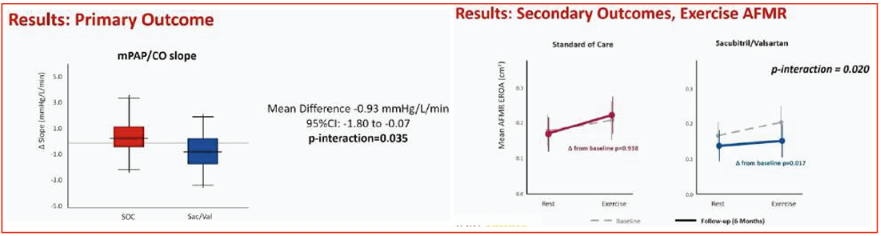
The PRAISE-MR trial enrolled HFpEF patients with moderate or greater AFMR and randomized them to Sacubitril/valsartan or standard care alongside optimized background therapy. The primary endpoint was exercise hemodynamics (mPAP/CO slope), while secondary endpoints included MR severity, cardiac structure/function, exercise capacity, NT-proBNP, and quality-of-life outcomes over 6 months.
The PRAISE-MR trial showed that Sacubitril/valsartan significantly improved exercise-related AFMR severity compared with standard care over 6 months. While AFMR worsened during exercise in the standard care group, ARNI therapy demonstrated a favorable reduction in exercise AFMR severity, indicating beneficial effects on dynamic mitral regurgitation.
The PRAISE-MR trial demonstrated good tolerability of Sacubitril/valsartan, with 60% of patients achieving the target dose. Ambulatory blood pressure monitoring showed no significant differences in systolic or diastolic BP compared with standard care over 6 months, supporting the overall safety profile of ARNI therapy in HFpEF patients with secondary MR.
The PRAISE-MR trial, the first randomized study in atrial functional mitral regurgitation (AFMR) with HFpEF, demonstrated that Sacubitril/valsartan improves exercise hemodynamics, functional status, and exercise capacity, while showing favorable myocardial and mitral valve effects with good tolerability. The findings highlight AFMR as a pharmacologically treatable condition and support the potential role of ARNI therapy in this population despite the pragmatic open-label design and surrogate endpoints.