
by Prateek Chopra | June 18, 2026 | Cardiology Conferences | ESH 2026
Clinical Rationale:
RAS inhibitors (RASi) reduce CKD progression and cardiovascular risk but are frequently discontinued in patients with eGFR <30 ml/min/1.73m² due to concerns about hyperkalemia, hypotension, and renal function deterioration.
Evidence Review:
- Meta-analysis of 44 RCTs (43,319 patients, CKD stages 3–5):
- ACEi reduced CKD progression by 46% (OR 0.54), cardiovascular events by 27%, and mortality by 23%.
- CKD G4–G5 (18 RCTs; 1,739 patients): RASi reduced renal replacement therapy risk by 34% (HR 0.66; 95% CI 0.55–0.79).
- Real-world data: only 22% of patients with eGFR 15–29 ml/min/1.73m² received ACEi; overall RASi cessation 37%.
- Hyperkalemia triggered discontinuation in 37% of cases (3 per 100 patients/year).
Management of Hyperkalemia:
- Potassium binders:
- Patiromer (AMETHYST-DN) sustained K⁺ control over 52 weeks.
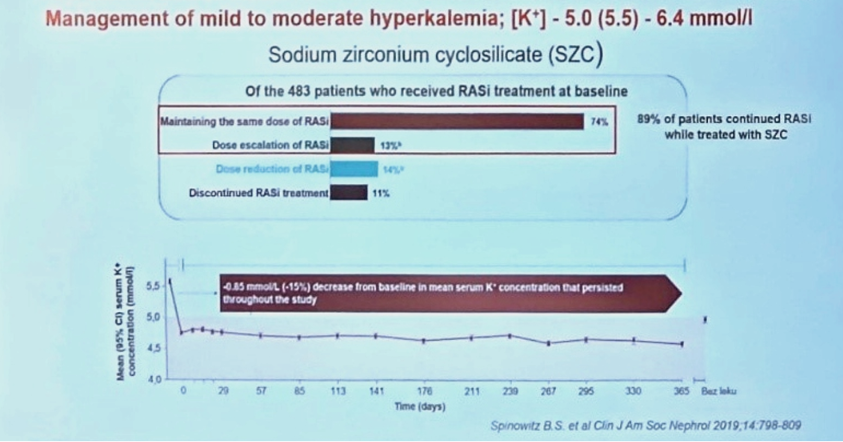
- Sodium zirconium cyclosilicate (HARMONIZE/ZS-004E) reduced serum K⁺ by 0.85 mmol/L, allowing 89% of patients to continue RASi.
- RASi-induced eGFR reduction <30% reflects reversible hemodynamic effect; intervention not required.
Consequences of RASi Discontinuation:
- Meta-analysis of 6 observational studies (248,963 patients):
- Mortality ↑41% (HR 1.41; 95% CI 1.23–1.62).
- End-stage renal disease risk ↑31% (HR 1.31; 95% CI 1.10–1.56).
- Hyperkalemia-related discontinuation further raised mortality by 60% (HR 1.60; 95% CI 1.56–1.84).
Clinical Implications:
- Do: Use RASi, treat hyperkalemia with potassium binders, accept eGFR drop <30%.
- Do not: Discontinue RASi unnecessarily.
In patients with CKD G4–G5, RASi therapy is nephroprotective and should be maintained. Appropriate management of hyperkalemia enables continued use, preventing adverse renal and cardiovascular outcomes.