
by Prateek Chopra | June 16, 2026 | Cardiology Conferences | ESH 2026
Background and Rationale:
Cardiovascular disease (CVD) prevention is increasingly shifting from a population-based model to a personalized approach that integrates genetic risk, traditional risk factors, and inflammatory biomarkers. Precision medicine can enhance prevention strategies in patients with dyslipidemia, hypertension, and elevated inflammatory burden.
Genetic Risk Assessment:
- Evidence from the Estonian Biobank and national digital health systems highlights the value of genetic information in CV risk stratification.
- Polygenic risk scores (PRS) identify individuals at elevated risk of coronary artery disease and CV mortality before clinical manifestations, enabling targeted early interventions.
- Pharmacogenomic profiling supports individualized selection of lipid-lowering therapies based on metabolic characteristics.
Hemodynamic-Guided Hypertension Management:
- Personalized hypertension management extends beyond office BP measurements.
- Advanced tools (e.g., HOTMAN platform) and non-invasive monitoring identify underlying circulatory abnormalities to guide tailored antihypertensive therapy.
- Such approaches may improve BP control and treatment effectiveness versus standard strategies.
Inflammation and Cardiovascular Risk:
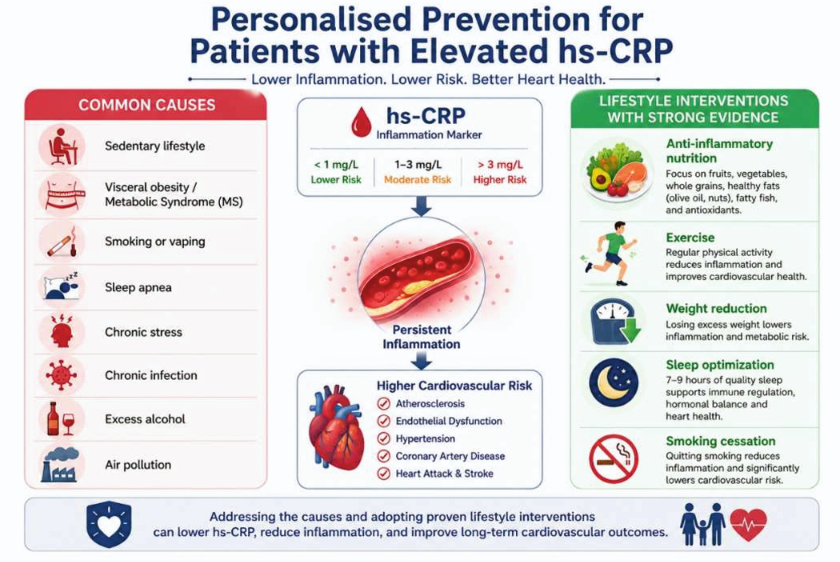
- High-sensitivity CRP (hs-CRP) serves as a marker of systemic inflammation and CV risk:
- <1 mg/L: low risk
- 1–3 mg/L: moderate risk
- ≥3 mg/L: high risk
- Elevated hs-CRP levels may result from visceral obesity, smoking, physical inactivity, poor sleep, chronic stress, infections, and environmental pollution.
- Lifestyle interventions (exercise, diet, weight management, smoking cessation, sleep optimization) reduce inflammatory burden and CV risk.
Integrating genetic risk assessment, pharmacogenomics, hemodynamic-guided hypertension management, and inflammation-based risk stratification offers a comprehensive framework for precision cardiovascular prevention. This approach may significantly improve long-term cardiovascular outcomes by enabling individualized, targeted interventions.