
by Prateek Chopra | June 11, 2026 | Diabetes Conferences | ADA 2026 | 0 comments
Research Objective:
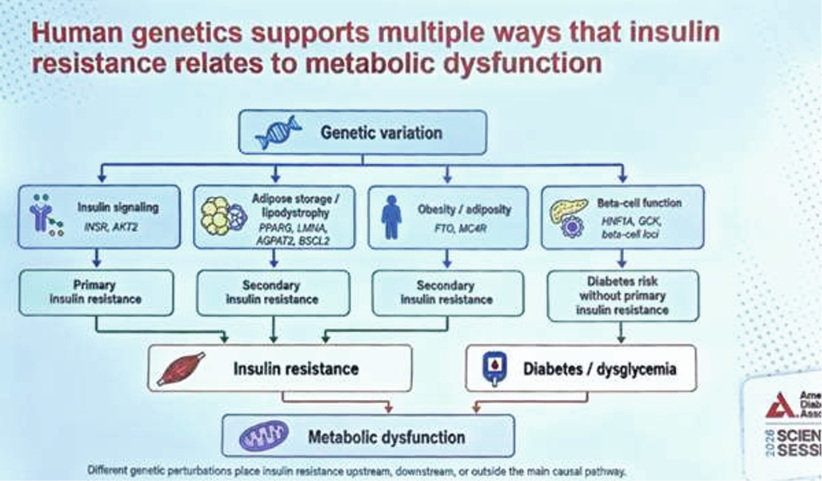
- This analysis explored whether insulin resistance is a primary defect that initiates metabolic disease or a secondary consequence of upstream metabolic dysfunction.
- Human genetic evidence was used to evaluate competing mechanistic models of insulin resistance and diabetes pathogenesis.
Sources of Evidence:
- Clinical characterization of monogenic insulin resistance syndromes caused by pathogenic variants in the insulin receptor gene (INSR).
- Analysis of monogenic lipodystrophy syndromes involving genes such as PPARG, LMNA, AGPAT2, and BSCL2.
- Genome-wide association studies (GWAS) integrating common genetic variants associated with fasting insulin, pathway-specific polygenic risk scores, and data from large multi-ancestry biobanks.
Evidence for Primary Insulin Resistance:
- Rare INSR mutations, including p.Ile348Phe, resulted in severe insulin resistance and marked dysglycemia. Aected individuals demonstrated:
- HbA1c of 14.2%.
- Fasting glucose of 12 mmol/L.
- Despite severe hyperglycemia, these individuals showed relative protection from dyslipidemia and hepatic steatosis, supporting insulin signaling defects as the initiating cause.
Evidence for Secondary Insulin Resistance:
- Monogenic lipodystrophy syndromes demonstrated that adipose tissue dysfunction can precede and drive insulin resistance.
- These findings support a model in which insulin resistance develops secondary to impaired adipose tissue function.
Insights from Polygenic Analyses:
- Clustering of 230 fasting-insulin-associated SNPs across 43 metabolic traits identified distinct lipodystrophy type and obesity-type genetic subgroups.
- Lipodystrophy-related polygenic scores independently predicted:
- Increased risk of type 2 diabetes.
- Greater likelihood of progression to insulin-requiring diabetes.
- These scores also explained part of the variation in BMI thresholds for metabolic dysfunction across diverse ancestral populations.
Implications for Diabetes Risk Stratification:
- Genetic variants in INSR and AKT2 can cause primary insulin resistance.
- Lipodystrophy-associated genes contribute to secondary insulin resistance through adipose tissue failure.
- Obesity-related loci promote insulin resistance through excess adiposity.
- Beta-cell loci increase diabetes risk independently of insulin resistance.
Human genetic evidence indicates that insulin resistance arises through multiple biological pathways rather than a single mechanism. Recognizing these distinct genetic architectures may improve precision medicine approaches, enable more accurate diabetes risk stratification, and support the development of targeted therapeutic strategies