
by Prateek Chopra | June 12, 2026 | Cardiology Conferences | ESH 2026
Personalized Obesity Care:
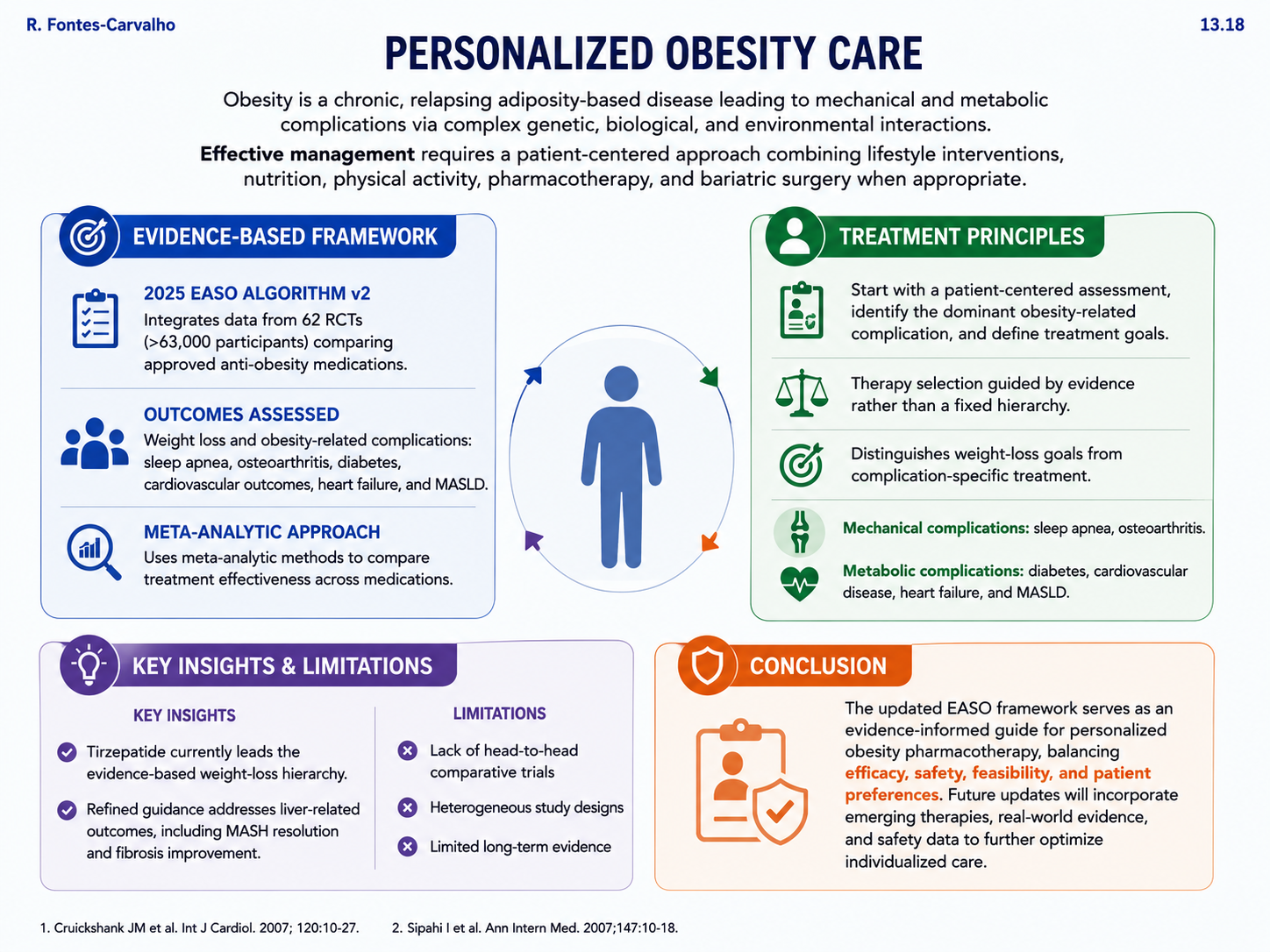
Obesity is a chronic, relapsing adiposity-based disease leading to mechanical and metabolic complications via complex genetic, biological, and environmental interactions. Effective management requires a patient-centered approach combining lifestyle interventions, nutrition, physical activity, pharmacotherapy, and bariatric surgery when appropriate.
Evidence-Based Framework:
- 2025 EASO Algorithm v2: Integrates data from 62 RCTs (>63,000 participants) comparing approved anti-obesity medications.
- Assessed outcomes include weight loss and obesity-related complications: sleep apnea, osteoarthritis, diabetes, cardiovascular outcomes, heart failure, and MASLD.
- Utilizes meta-analytic methods to compare treatment effectiveness across medications.
Treatment Principles:
- Start with a patient-centered assessment, identify the dominant obesity-related complication, and define treatment goals.
- Therapy selection guided by evidence rather than a fixed hierarchy.
- Distinguishes weight-loss goals from complication-specific treatment.
- Mechanical complications: sleep apnea, osteoarthritis.
- Metabolic complications: diabetes, cardiovascular disease, heart failure, and MASLD.
Key Insights & Limitations:
- Tirzepatide currently leads the evidence-based weight-loss hierarchy.
- Refined guidance addresses liver-related outcomes, including MASH resolution and fibrosis improvement.
- Limitations: lack of head-to-head comparative trials, heterogeneous study designs, and limited long-term evidence.
The updated EASO framework serves as an evidence-informed guide for personalized obesity pharmacotherapy, balancing efficacy, safety, feasibility, and patient preferences. Future updates will incorporate emerging therapies, real-world evidence, and safety data to further optimize individualized care.