
by Prateek Chopra | June 6, 2026 | Cardiology Conferences | ESH 2026
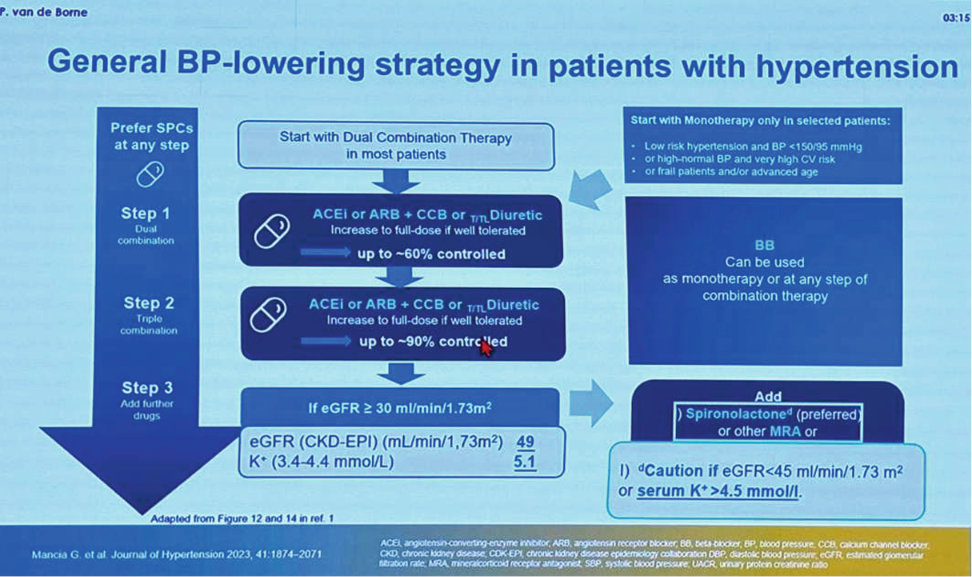
Unmet Need in Hypertension:
Hypertension affects over 1.3 billion individuals worldwide and remains the leading modifiable risk factor for cardiovascular morbidity and mortality. Despite numerous pharmacological options, BP control rates are suboptimal, highlighting the gap between available therapies and individualized patient management. Tailoring therapy to patient-specific characteristics, including comorbidities, organ protection, and tolerability, is essential for optimizing cardiovascular outcomes.
Drug Classes and Clinical Evidence:
- RAS Blockers (ACEi/ARBs): Focus on receptor pharmacodynamics, binding affinity, insurmountable antagonism, and organ-protective effects.
- Calcium Channel Blockers (CCBs), Diuretics, Beta-blockers: Evaluated for efficacy in BP reduction, metabolic impact, and heart failure prevention.
- Outcomes Assessed: Seated systolic BP (SeSBP), seated diastolic BP (SeDBP), incident diabetes, and heart failure prevention.
Patient Profile Matching and Key Findings:
- ARB-based combinations demonstrated substantial BP reductions irrespective of companion agent:
- OLM/HCTZ 40/25 mg: SeSBP −37.10 mmHg, SeDBP −21.80 mmHg.
- OLM/AML 40/10 mg: SeSBP −30.00 mmHg, SeDBP −18.00 mmHg.
- ARBs also reduced incident diabetes risk (OR 0.57, p<0.0001).
- CCBs and ACE inhibitors showed metabolic benefits; β-blockers and diuretics were less favorable.
- Heart failure prevention favored diuretics and ARBs over placebo and conventional therapy.
Optimal hypertension management requires moving beyond one-size-fits-all therapy. Agent selection guided by receptor pharmacodynamics, organ-protective properties, and comorbidity burden improves adherence and cardiovascular outcomes. ARBs, with unique pharmacologic profiles, are valuable for patients requiring sustained, potent RAS blockade. Integration of pharmacology into clinical decision-making enhances individualized hypertension care.