
by Prateek Chopra | June 12, 2026 | Cardiology Conferences | ESH 2026
Clinical Rationale:
Growing evidence supports a bidirectional relationship between infections and cardiovascular disease (CVD). Respiratory infections can trigger acute cardiovascular events and exacerbate pre-existing conditions, while patients with underlying CVD are at higher risk of severe infectious outcomes. Influenza infection, for example, increases the incidence of acute myocardial infarction more than six-fold within the first 7 days post-infection (IR 6.1).
Evidence from Vaccines:
- Influenza Vaccination:
- 25–35% reduction in cardiovascular events over 20 years of meta-analyses (RR 0.65–0.75).
- 17% reduction in primary CV outcomes among acute coronary syndrome patients; NNT=57.
- Large cohort (>466,000 patients) showed lower hospitalization for cardiac events (HR 0.90), ischemic heart disease (HR 0.84), acute thrombosis (HR 0.70), and all-cause mortality (HR 0.78).
COVID-19 Vaccination: Reduces hospitalization, mortality, and risk of acute MI.
Pneumococcal Vaccination: Decreases myocardial infarction, major adverse CV events, and acute coronary syndromes by 35% in older adults with chronic heart disease.
Emerging Vaccines: RSV and zoster vaccines show promising cardiovascular benefits in high-risk populations.
Clinical Implications:
- Vaccines are safe and effective in preventing infection and its cardiovascular sequelae.
- Influenza vaccination currently has the most robust CV evidence.
- Broader vaccine implementation could serve as an adjunct to traditional cardiovascular prevention strategies.
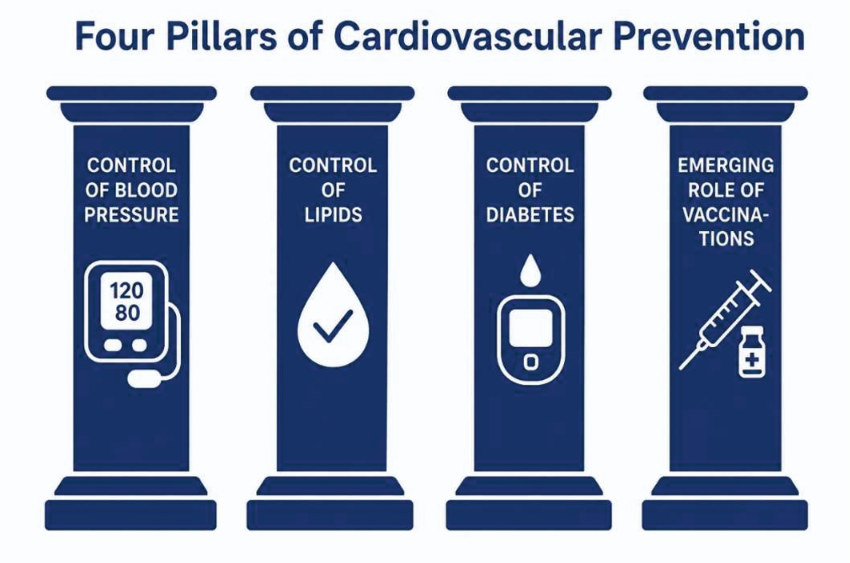
Vaccination represents an emerging “fourth pillar” of cardiovascular prevention alongside blood pressure, lipid, and diabetes control. Future research should strengthen evidence for newer vaccines, define cardiovascular outcomes more precisely, and support wider adoption in high-risk populations.