
by Prateek Chopra | June 2, 2026 | Cardiology Conferences | ESH 2026
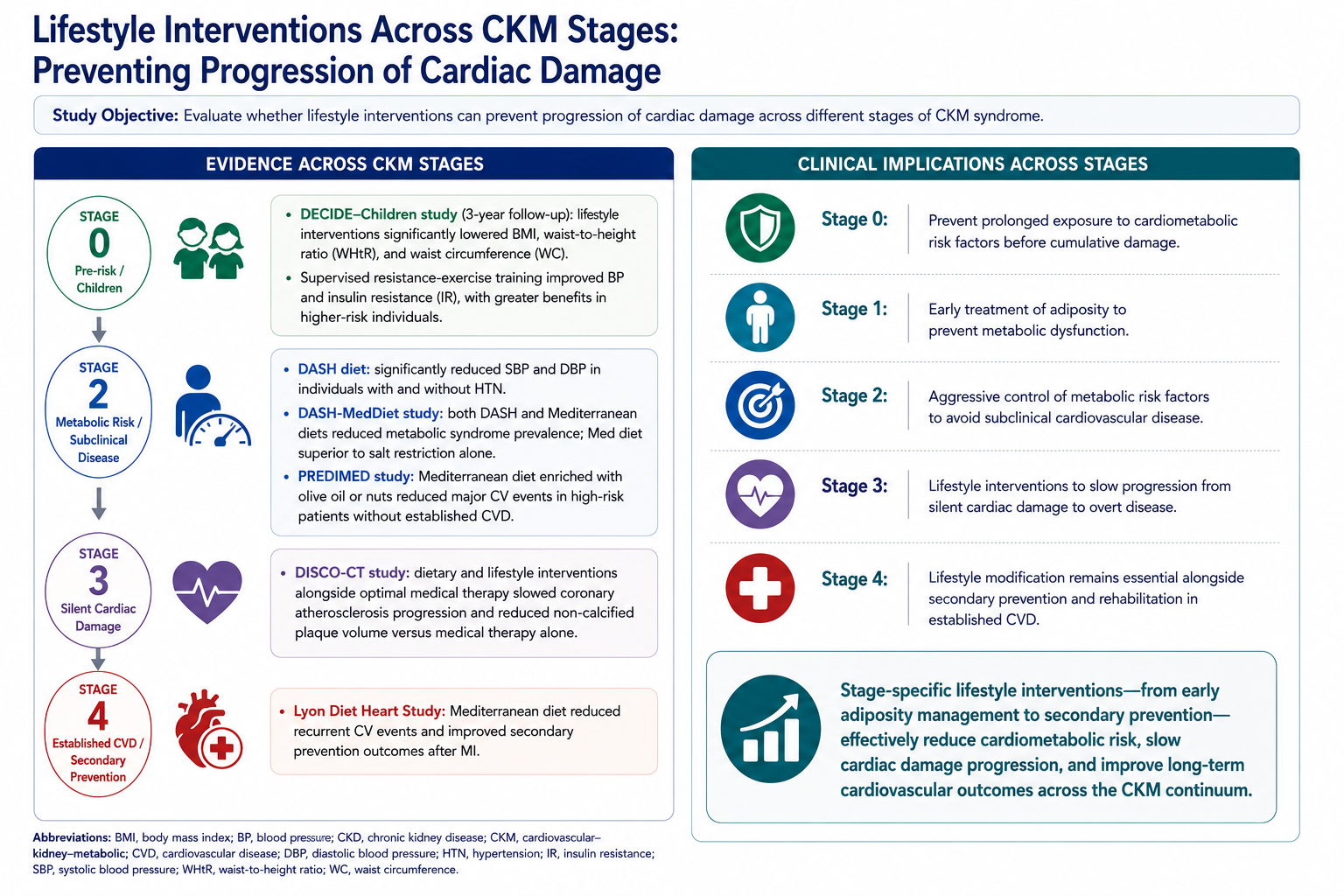
Study Objective:
Evaluate whether lifestyle interventions can prevent progression of cardiac damage across different stages of CKM syndrome.
Evidence Across CKM Stages:
Stage 0 (Pre-risk / Children):
- DECIDE–Children study (3-year follow-up): lifestyle interventions significantly lowered BMI, waist-to-height ratio (WHtR), and waist circumference (WC).
- Supervised resistance-exercise training improved BP and insulin resistance (IR), with greater benefits in higher-risk individuals.
Stage 2 (Metabolic Risk / Subclinical Disease):
- DASH diet: significantly reduced SBP and DBP in individuals with and without HTN.
- DASH-MedDiet study: both DASH and Mediterranean diets reduced metabolic syndrome prevalence; Med diet superior to salt restriction alone.
- PREDIMED study: Mediterranean diet enriched with olive oil or nuts reduced major CV events in high-risk patients without established CVD.
Stage 3 (Silent Cardiac Damage):
- DISCO-CT study: dietary and lifestyle interventions alongside optimal medical therapy slowed coronary atherosclerosis progression and reduced non-calcified plaque volume versus medical therapy alone.
Stage 4 (Established CVD / Secondary Prevention):
- Lyon Diet Heart Study: Mediterranean diet reduced recurrent CV events and improved secondary prevention outcomes after MI.
Clinical Implications Across Stages:
- Stage 0: Prevent prolonged exposure to cardiometabolic risk factors before cumulative damage.
- Stage 1: Early treatment of adiposity to prevent metabolic dysfunction.
- Stage 2: Aggressive control of metabolic risk factors to avoid subclinical cardiovascular disease.
- Stage 3: Lifestyle interventions to slow progression from silent cardiac damage to overt disease.
- Stage 4: Lifestyle modification remains essential alongside secondary prevention and rehabilitation in established CVD.
Stage-specific lifestyle interventions—from early adiposity management to secondary prevention—effectively reduce cardiometabolic risk, slow cardiac damage progression, and improve long-term cardiovascular outcomes across the CKM continuum.