
by Prateek Chopra | June 1, 2026 | Cardiology Conferences | ESH 2026
Clinical Background:
Nocturnal blood pressure (BP) assessment is critical for hypertension management and cardiovascular risk prediction. Elevated night-time BP is an independent risk factor for adverse cardiovascular outcomes, even in individuals with normal daytime BP. Nocturnal hypertension frequently coexists with obstructive sleep apnea (OSA), CKD, obesity, diabetes, autonomic dysfunction, and aldosteronism.
Key Evidence:
- Absolute nocturnal BP values and their reproducibility are more clinically meaningful than traditional “dipping” patterns.
- Night-time BP ≥120/70 mmHg is considered significant.
- 24-hour ABPM is the reference standard, but practical limitations have increased interest in home-based nocturnal BP monitoring; additional validation is needed for wrist-based and cuffless wearable devices.
Clinical Implications:
- Cardiovascular mortality risk increases progressively with worsening nocturnal BP:
- Normal night-time BP & dipping pattern: baseline risk 1.0
- Nocturnal hypertension: risk 1.9, independent of dipping status
- Absolute night-time BP is a stronger determinant of cardiovascular outcomes than dipping patterns alone.
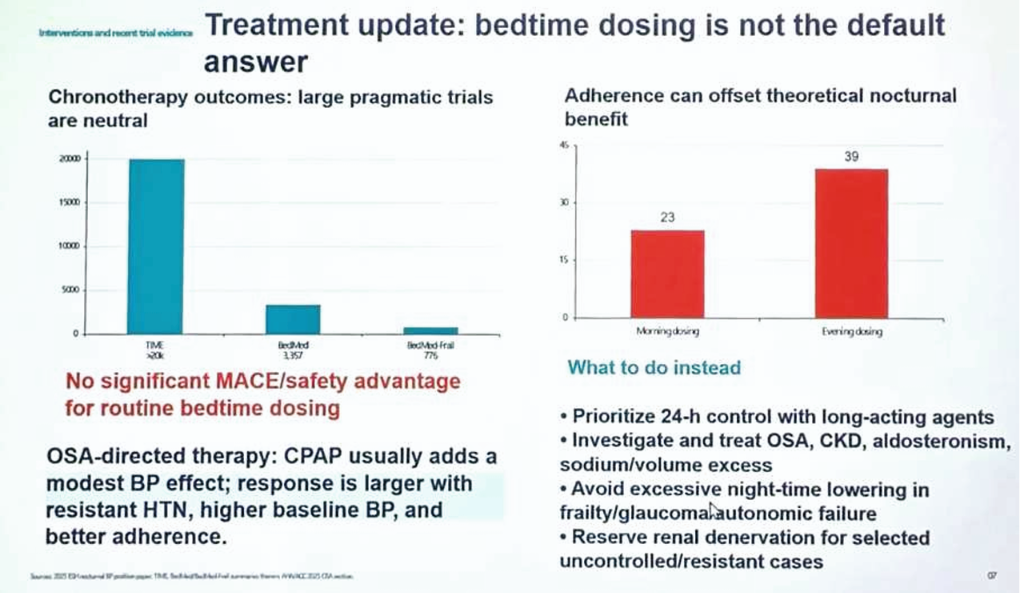
- Management should prioritize consistent 24-hour BP control with long-acting therapies and targeted treatment of contributing conditions such as OSA and volume overload.
Incorporating nocturnal BP assessment into routine practice provides valuable prognostic information beyond daytime measurements, enabling more precise risk stratification and personalized hypertension management.