
by Prateek Chopra | July 4, 2026 | Diabetes Conferences | ADA 2026
Clinical Context
- Ventricular arrhythmias are a major cause of mortality in patients with heart failure with reduced ejection fraction (HFrEF).
- This meta-analysis evaluated whether SGLT2 inhibitors provide antiarrhythmic benefits beyond their established cardiovascular and renal protective effects.
Methods
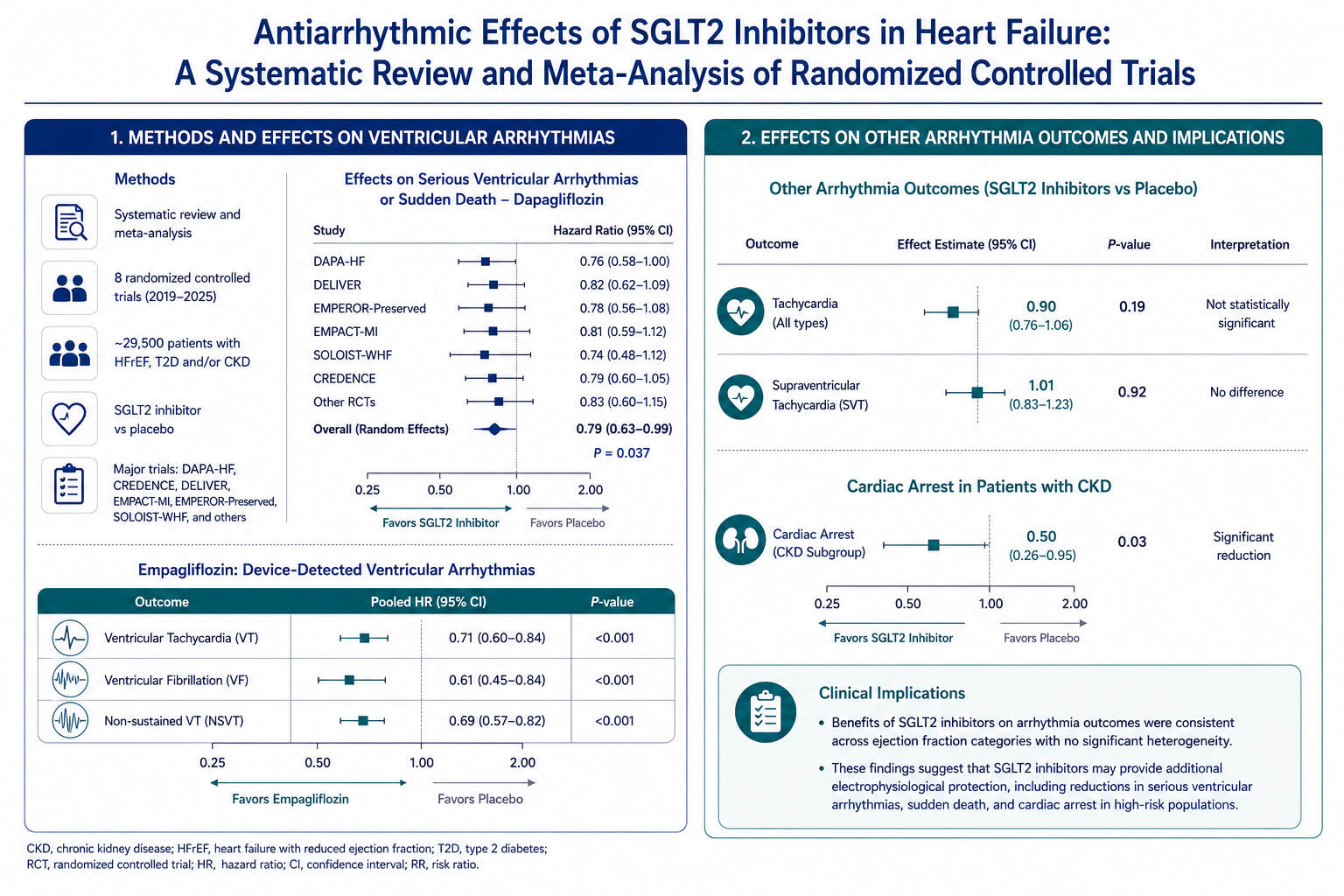
- A systematic review and meta-analysis of eight randomized controlled trials conducted between 2019 and 2025 was performed.
- The analysis included approximately 29,500 patients with heart failure, type 2 diabetes, and/or chronic kidney disease receiving SGLT2 inhibitors or placebo.
- Major trials included DAPA-HF, CREDENCE, DELIVER, EMPACT-MI, EMPEROR-Preserved, SOLOIST-WHF, and others.
Effects on Ventricular Arrhythmias
- Dapagliflozin reduced the risk of serious ventricular arrhythmias or sudden death by 21% (HR 0.79; 95% CI: 0.63–0.99; P=0.037).
- Empagliflozin significantly reduced device-detected ventricular tachycardia, ventricular fibrillation, and non-sustained ventricular tachycardia (P<0.001).
Effects on Other Arrhythmia Outcomes
- Pooled analysis showed a 10% lower incidence of tachycardia with SGLT2 inhibitor therapy, although the difference did not reach statistical significance (RR 0.90; P=0.19).
- Rates of supraventricular tachycardia were similar between treatment groups.
- In patients with CKD, SGLT2 inhibitors reduced the risk of cardiac arrest by 50% (RR 0.50; 95% CI: 0.26–0.95; P=0.03).
Clinical Implications
- Benefits were observed consistently across ejection fraction categories, with no significant heterogeneity between studies.
- The favorable trends in arrhythmia outcomes suggest that SGLT2 inhibitors may offer additional electrophysiological protection in high-risk cardiovascular populations.
SGLT2 inhibitors demonstrated a favorable arrhythmia profile, including reductions in serious ventricular arrhythmias, sudden death, and cardiac arrest in selected populations. These findings suggest potential antiarrhythmic benefits that extend beyond their established cardiovascular and renal effects.