
by Prateek Chopra | July 2, 2026 | Diabetes Conferences | ADA 2026
Lifestyle Intervention Program
- This trial evaluated the impact of a structured, guideline-based lifestyle program on glycemic control, body weight, and quality of life in adults with early type 2 diabetes.
Methods
- Single-center randomized controlled trial involving 380 adults with early T2D.
- Participants were randomized to:
- Structured Lifestyle Intervention (n=190).
- Usual Care (n=190).
- The intervention included individualized medical nutrition therapy and supervised exercise (≥150 minutes/week plus resistance training).
Baseline Characteristics
- Mean age: ~55 years.
- Mean BMI: ~30 kg/m².
- Mean HbA1c: ~7.8%.
- Baseline characteristics were comparable between groups.
Key Findings at 12 Months
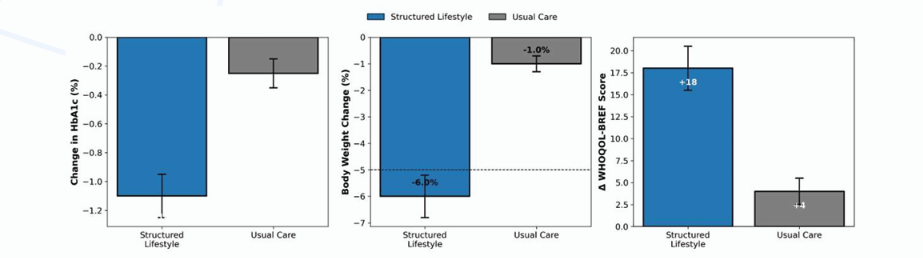
- Greater reduction in HbA1c with structured lifestyle intervention.
- Greater body weight reduction compared with usual care.
- Significant improvement in WHOQOL-BREF quality-of-life scores.
- All improvements were statistically significant (P<0.01).
Clinical Implications
- Intensive lifestyle intervention can improve both metabolic outcomes and patient-reported well-being.
- Structured lifestyle therapy remains a highly effective first-line strategy in early T2D management.
A 12-month structured lifestyle program significantly improved glycemic control, body weight, and quality of life in adults with early T2D, supporting its role as a key component of early diabetes management.