
by Prateek Chopra | June 29, 2026 | Diabetes Conferences | ADA 2026
Trial Overview
- Retatrutide is a novel triple hormone receptor agonist targeting GIP, GLP-1, and glucagon receptors.
- The phase 3 TRANSCEND-T2D-1 trial evaluated its efficacy and safety in adults with recent-onset type 2 diabetes and overweight or obesity.
Study Design
- Randomized, double-blind, placebo-controlled trial.
- Enrolled 537 adults with:
- Mean diabetes duration of 2.5 years.
- BMI ≥23 kg/m².
- HbA1c between 7.0% and 9.5% despite diet and exercise.
- Participants received once-weekly retatrutide 4 mg, 9 mg, 12 mg, or placebo for 40 weeks.
Glycemic Outcomes
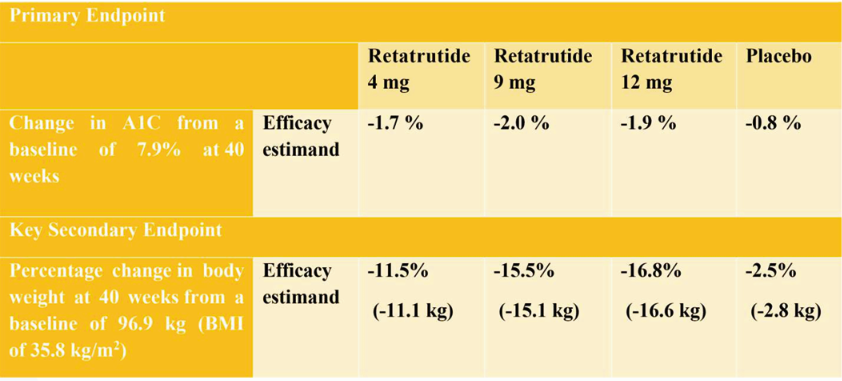
- Retatrutide achieved HbA1c reductions of up to 2.0%.
- Significant improvements in glycemic control were observed across treatment groups.
Weight Loss Outcomes
- Body weight decreased by up to 16.8%.
- Average weight loss reached 36.0 pounds.
- Weight reduction had not plateaued by Week 40, suggesting potential for further benefit with longer treatment.
Cardiometabolic Benefits
- Improvements were observed in:
- LDL cholesterol.
- Triglyceride levels.
- Blood pressure.
- These findings indicate broader cardiometabolic benefits beyond glucose lowering.
Safety Outcomes
- Adverse events were generally low.
- Safety findings were consistent with those reported for currently available GLP-1 receptor agonists.
- No new safety concerns were identified.
Clinical Implications
- Retatrutide addresses both hyperglycemia and obesity through multiple complementary mechanisms.
- The therapy may provide a comprehensive treatment approach for individuals with early T2D and excess weight.
In the TRANSCEND-T2D-1 trial, retatrutide produced substantial reductions in HbA1c and body weight, along with improvements in cardiovascular risk factors. These findings support its potential as an effective treatment option for managing both type 2 diabetes and obesity.