
by Prateek Chopra | June 1, 2026 | Cardiology Conferences | ESC-HF 2026
Sacubitril–valsartan (SV) has shown prognostic benefits in patients with heart failure with reduced ejection fraction (HFrEF), although its long-term real-world impact remains unclear. This study assessed long-term outcomes associated with SV use in a real-world HFrEF cohort. The findings were presented at Heart Failure 2026, organized by the European Society of Cardiology, held in Barcelona, Spain, from 9–12 May 2026.
An observational single-center registry included patients with HFrEF who initiated SV between 2017 and 2019. Baseline clinical characteristics, NYHA functional class, and echocardiographic findings were collected. HF events were defined as HF admission, emergency department visit, or death during follow-up. Kaplan–Meier and log-rank analyses evaluated associations between comorbidities and HF events.
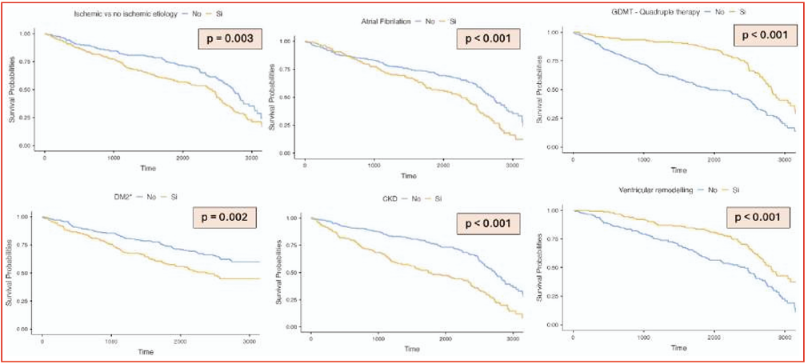
A total of 379 patients were included; 25% were women, with a mean age of 69.1±12.1 years and a median follow-up of 2,425 days. Overall, 61.5% experienced an HF event. Patients with HF events were older, had more comorbidities, worse baseline functional class, and more prior HF admissions before SV initiation. Ischemic etiology was more common in the HF event group. These patients also had higher NT-proBNP levels, worse renal function, and higher pulmonary artery pressures. Baseline guideline-directed medical therapy (GDMT) was comparable between groups except for greater diuretic use in the HF event group. During follow-up, patients without HF events achieved higher use of SGLT2 inhibitors and MRAs, along with better SV titration. Long-term prognosis was worse in patients with ischemic etiology, diabetes mellitus, impaired renal function, atrial fibrillation, and lack of GDMT.
In this real-world HFrEF cohort, long-term follow-up revealed a high rate of HF events. Poor outcomes were associated with older age, ischemic etiology, renal dysfunction, and multiple comorbidities, whereas optimized guideline-directed medical therapy, including SV and SGLT2 inhibitors, was associated with better prognosis.