
by Prateek Chopra | May 26, 2026 | Cardiology Conferences | ESC-HF 2026
Elevated left ventricular filling pressures (LVFP) often precede heart failure (HF) decompensation by several days or weeks, creating an opportunity for early therapeutic intervention. Non-invasive remote hemodynamic monitoring may enable timely and targeted medication adjustments to prevent worsening HF and improve outcomes. The STOP-DHF trial evaluated the impact of a non-invasive LVFP-guided strategy on diuretic and guideline-directed medical therapy (GDMT) optimization in patients with chronic HF. The findings were presented at Heart Failure 2026, organized by the European Society of Cardiology, held in Barcelona, Spain, from 9–12 May 2026.
STOP-DHF was a prospective, multicenter, single-arm pragmatic trial enrolling patients with chronic HF classified as NYHA class II–III irrespective of left ventricular ejection fraction (LVEF). Non-invasive LVFP measurements were obtained using a CE-certified photoplethysmography-based monitoring system. Structured clinical review and protocol-recommended medication adjustments were initiated following predefined hemodynamic alerts. The study assessed changes in diuretics (loop and thiazide) and GDMT along with safety outcomes, including symptomatic hypotension, electrolyte abnormalities, and renal function.
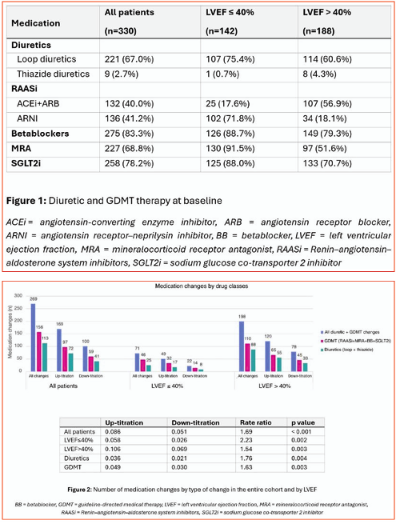
Among 330 analyzed patients, mean age was 67 years, 36% were women, and 43% had LVEF ≤40%. Over a mean follow-up of 6 months, the primary composite endpoint of HF hospitalization or all-cause mortality occurred significantly less frequently compared with a health-system–matched benchmark (4.2% vs 9.0%; p<0.001; 95% CI 2.3–7.0%). A total of 269 medication changes were recorded, corresponding to 0.136 changes per patient-month, including 169 (63%) up-titrations and 100 (37%) down-titrations. Up-titrations were more frequent across both LVEF phenotypes and treatment categories. Patients with LVEF >40% experienced higher overall medication adjustment rates compared with those with LVEF ≤40% (0.176 vs 0.083 changes/patient-month; RR 2.10, p<0.001). In patients with preserved or mildly reduced LVEF, intensification rates were similar between GDMT and diuretics (0.058 vs 0.049 changes/patient-month; RR 1.18, p = 0.36), while among patients with LVEF ≤40%, GDMT intensification occurred more frequently than diuretic adjustment (0.038 vs 0.020 changes/patient-month; p = 0.04). Renal function remained stable during follow-up (63.59 ± 23.36 vs 63.71 ± 23.69 mL/min/1.73 m²; paired t-test p = 0.92; n = 76 with paired data), with only seven episodes of symptomatic hypotension and no severe electrolyte disturbances reported.
In the STOP-DHF trial, non-invasive LVFP-guided monitoring enabled safe and targeted optimization of GDMT and diuretic therapy and was associated with lower rates of HF hospitalization or all-cause mortality compared with a matched benchmark population.