
by Prateek Chopra | May 23, 2026 | Cardiology Conferences | ESC-HF 2026
Patients with heart failure with reduced ejection fraction (HFrEF) and advanced chronic kidney disease (CKD) have limited therapeutic options and poor prognosis. Although sacubitril/valsartan has improved outcomes in HFrEF, major trials excluded patients with CKD stage 4 or higher, leaving uncertainty regarding its efficacy and safety in this population. This systematic review and meta-analysis evaluated the impact of sacubitril/valsartan in patients with concomitant HFrEF and advanced CKD. The findings were presented at Heart Failure 2026, organized by the European Society of Cardiology, held in Barcelona, Spain, from 9–12 May 2026.
A systematic search of PubMed, SCOPUS, Web of Science, Cochrane Library, ClinicalTrials.gov, and international trial registries identified studies evaluating sacubitril/valsartan in patients with HFrEF and advanced CKD. Data regarding left ventricular ejection fraction (LVEF), estimated glomerular filtration rate (eGFR), mortality, heart failure hospitalizations, progression to end-stage kidney disease (ESKD), and adverse events were analyzed using random-effects meta-analysis.
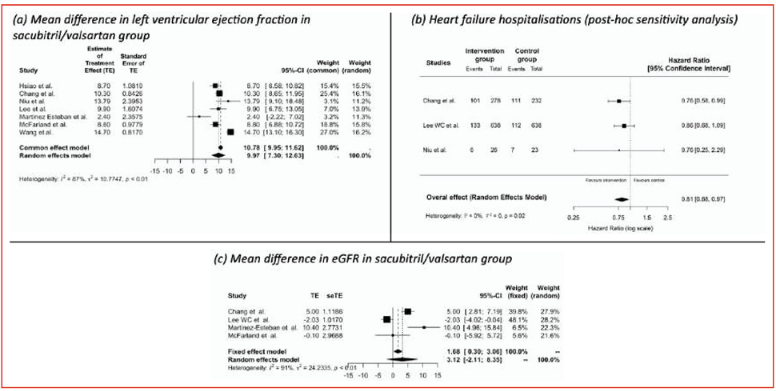
Eight observational studies involving 5,216 patients were included. Mean age was 66.8±13.5 years, and 69.2% were male. Sacubitril/valsartan therapy was associated with a significant 10% improvement in LVEF from baseline to follow-up. Sensitivity analysis demonstrated reduced heart failure hospitalizations compared with control therapy. However, there was no significant difference in renal function, all-cause mortality, cardiovascular mortality, progression to ESKD, hyperkalemia, or hypotension between treatment groups. Considerable heterogeneity was observed across studies, likely related to selection bias, unequal group sizes, and differences in comparator therapies.
Sacubitril/valsartan may improve LVEF and reduce heart failure hospitalizations in patients with HFrEF and advanced CKD without increasing adverse events. However, the findings should be interpreted cautiously given the substantial heterogeneity and observational nature of the available evidence, highlighting the need for dedicated randomized clinical trials.