
by Prateek Chopra | May 15, 2026 | Cardiology Conferences | ESC-HF 2026
The guideline-directed medical therapy (GDMT) has transformed the prognosis of heart failure with reduced ejec on frac on (HFrEF). The introduc on of the four founda onal pillars, ARNIs or ACE inhibitors, beta-blockers, Mineralocor coid receptor antagonists, and SGLT2 inhibitors, has substan ally reduced mortality and hospitaliza on. However, many pa ents con nue to experience worsening heart failure and adverse cardiovascular outcomes despite opmal therapy. The objec ve was to examine whether current GDMT represents a complete therapeu c solu on or only a par al narra ve that leaves considerable residual risk. The findings were presented at Heart Failure 2026, organized by the European Society of Cardiology, held in Barcelona, Spain, from 9–12 May 2026.
Evidence from landmark randomized clinical trials and contemporary guideline recommenda ons was reviewed to evaluate the benefits and limita ons of founda onal HFrEF therapies. Mechanis c pathways contribu ng to ongoing disease progression, including impaired nitric oxide–soluble guanylate cyclase–cyclic guanosine monophosphate signaling, were explored. Addi onal data from studies of newer therapies, such as Vericiguat, were assessed to determine their role in addressing residual risk.
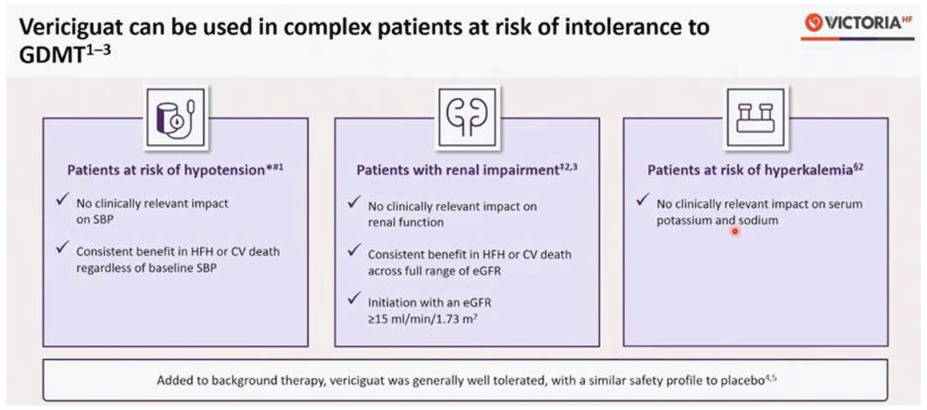
The evidence demonstrated that although the four founda onal therapies provide substan al and complementary reduc ons in mortality and heart failure hospitaliza on, a significant propor on of pa ents remain symptoma c and vulnerable to recurrent decompensa on. Worsening heart failure emerged as a cri cal marker of poor prognosis despite opmized treatment. Therapies targe ng alterna ve pathophysiological pathways, par cularly vericiguat, were shown to further reduce cardiovascular death and heart failure hospitaliza on in high-risk pa ents with recent worsening heart failure.
It was concluded that GDMT represents a major therapeutic advance but does not fully eliminate the risk of disease progression. The contemporary management of HFrEF requires a more comprehensive and individualized approach that extends beyond the four foundational pillars to include therapies that address persistent residual risk.