
by Prateek Chopra | June 17, 2026 | Cardiology Conferences | ESH 2026
Clinical Context:
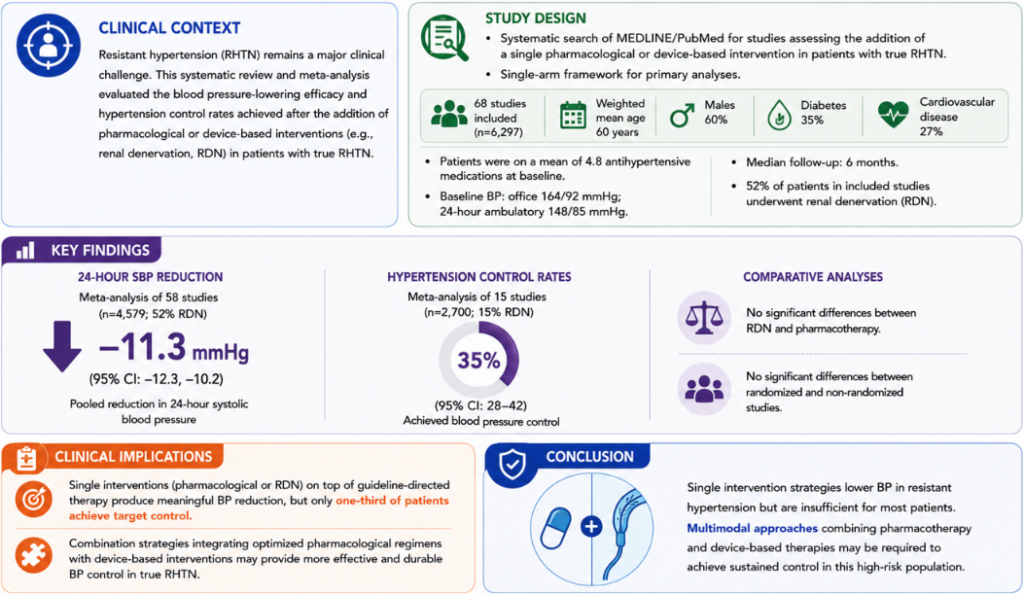
Resistant hypertension (RHTN) remains a major clinical challenge. This systematic review and meta-analysis evaluated the blood pressure-lowering efficacy and hypertension control rates achieved after the addition of pharmacological or device-based interventions (e.g., renal denervation, RDN) in patients with true RHTN.
Study Design:
- Systematic search of MEDLINE/PubMed for studies assessing the addition of a single pharmacological or device-based intervention in patients with true RHTN.
- Single-arm framework for primary analyses.
- 68 studies included (n=6,297; weighted mean age 60 years; males 60%; diabetes 35%; cardiovascular disease 27%).
- Patients were on a mean of 4.8 antihypertensive medications at baseline.
- Baseline BP: office 164/92 mmHg; 24-hour ambulatory 148/85 mmHg.
- Median follow-up: 6 months.
Key Findings:
- 24-hour SBP Reduction: Meta-analysis of 58 studies (n=4,579; 52% RDN) showed pooled reduction −11.3 mmHg (95% CI: −12.3, −10.2).
- Hypertension Control Rates: Meta-analysis of 15 studies (n=2,700; 15% RDN) showed 35% (95% CI: 28–42) achieved BP control.
- No significant differences between RDN and pharmacotherapy or between randomized and non-randomized studies.
Clinical Implications:
- Single interventions (pharmacological or RDN) on top of guideline-directed therapy produce meaningful BP reduction, but only one-third of patients achieve target control.
- Combination strategies integrating optimized pharmacological regimens with device-based interventions may provide more effective and durable BP control in true RHTN.
Single intervention strategies lower BP in resistant hypertension but are insufficient for most patients. Multimodal approaches combining pharmacotherapy and device-based therapies may be required to achieve sustained control in this high-risk population.