
by Prateek Chopra | June 16, 2026 | Cardiology Conferences | ESH 2026
Therapeutic Challenge:
Despite advances in lipid-lowering therapy (LLT), guideline-recommended LDL-C targets remain poorly achieved among patients with established atherosclerotic cardiovascular disease (ASCVD). Residual cardiovascular risk persists, highlighting the need for earlier and more intensive lipid-lowering strategies.
Study Evidence:
- INTERASPIRE Study:
- International, prospective survey across 14 countries and 6 WHO regions.
- 4,548 patients with coronary heart disease ~1 year post-ACS or revascularization.
- LLT use: 73.3% on statins, 12.2% on combination therapy, 0.2% on PCSK9-targeted therapy.
- LDL-C target attainment: 17.5% <1.4 mmol/L, 38.1% <1.8 mmol/L.
Guideline Recommendations:
- International Lipid Expert Panel (ILEP):
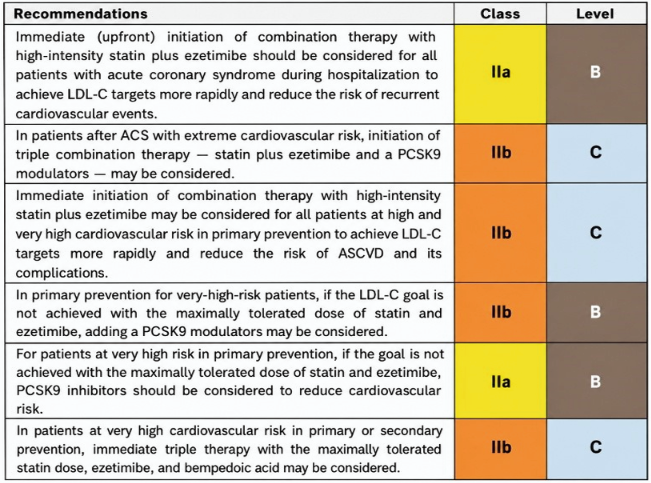
- Upfront combination therapy: high-intensity statins + ezetimibe; escalate to bempedoic acid or PCSK9 inhibitors/inclisiran if targets unmet.
- LDL-C targets: <55 mg/dL for ASCVD, <40 mg/dL for extreme-risk patients.
- Polish Lipid Association 2026:
- Supports immediate combination therapy in ACS and very-high-risk populations; early triple therapy considered.
Emerging Clinical Evidence:
- Intensive LDL-C lowering reduces major adverse cardiovascular events vs conventional therapy (6.8% vs 8.7%; HR 0.87, 95% CI 0.72–0.99; p=0.032).
- Evolocumab: 31% relative risk reduction in 3-point MACE (HR 0.69; p<0.001).
- Inclisiran: fewer muscle-related adverse events (HR 0.57; p<0.0001).
The 2026 lipid-management paradigm emphasizes rapid LDL-C reduction through early combination therapy, personalized escalation, and wider adoption of novel agents to halt atherosclerosis progression and improve cardiovascular outcomes.