
by Prateek Chopra | June 14, 2026 | Cardiology Conferences | ESH 2026
Unmet Pediatric Hypertension Risk:
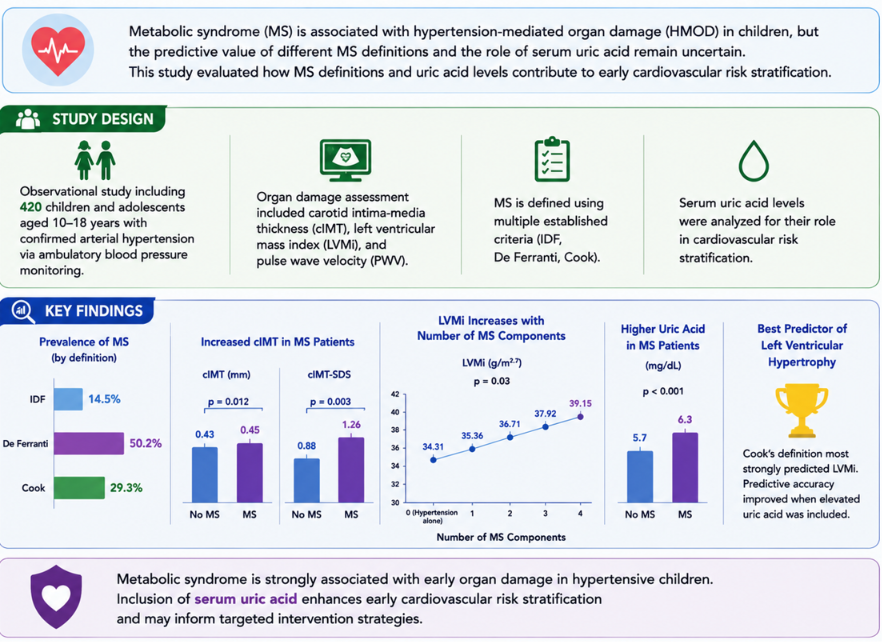
Metabolic syndrome (MS) is associated with hypertension-mediated organ damage (HMOD) in children, but the predictive value of different MS definitions and the role of serum uric acid remain uncertain. This study evaluated how MS definitions and uric acid levels contribute to early cardiovascular risk stratification.
Study Design:
- Observational study including 420 children and adolescents aged 10–18 years with confirmed arterial hypertension via ambulatory blood pressure monitoring.
- Organ damage assessment included carotid intima-media thickness (cIMT), left ventricular mass index (LVMi), and pulse wave velocity (PWV).
- MS is defined using multiple established criteria (IDF, De Ferranti, Cook).
Key Findings:
- Prevalence of MS ranged from 14.5% (IDF) to 50.2% (De Ferranti).
- MS patients had higher cIMT (0.45 vs 0.43 mm; p=0.012) and cIMT-SDS scores (1.26 vs 0.88; p=0.003).
- LVMi increased with the number of MS components, highest in patients with four criteria vs hypertension alone (39.15 vs 34.31 g/m².7; p=0.03).
- Serum uric acid levels were higher in MS patients (6.3 vs 5.7 mg/dL; p<0.001).
- Cook’s definition most strongly predicted left ventricular hypertrophy; predictive accuracy improved when elevated uric acid was included.
Metabolic syndrome is strongly associated with early organ damage in hypertensive children. Inclusion of serum uric acid enhances early cardiovascular risk stratification and may inform targeted intervention strategies.