
by Prateek Chopra | June 8, 2026 | Cardiology Conferences | ESH 2026
Simplifying Hypertension Care:
Despite hypertension being a leading contributor to cardiovascular morbidity and mortality, BP control remains suboptimal due to poor adherence, therapeutic inertia, and complex multi-drug regimens. Triple single-pill combinations (SPCs) simplify therapy, improve adherence, accelerate BP target attainment, and enhance long-term cardiovascular outcomes.
Guideline-Based Recommendations:
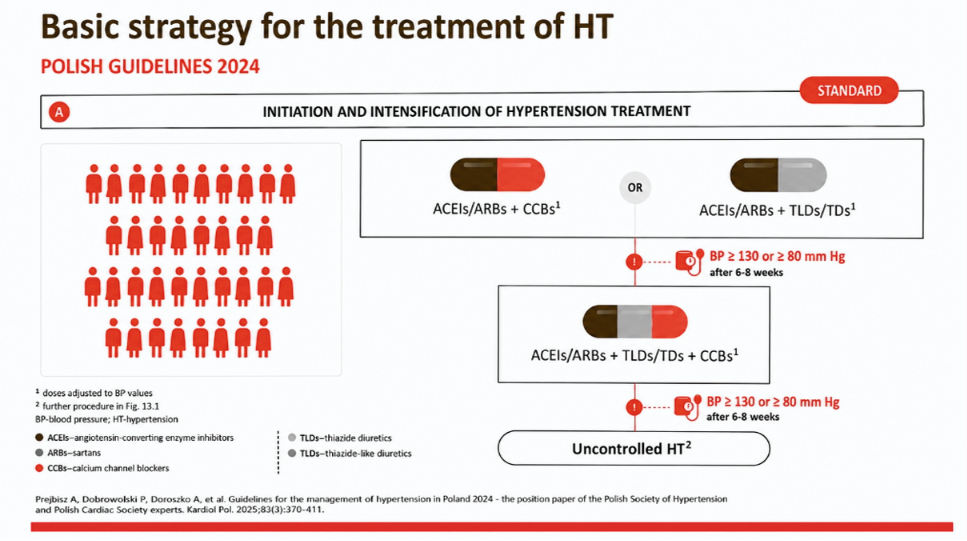
- Dual SPC Initiation: ACEi/ARB + CCB or thiazide/thiazide-like diuretic; achieves BP control in ~60% of patients (2023 ESH Guidelines).
- Escalation to Triple SPC: ACEi/ARB + CCB + thiazide/thiazide-like diuretic; increases BP control rates to nearly 90%.
- Polish 2024 Treatment Algorithm: Advocates rapid intensification to triple SPCs if BP targets are not met, minimizing prolonged use of free-drug combinations.
Real-World Evidence:
- Suboptimal SPC utilization persists in practice, with overreliance on conventional multi-drug regimens.
- SPC-based therapy improves medication adherence by 20–30%, reduces treatment discontinuation, and accelerates BP target achievement.
- Intensive BP targets (<120/70 mmHg) and earlier intervention improve population-level outcomes and reduce therapeutic inertia.
Clinical Implications:
- Triple SPCs offer a standardized, evidence-based approach to strengthen BP control.
- Simplified regimens enable timely treatment intensification and improved long-term cardiovascular outcomes.
- Integration of SPCs into care pathways supports broader, scalable hypertension management.
Triple single-pill combinations represent a cornerstone of contemporary hypertension management. By streamlining therapy, enhancing adherence, and enabling earlier, intensified treatment, triple SPCs reduce the burden of hypertension-related cardiovascular disease and facilitate optimized, guideline-directed care.