
by Prateek Chopra | June 8, 2026 | Cardiology Conferences | ESH 2026
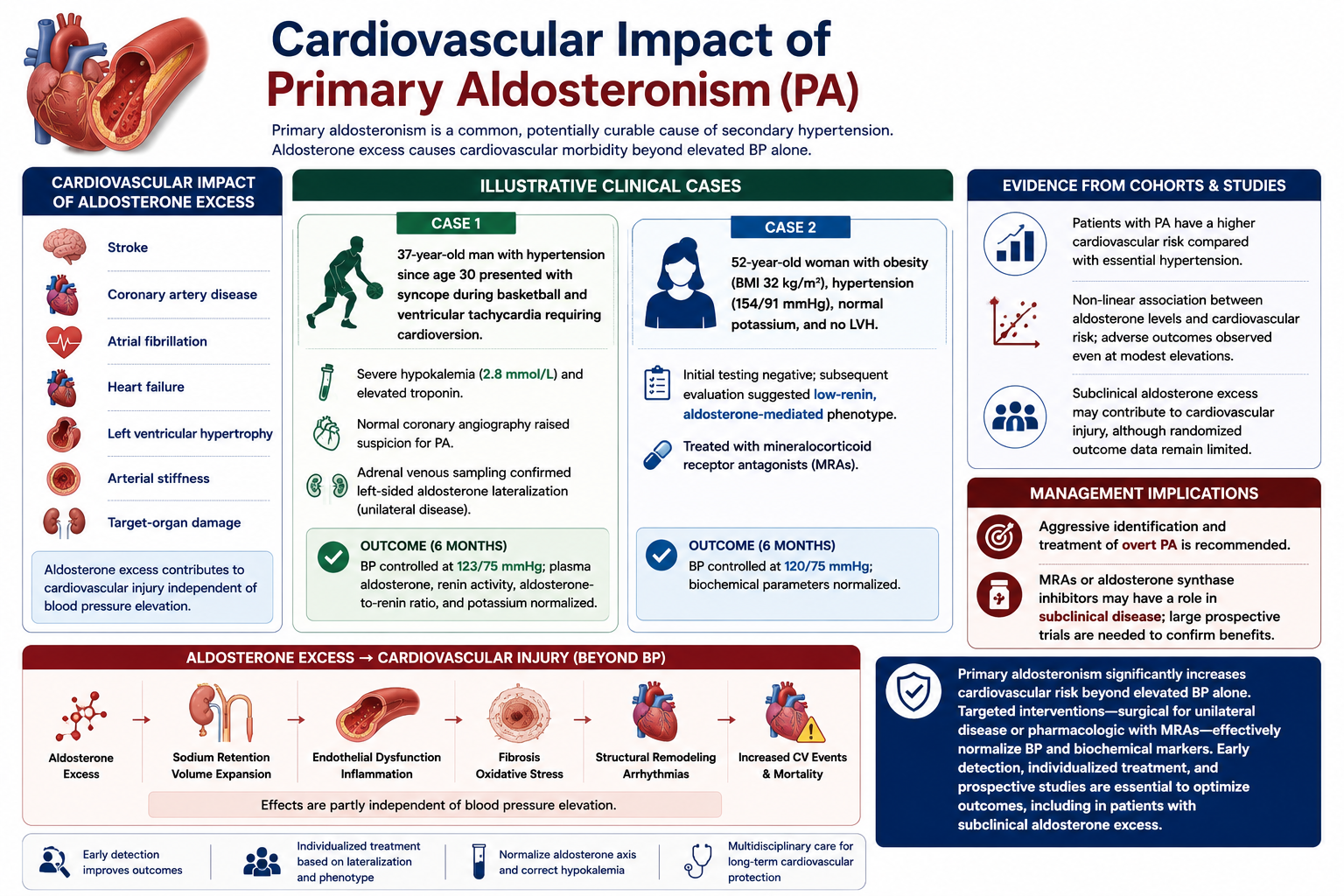
Cardiovascular Impact of PA:
Primary aldosteronism (PA) is a common, potentially curable cause of secondary hypertension. Aldosterone excess contributes to cardiovascular morbidity beyond the effects of elevated blood pressure alone, including stroke, coronary artery disease, atrial fibrillation, heart failure, left ventricular hypertrophy, arterial stiffness, and target-organ damage.
Illustrative Clinical Cases:
Case 1:
- A 37-year-old man with hypertension since age 30 presented with syncope during basketball and ventricular tachycardia requiring cardioversion.
- Severe hypokalemia (2.8 mmol/L) and elevated troponin.
- Normal coronary angiography raised suspicion for PA.
- Adrenal venous sampling confirmed left-sided aldosterone lateralization (unilateral disease).
- Outcome: BP controlled at 123/75 mmHg; plasma aldosterone, renin activity, aldosterone-to-renin ratio, and potassium normalized at 6 months.
Case 2:
- 52-year-old woman with obesity (BMI 32 kg/m²), hypertension (154/91 mmHg), normal potassium, and no LVH.
- Initial testing negative; subsequent evaluation suggested low-renin, aldosterone-mediated phenotype.
- Treated with mineralocorticoid receptor antagonists (MRAs).
- Outcome: BP controlled at 120/75 mmHg; biochemical parameters normalized.
Evidence from Cohorts & Studies:
- Patients with PA have a higher cardiovascular risk compared with essential hypertension.
- Non-linear association between aldosterone levels and cardiovascular risk; adverse outcomes observed even at modest elevations.
- Subclinical aldosterone excess may contribute to cardiovascular injury, although randomized outcome data remain limited.
Management Implications:
- Aggressive identification and treatment of overt PA is recommended.
- MRAs or aldosterone synthase inhibitors may have a role in subclinical disease; large prospective trials are needed to confirm benefits.
Primary aldosteronism significantly increases cardiovascular risk beyond elevated BP alone. Targeted interventions—surgical for unilateral disease or pharmacologic with MRAs—effectively normalize BP and biochemical markers. Early detection, individualized treatment, and prospective studies are essential to optimize outcomes, including in patients with subclinical aldosterone excess.