
by Prateek Chopra | June 7, 2026 | Cardiology Conferences | ESH 2026
Optimizing Cardiovascular Risk:
Prof. Andrzej highlighted standardized CVD mortality rates across regions, emphasizing major risk factors including BMI, systolic blood pressure, non-HDL cholesterol, diabetes, and smoking. Expanded clinical conditions such as resistant hypertension, sleep disorders, chronic inflammation, NAFLD, and migraine, as well as emerging risk factors like sedentary lifestyle and environmental exposures, were also discussed.
Risk Stratification:
- SCORE2 Model: Incorporates age, sex, smoking status, systolic blood pressure, and non-HDL cholesterol to predict cardiovascular risk.
- Emphasizes comprehensive evaluation beyond traditional risk factors, incorporating both clinical and emerging markers.
Hypertension Management:
- Initiation of Combination Therapy: Initiating dual therapy (ACEi/ARB + CCB or diuretic) achieves BP control in up to 60% of patients; triple therapy may increase control rates to nearly 90%.
- Single-Pill Combinations (SPCs): Demonstrated superiority over monotherapy or free-drug combinations for earlier BP control, improved adherence, reduced CV events, and lower hospitalization rates.
- True Resistant Hypertension: Observed in <5% of patients; associated with poorer outcomes and higher CV event rates.
Special Populations & Comorbidities:
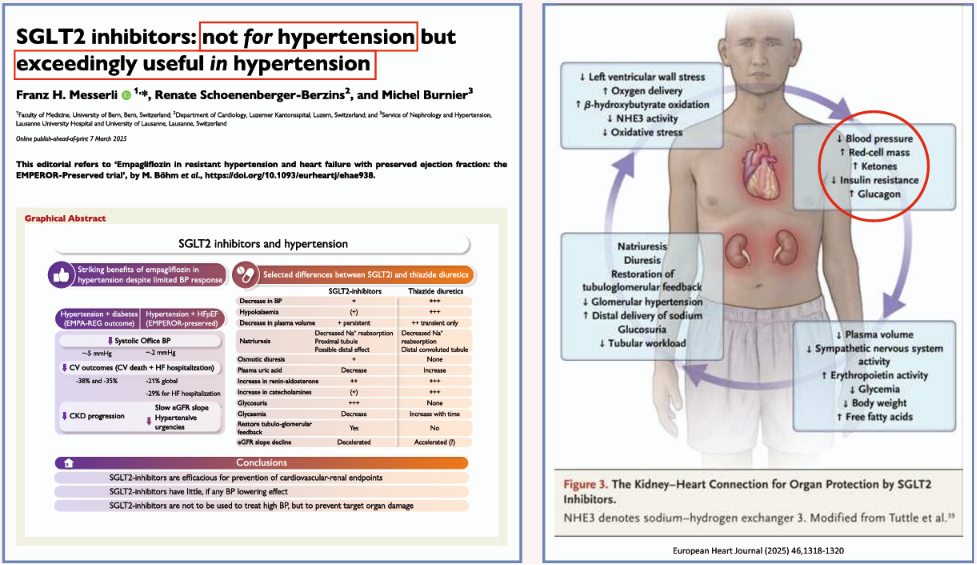
- Type 2 Diabetes: BP target <130/80 mmHg recommended; SGLT2 inhibitors provide cardio-renal protection, though not as primary antihypertensive agents.
- Dyslipidaemia Management: Statins recommended as first-line therapy; polypills combining BP- and LDL-C-lowering agents may be used for primary prevention.
- Resistant & White-Coat Hypertension: Requires careful monitoring due to increased cardiovascular risk.
Real-World Evidence:
- Perindopril/amlodipine/indapamide SPCs demonstrated improved long-term BP control compared with other regimens.
- Emerging studies support organ protection and cardiovascular risk reduction through SGLT2 inhibitors in hypertensive patients.
Early, combination-focused antihypertensive strategies—especially single-pill combinations—enhance BP control, adherence, and cardiovascular outcomes. Comprehensive evaluation of extended risk factors and integration of novel therapies, including SGLT2 inhibitors, support individualized, preventive cardiovascular care in patients with hypertension, hyperlipidaemia, and diabetes.