
by Prateek Chopra | June 4, 2026 | Cardiology Conferences | ESH 2026
Clinical Context:
Non-steroidal mineralocorticoid receptor antagonists (MRAs) and aldosterone synthase inhibitors (ASIs) are emerging therapeutic approaches in primary aldosteronism (PA). Evidence from randomized trials, single-arm studies, real-world analyses, and ongoing clinical programs evaluates the efficacy, biochemical outcomes, and safety of finerenone, baxdrostat, and dexfadrostat.
Key Evidence – MRAs:
- Randomized open-label trial: finerenone vs spironolactone (n=59, 20–40 mg/day, 8 weeks) showed similar BP outcomes; renin not fully desuppressed, hypokalemia in 2 finerenone-treated patients.
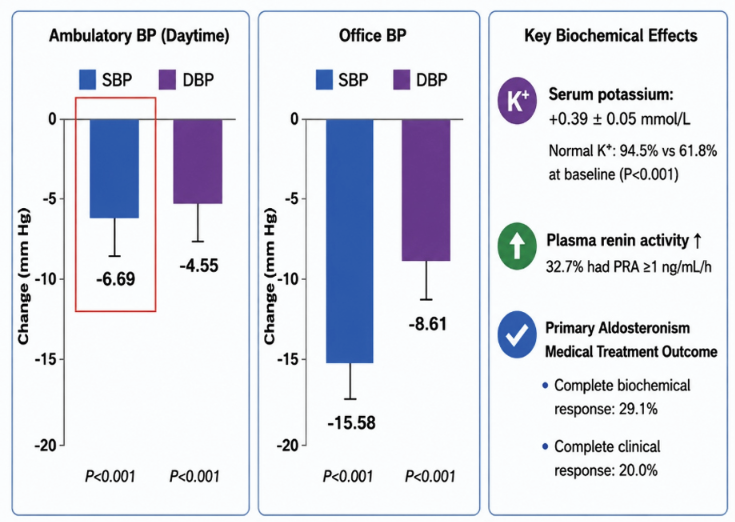
- 12-week finerenone study (n=57): significant reductions in ambulatory and office BP (P<0.001), improved potassium levels, favorable biochemical response.
- Real-world data: 15 patients switched from eplerenone to finerenone showed significant biochemical and clinical improvements (P=0.008 and P=0.004).
- Non-steroidal MRAs block the mineralocorticoid receptor with fewer sex hormone-related adverse effects; finerenone has lower hyperkalemia risk but somewhat lower efficacy in PA compared with steroidal MRAs.
Key Evidence – ASIs:
- Second-generation ASIs (baxdrostat, dexfadrostat) show improved CYP11B2 selectivity.
- Phase 2 trial dexfadrostat: marked reductions in aldosterone-renin ratio (ARR) and ambulatory systolic BP.
- SPARK phase 2a (baxdrostat): reduced ARR, increased plasma renin activity, corrected hypokalemia, and normalized aldosterone excess without serious adverse events.
- Baxdrostat is currently under evaluation in the BaxPA phase 3 trial.
- ASIs provide upstream suppression of aldosterone synthesis and may overcome aldosterone escape by inhibiting both genomic and non-genomic aldosterone pathways. Prolonged suppression has been observed post-drug discontinuation.
Emerging non-steroidal MRAs and aldosterone synthase inhibitors offer targeted, upstream, and complementary strategies to traditional MRAs, with the potential to improve blood pressure and biochemical outcomes in patients with primary aldosteronism.