
by Prateek Chopra | June 4, 2026 | Cardiology Conferences | ESH 2026
Clinical Rationale:
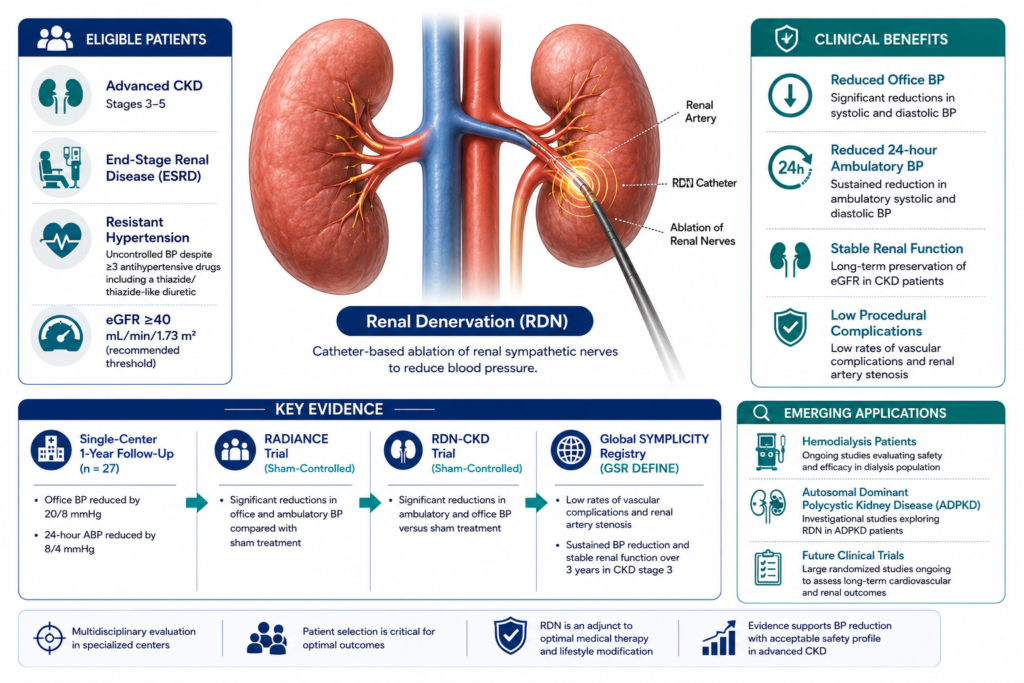
Renal denervation (RDN) is being evaluated as an adjunctive therapy for patients with advanced CKD, end-stage renal disease (ESRD), and resistant hypertension. Current evidence is drawn from ESH/ESC recommendations, sham-controlled randomized trials, registries, observational studies, and ongoing clinical protocols.
Current Recommendations:
- RDN is supported in patients with uncontrolled or resistant hypertension despite combination therapy, particularly in specialized centers following multidisciplinary evaluation.
- Recommended for patients with eGFR ≥40 mL/min/1.73 m², increased cardiovascular risk, or resistant hypertension despite three-drug therapy including a thiazide/thiazide-like diuretic.
Key Evidence:
- Single-center 1-year follow-up (n=27): office BP reduced by 20/8 mmHg; 24-hour ambulatory BP reduced by 8/4 mmHg.
- RADIANCE and RDN-CKD trials: sham-controlled analyses demonstrated significant reductions in ambulatory and office BP versus sham treatment.
- Global SYMPLICITY Registry (GSR DEFINE) and safety analyses: low rates of vascular complications and renal artery stenosis; sustained BP reduction and stable renal function over 3 years in CKD stage 3 patients.
Emerging Applications:
- Ongoing studies in hemodialysis patients and autosomal dominant polycystic kidney disease (ADPKD) are exploring RDN safety and efficacy in additional CKD populations.
Renal denervation is a promising adjunctive therapy for resistant hypertension in advanced CKD and ESRD. Evidence demonstrates sustained BP reduction with acceptable procedural safety and stable long-term renal outcomes. Further large randomized studies are required to define long-term cardiovascular and renal benefits and optimize patient selection.