
by Prateek Chopra | June 3, 2026 | Cardiology Conferences | ESH 2026
Treatment Rationale:
Renal denervation (RDN) is an emerging interventional strategy in chronic heart failure (CHF), particularly in patients with sympathetic nervous system (SNS) overactivity. Excessive SNS activation contributes to hypertension, cardiac remodeling, fibrosis, arrhythmias, endothelial dysfunction, renal sodium retention, and progression of heart failure.
Mechanism of Action:
- RDN interrupts renal sympathetic nerve signaling, reducing neurohormonal activation.
- Lowers sympathetic nerve activity (muscle sympathetic nerve firing reduced ~37% in resistant hypertension).
- Suppresses RAAS: reductions in plasma renin activity and aldosterone levels.
- Enhances natriuretic peptide activity.
Clinical and Imaging Evidence:
- Reduces ambulatory systolic BP, especially in patients with elevated baseline heart rate.
- Cardiac imaging: decreased LV hypertrophy (LVH), improved LVEF, reduced fibrosis, enhanced vascular compliance.
- Early HF studies (e.g., REACH pilot): improved exercise capacity and functional status.
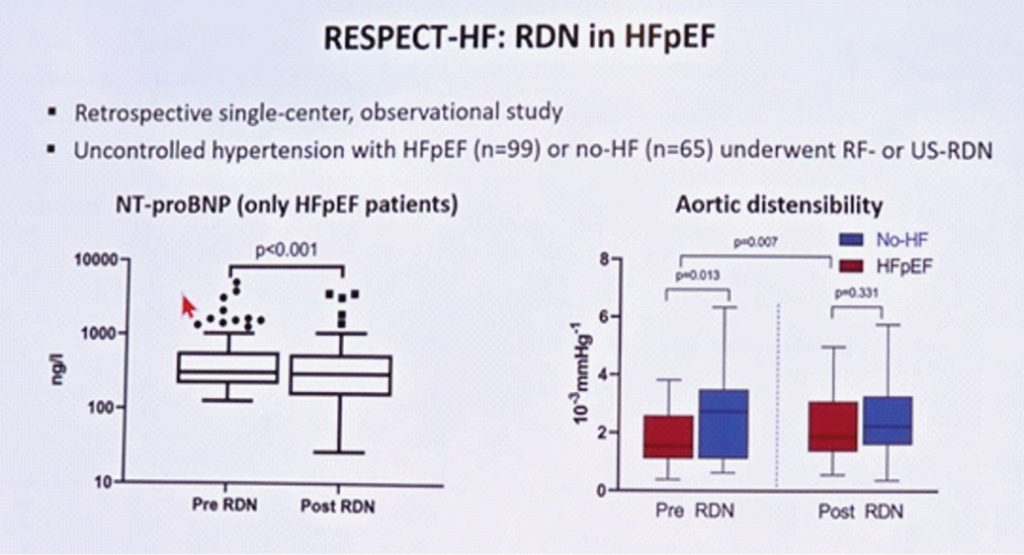
- HFpEF patients: reductions in NT-proBNP levels and improved aortic distensibility.
RESPECT-HF Study Findings
- NT-proBNP significantly decreased after RDN in HFpEF patients (p<0.001).
- Aortic distensibility improved in HFpEF patients (p=0.013) and overall (p=0.007).
- No significant difference between HFpEF and non-HF groups post-procedure (p=0.331).
Clinical Implications:
- RDN provides benefits beyond BP reduction, including improved cardiac remodeling, neurohormonal balance, and functional outcomes in CHF.
- Early evidence suggests potential utility in HFpEF and broader CHF populations.
- Ongoing randomized sham-controlled trials will clarify its role in routine CHF management.
Renal denervation is a promising therapy targeting sympathetic overactivity in heart failure, offering multi-dimensional cardiovascular and functional benefits beyond conventional pharmacotherapy.