
by Prateek Chopra | July 5, 2026 | Diabetes Conferences | ADA 2026
Mechanistic Insights
- The SELECT trial previously demonstrated a 20% reduction in major adverse cardiovascular events (MACE) with semaglutide in individuals with overweight/obesity and established cardiovascular disease without diabetes.
- This analysis evaluated whether specific circulating proteins contribute to semaglutide’s cardiovascular benefits independent of weight loss.
Methods
- Six pre-specified proteins (THBS2, NPPB, MSR1, ANGPT2, CD93, and TNC) were measured at baseline and Week 20 in 9,461 SELECT participants.
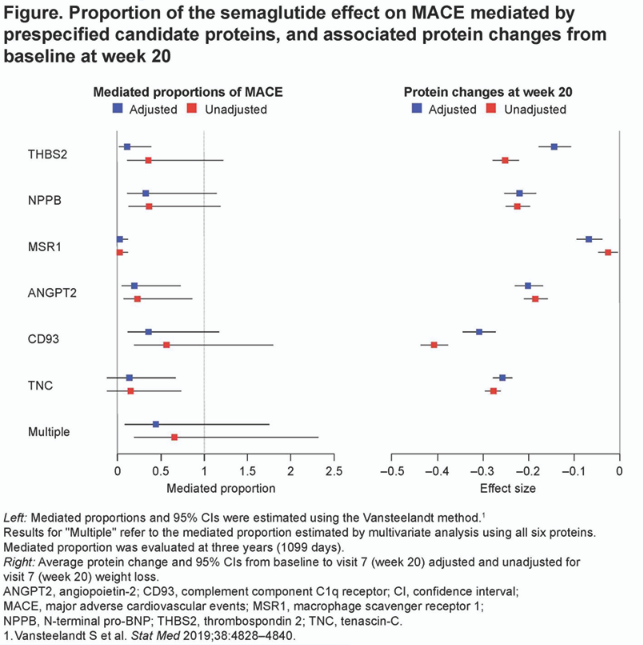
- Mediation analyses were performed to determine the extent to which changes in these proteins explained the reduction in MACE risk over 3 years, with and without adjustment for weight loss.
Key Findings
- Baseline levels of all six proteins were associated with future MACE risk.
- Semaglutide significantly modified the levels of these proteins during treatment.
- Combined protein mediation accounted for 44.0% of the cardiovascular benefit without weight adjustment and 65.8% after adjustment for weight loss.
Protein-Specific Effects
- Significant weight-adjusted mediation was observed for:
- THBS2: 11.1%.
- NPPB: 32.6%.
- ANGPT2: 19.3%.
- CD93: 35.8%.
- These findings suggest that multiple biological pathways may contribute to semaglutide’s cardioprotective effects.
Clinical Implications
- The cardiovascular benefits of semaglutide appear to extend beyond weight reduction alone.
- Modulation of proteins involved in inflammation, vascular function, and cardiac stress may play an important role in reducing cardiovascular risk.
Four circulating proteins—THBS2, NPPB, ANGPT2, and CD93—mediated a substantial proportion of semaglutide’s cardiovascular benefit independent of weight loss. These findings provide new insights into the biological mechanisms underlying semaglutide’s cardioprotective effects.