
by Prateek Chopra | July 4, 2026 | Diabetes Conferences | ADA 2026
Clinical Background
- SGLT2 inhibitors are known to reduce cardiovascular risk in type 2 diabetes, but the impact of treatment duration on cardiovascular outcomes has been unclear.
- This study evaluated whether longer SGLT2i use is associated with progressively greater reductions in major cardiovascular events and heart failure hospitalization.
Methods
- Nationwide healthcare data from South Korea (2012–2023) were used to emulate a target trial.
- Patients with T2D initiating SGLT2i therapy were categorized according to treatment duration: <1 year, 1–2 years, 2–3 years, and ≥3 years.
- The primary outcomes were major adverse cardiovascular events (MACE) and hospitalization for heart failure (HHF).
Study Population
- A total of 1,174,088 patients were included.
- Mean age was 57.3 years, and 40.5% were female.
Key Findings
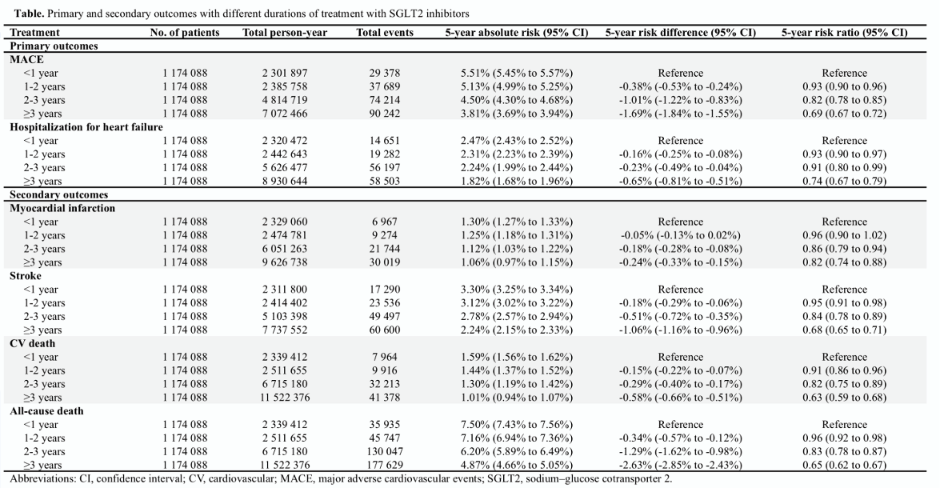
- Longer treatment duration was associated with progressively lower cardiovascular risk over five years.
- Compared with treatment for <1 year, the risk of MACE was reduced by 7%, 18%, and 31% among patients treated for 1–2 years, 2–3 years, and ≥3 years, respectively (RR: 0.93, 0.82, and 0.69).
- Similarly, the risk of HHF decreased with longer treatment duration, with relative risks of 0.93, 0.91, and 0.74 for treatment durations of 1–2 years, 2–3 years, and ≥3 years, respectively.
Clinical Implications
- The cardiovascular benefits of SGLT2 inhibitors appear to accumulate over time, with the greatest protection observed among patients receiving long-term therapy.
- These findings highlight the importance of treatment persistence and long-term adherence to maximize cardiovascular and heart failure benefits.
In this large nationwide analysis, longer SGLT2i treatment duration was associated with progressively greater reductions in major adverse cardiovascular events and hospitalization for heart failure, supporting sustained therapy to optimize cardiovascular outcomes in patients with type 2 diabetes.